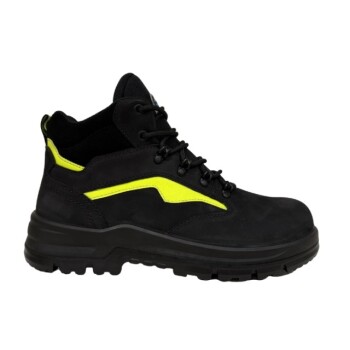
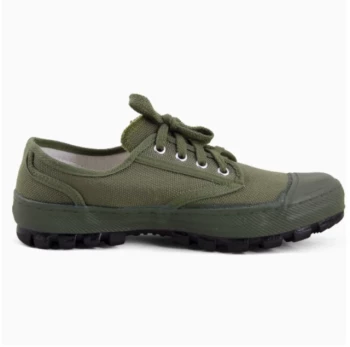
When choosing work boots, you must prioritize safety features tailored to your job, followed by all-day comfort and long-term durability. These three pillars—Safety, Comfort, and Durability—are not independent; they work together to protect you, prevent fatigue, and ensure you get a return on your investment.
The best work boot is not the one with the most features, but the one with the right features for your specific work environment. Your first step is to assess your daily hazards, not the marketing claims on the box.
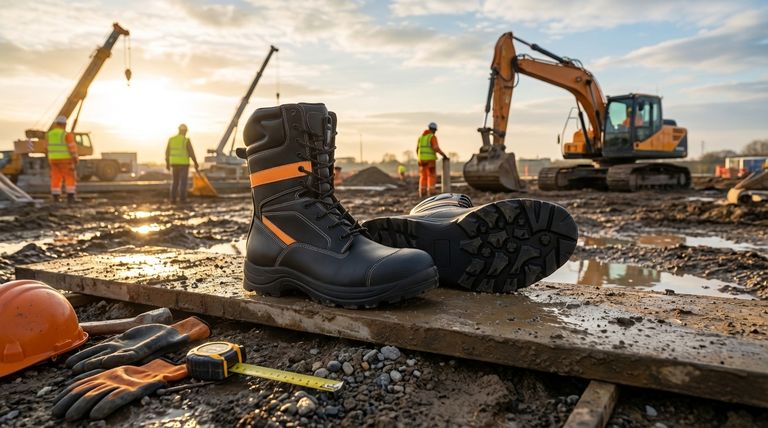
The Non-Negotiable Foundation: Safety First
Before considering any other feature, you must ensure a boot meets the safety requirements of your workplace. Failure to do so exposes you to unnecessary risk.
Understand Your Job's Hazards
Your specific job dictates your safety needs. A roofer needs different protection than an electrician or a warehouse worker. Always start by identifying the mandatory safety standards for your role, such as those required by OSHA.
Decoding Toe Protection
Protective toe caps are the most common safety feature, designed to shield you from compression and falling objects.
- Steel Toes offer the maximum protection and are the traditional standard.
- Composite Toes are made of non-metal materials like carbon fiber or plastic. They are lighter and don't conduct heat or cold, making them ideal for extreme weather.
- Alloy Toes are lighter than steel but still provide excellent protection, often allowing for a more comfortable, less bulky toe box.
Beyond the Toe Cap
Other critical safety features protect different parts of your foot and body.
Look for puncture-resistant soles if you work around nails or sharp debris. Metatarsal guards offer extra protection for the top of your foot, and Electrical Hazard (EH) ratings are essential for anyone working near live circuits.
Securing Your Footing
Traction is a fundamental safety feature that prevents slips and falls. The outsole design is critical here.
A defined heel outsole is best for climbing ladders or navigating uneven, muddy terrain. A wedge outsole provides maximum surface contact, making it ideal for flat, wet surfaces like concrete or steel platforms.
The Key to Productivity: All-Day Comfort
A safe boot is useless if it's too uncomfortable to wear. Comfort reduces fatigue, prevents chronic pain, and directly impacts your focus and performance on the job.
The Importance of a Proper Fit
No amount of technology can make up for a poor fit. Your boot should be snug but not tight, with enough room to wiggle your toes. Always try on boots at the end of the day when your feet are slightly swollen.
Support from the Ground Up
Good work boots feature cushioned insoles and ergonomic designs to provide arch support. For many, adding a high-quality custom or aftermarket insole can dramatically improve comfort and properly align your feet, reducing strain on your back and joints.
Managing Weight, Flexibility, and Moisture
A heavy boot can feel like a ball and chain by the end of the day. Modern lightweight materials can reduce fatigue without sacrificing protection. Also, consider the environment. Waterproof boots are essential for wet conditions, while breathable, moisture-wicking liners are key for hot weather to keep your feet dry and healthy.
Understanding the Trade-offs
Choosing the perfect work boot always involves balancing competing features. Understanding these compromises is key to making an informed decision.
Material Matters: Leather vs. Synthetics
Full-grain leather offers exceptional durability and can be waterproofed, but often requires a break-in period. Synthetic materials are typically lighter, more flexible, and breathable right out of the box but may not offer the same long-term resilience as high-quality leather.
The Weight of Maximum Protection
The safest boots are often the heaviest. Features like steel toes, metatarsal guards, and thick, puncture-proof soles add significant weight. You must decide if the hazards of your job justify the extra fatigue that can come with a heavier boot.
Waterproofing vs. Breathability
A truly waterproof boot uses a membrane that blocks water from entering. However, this same membrane can limit the boot's ability to vent moisture (sweat) from the inside. For hot and dry environments, a more breathable, non-waterproof boot is often the more comfortable choice.
How to Choose the Right Boot for Your Work
Filter your options based on your primary daily tasks to find the ideal balance of features.
- If your primary focus is hazardous construction or industrial sites: Prioritize certified safety features like steel toes and puncture-resistant soles first.
- If your primary focus is long hours on hard, flat surfaces: Prioritize superior cushioning, arch support, and a lightweight design to minimize fatigue.
- If your primary focus is working outdoors in varied weather and terrain: Prioritize true waterproofing, excellent traction from a heeled outsole, and durable materials that can withstand the elements.
Investing in the right boot is a direct investment in your safety, comfort, and ability to perform at your best every day.
Summary Table:
| Priority | Key Feature | Why It Matters |
|---|---|---|
| #1: Safety | Protective Toe, Puncture-Resistant Sole, EH Rating | Protects against workplace hazards like falling objects and electrical shocks. |
| #2: Comfort | Proper Fit, Arch Support, Lightweight Design | Reduces fatigue and prevents chronic pain during long shifts. |
| #3: Durability | High-Quality Leather, Robust Construction | Ensures a long-lasting return on your investment. |
Ready to equip your team with the perfect work boots?
As a large-scale manufacturer, 3515 produces a comprehensive range of durable, safe, and comfortable footwear for distributors, brand owners, and bulk clients. Our production capabilities encompass all types of industrial, construction, and outdoor shoes and boots, tailored to your specific hazards and comfort needs.
Contact our experts today for a quote and discover how we can be your reliable manufacturing partner.
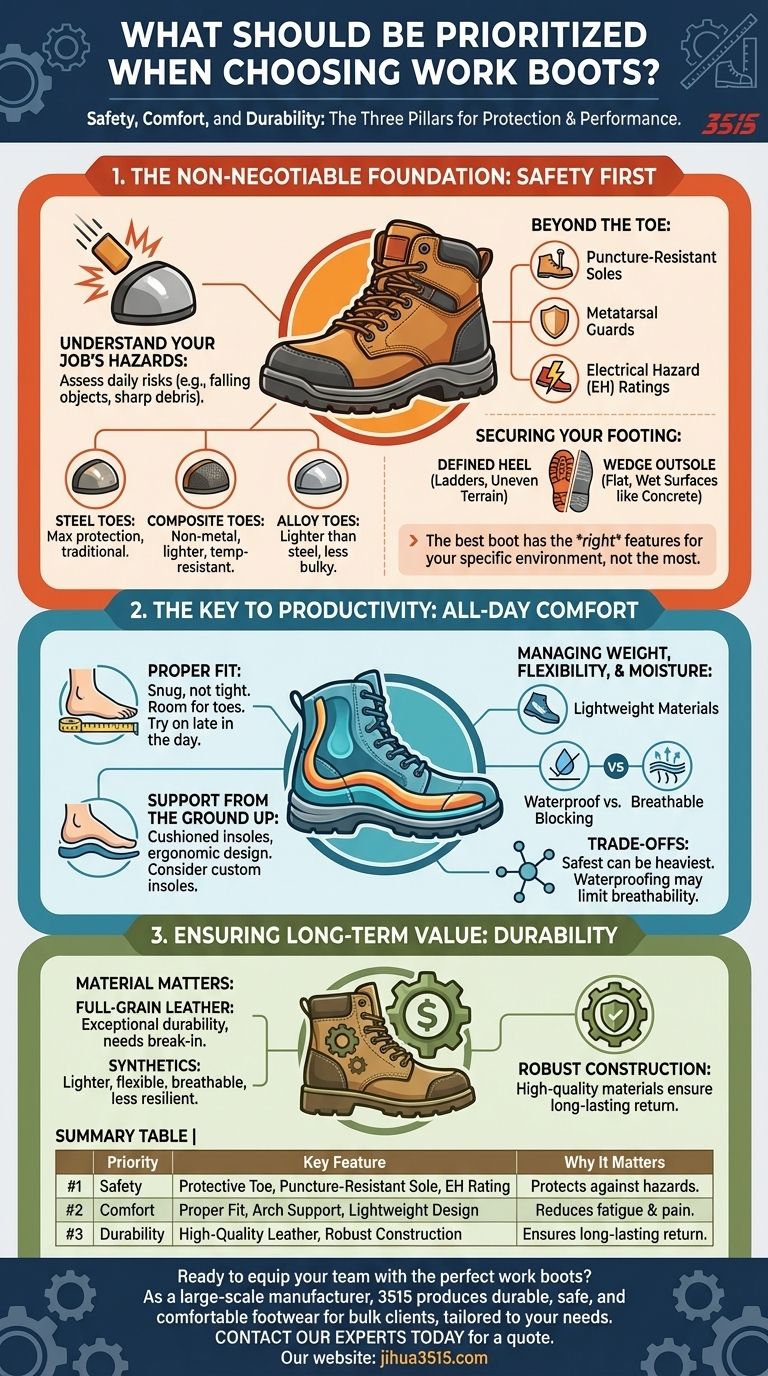
Visual Guide
Related Products
- Durable Leather Work Boots for Wholesale & Custom Manufacturing
- Durable Leather Work Boots for Wholesale & Custom OEM Manufacturing
- Durable Leather Work Boots Wholesale Manufacturer & Custom Factory
- Durable Leather Moc Toe Work Boots for Wholesale & Custom Manufacturing
- Wholesale Leather Work Boots with Customizable Wedge Sole for Brands
People Also Ask
- What is the difference between full-grain and top-grain leather? Premium Material Guide for Boot Manufacturers
- What are the common workplace hazards that can be mitigated with the right work boots? Protect Your Workforce
- What are the common foot issues workers face due to uncomfortable work boots? Prevent Pain & Deformities
- What are the advantages of leather versus synthetic work boots? A Guide to Choosing the Right Material
- What are the key components of modern work boots? Engineered for Ultimate Durability and Comfort