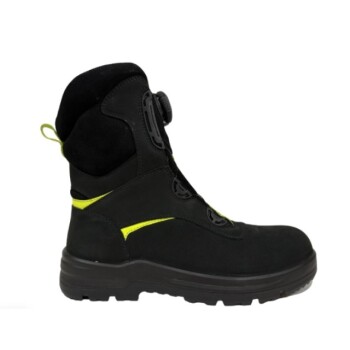
To select the right size for Crispi boots, you should know they generally run true to US width and are notably wider than many other European brands like Lowa or Zamberlan. This makes their standard width a good starting point for those with average to slightly wider feet. However, because factors like sock thickness and foot swell can impact fit, it is always best to try them on or consult detailed sizing guides before purchasing.
Choosing the correct boot size is not just about length; it's about understanding how the boot's design, your foot shape, and your intended activity interact to create a secure and comfortable fit for peak performance.
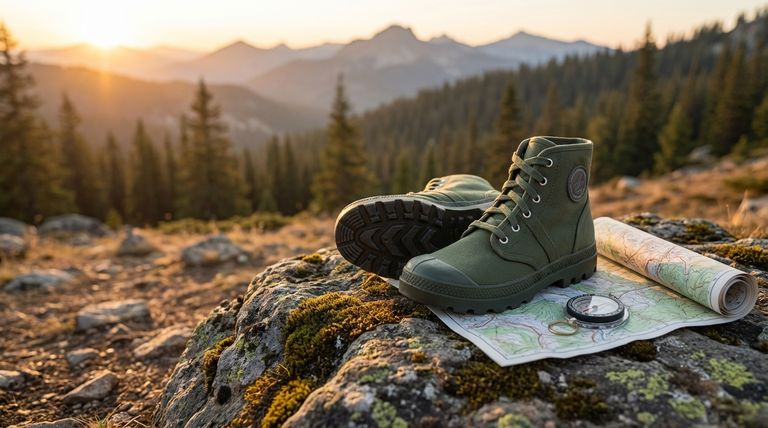
Beyond the Number: Key Factors in Boot Selection
Finding the right size is the final step in a broader selection process. The boot's purpose dictates the features you need, which in turn influences how it should fit.
The Crispi Fit Profile
Crispi boots are known for a fit that accommodates a broader range of foot shapes, particularly in the forefoot. This design often provides more room than traditionally narrow European hiking boots.
However, "true to size" is a guideline, not a guarantee. Always consider the socks you will be wearing, as a thick wool sock can easily take up a half-size.
Terrain and Required Support
The ground you cover determines the necessary ankle support and boot stiffness. Backpack hunters carrying heavy loads require more ankle support than an archery hunter moving from a base camp.
Similarly, work on steep or rocky terrain demands a more rigid boot to prevent foot fatigue and injury, which will feel different from a flexible boot on flat ground.
Weather and Environmental Demands
The climate is a critical factor. Late-season hunts in snow demand tall, insulated boots to stay warm and dry.
Conversely, for warmer conditions or high-exertion activities, a lighter boot with a mix of leather and Cordura offers better breathability, preventing moisture buildup inside.
Understanding the Trade-offs
Every boot design involves compromises. Recognizing these trade-offs is key to selecting footwear that truly meets your needs.
Stiffness vs. All-Day Comfort
A rigid, supportive boot provides excellent stability on uneven ground and when carrying weight, but it can feel restrictive and less comfortable on flat, easy terrain.
A more flexible boot is comfortable out of the box but offers less protection and support under a heavy load or on challenging sidehills.
Insulation vs. Breathability
Insulated boots are essential for cold, static conditions, but they can cause your feet to overheat and sweat during periods of high activity.
Non-insulated, breathable boots are ideal for managing foot moisture in warmer weather but offer little protection when temperatures drop.
Weight vs. Durability and Protection
Lighter boots reduce fatigue and increase mobility, making them ideal for covering long distances quickly.
Heavier boots, often built with more leather and protective rands, offer superior durability and protection from rocks and abrasion but can feel cumbersome and slow you down.
Making the Right Choice for Your Goal
Use your primary activity as the filter to determine the right boot and final fit.
- If your primary focus is backpack hunting with heavy loads: Prioritize ankle support and a stiff sole, ensuring you have enough room for thicker socks without cramping your toes.
- If your primary focus is early-season archery or scouting: Opt for a lighter, more flexible boot that prioritizes breathability and mobility for covering ground quietly.
- If your primary focus is all-purpose farm or field work: Select for durability and specific protections, like waterproofing for wet conditions or reinforced toes around machinery.
- If your primary focus is late-season or cold-weather activity: Choose an insulated model and consider sizing up a half-size to accommodate thermal socks without restricting circulation.
Ultimately, the right boot becomes an extension of your foot, empowering you to perform safely and effectively in your chosen environment.
Summary Table:
| Selection Factor | Key Consideration |
|---|---|
| Crispi Fit Profile | Generally true to US width; wider forefoot than many European brands. |
| Terrain & Support | Stiff soles for heavy loads/uneven ground; flexibility for flat terrain. |
| Weather & Climate | Insulated for cold/static use; breathable for warmth/high activity. |
| Activity Type | Backpack hunting needs support; archery/scouting prioritizes mobility. |
Ready to find your perfect pair of boots?
As a large-scale manufacturer, 3515 produces a comprehensive range of durable and high-performance footwear for distributors, brand owners, and bulk clients. Our production capabilities encompass all types of shoes and boots, ensuring you get the right fit, features, and durability for your specific needs.
Contact our expert team today to discuss your footwear requirements and discover how we can empower your performance.
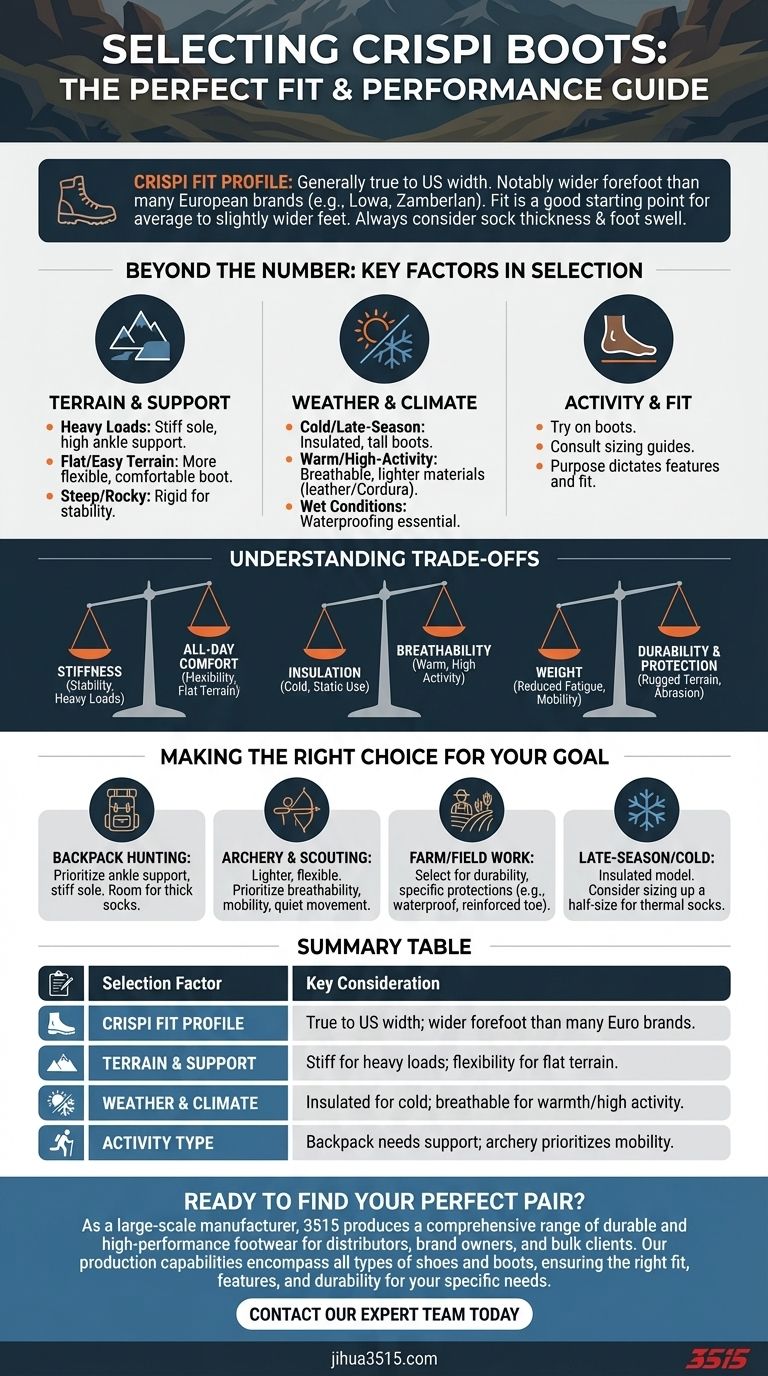
Visual Guide
Related Products
- Premium High-Cut Waterproof Safety Boots Manufacturing & Wholesale Solutions
- High-Traction Suede Tactical Boots Wholesale & Custom Manufacturing
- Wholesale Durable Mid-Cut Tactical Boots for Custom & Private Label Brands
- Durable Leather Tactical Boots Wholesale & Custom Manufacturing for Brands
- Durable Leather Work Boots Wholesale Manufacturer & Custom Factory
People Also Ask
- Which industries commonly use safety boots and why? Protect Your Workforce from Top Hazards
- What are the common hazards present in work environments that safety boots protect against? Find Your Perfect Match
- What future trends are emerging in safety boot technology? Discover Lighter, Smarter, and More Sustainable Footwear
- What are the slip resistance requirements for safety boots? Professional Grip Standards for Poultry Facility Cleaning
- Why is a high-precision 3D motion capture system necessary for measuring joint range of motion? Optimize Safety & Mobility