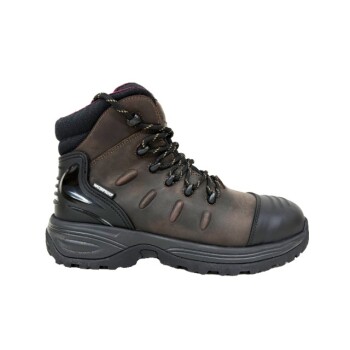
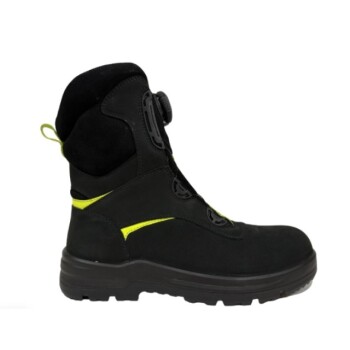
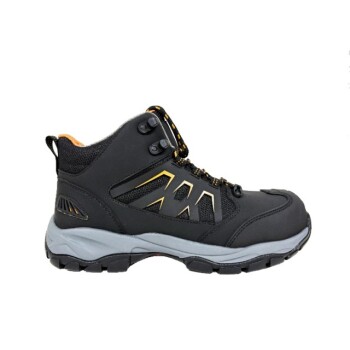
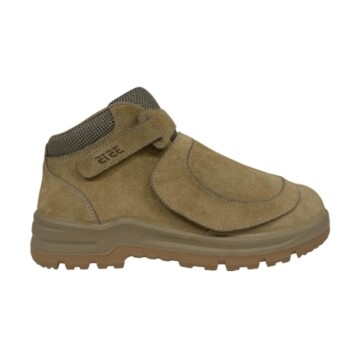
For personnel cleaning concrete surrounds at poultry facilities, the primary technical requirement for safety boots is the inclusion of industrial-grade anti-slip outsoles. These boots must explicitly provide high levels of grip and friction to counteract the hazardous conditions created when smooth concrete surfaces are wet during high-frequency cleaning tasks.
While concrete surrounds are vital for minimizing pathogen growth, they become distinct slip hazards when wet. Effective footwear must prioritize high-friction capabilities to ensure operational precision and worker safety in these specific environments.
The Operational Context: Why Grip Matters
To select the correct safety gear, it is critical to understand the environment that dictates these requirements.
Hygiene vs. Hazard
Poultry facilities utilize concrete surrounds primarily to facilitate cleaning and minimize pathogen growth.
However, the very features that make these surfaces easy to clean—smoothness and impermeability—turn them into significant hazards when introduced to water.
The Impact of Cleaning Routines
Cleaning in these facilities is a high-frequency task.
This means workers are constantly exposed to wet, slippery conditions, making the slip-resistance of their footwear a continuous, critical safety factor rather than an occasional concern.
Technical Specifications for Footwear
Standard safety boots are often insufficient for the specific demands of wet concrete.
Industrial-Grade Outsoles
The boots must be equipped with industrial-grade anti-slip outsoles.
General-purpose treads often lack the material composition or tread pattern required to channel water away effectively on hard, flat surfaces.
High-Friction Requirements
The core mechanism for safety on wet concrete is friction.
Boots must deliver a high level of grip to prevent the hydroplaning effect that occurs on wet concrete, ensuring workers maintain stability and operational precision.
Common Pitfalls to Avoid
When selecting safety footwear for poultry facilities, a lack of specificity can lead to accidents.
Underestimating the Surface
Do not assume that standard construction boots offer adequate slip resistance for wet concrete.
Many boots designed for outdoor terrain (mud or gravel) do not provide the necessary surface area contact or friction coefficient required for smooth, wet industrial floors.
Ignoring the "Wet" Variable
A boot that performs well on dry concrete may fail completely when the surface is wet.
The requirement specifically targets the hazardous condition created during cleaning; boots must be selected based on their wet-performance metrics.
Making the Right Choice for Your Goal
To balance the needs of hygiene and safety, apply the following selection criteria:
- If your primary focus is Worker Safety: Prioritize boots with industrial-grade anti-slip outsoles specifically rated for high grip on wet, hard surfaces.
- If your primary focus is Operational Precision: Ensure the footwear provides enough friction to allow workers to move confidently and efficiently without altering their gait due to fear of slipping.
Selecting the right high-friction footwear transforms a necessary hygiene process from a safety liability into a controlled, efficient operation.
Summary Table:
| Feature | Requirement for Poultry Cleaning | Benefit |
|---|---|---|
| Outsole Grade | Industrial-Grade Anti-Slip | Maximizes surface contact on smooth concrete |
| Grip Level | High-Friction / Wet-Rated | Prevents hydroplaning during high-frequency cleaning |
| Tread Design | Water-Channeling Channels | Effectively disperses liquids to maintain stability |
| Application | Wet, Smooth Concrete Surrounds | Ensures operational precision and pathogen control |
Secure Your Workforce with High-Performance Safety Footwear
As a large-scale manufacturer serving distributors and brand owners, 3515 offers comprehensive production capabilities for all footwear types, anchored by our flagship Safety Shoes series. Whether you require specialized industrial-grade anti-slip boots for poultry facilities or a diverse portfolio including tactical boots, outdoor shoes, and formal footwear, we provide the bulk manufacturing excellence you need.
Contact 3515 today to discuss your bulk requirements and custom safety specifications.
References
- Andrea Laconi, Alessandra Piccirillo. Stakeholders’ Perceptions of Biosecurity Implementation in Italian Poultry Farms. DOI: 10.3390/ani13203246
This article is also based on technical information from 3515 Knowledge Base .
Related Products
- Premium Grain Leather Safety Boots for Bulk Supply
- Puncture-Resistant Velcro Safety Boots for Wholesale & Custom Manufacturing
- Heavy-Duty Waterproof Nubuck Safety Boots Safety Shoes for Bulk Supply
- Premium Oil Wax Leather Safety Boots for Bulk Purchase
- Wholesale Durable Safety Boots | Custom Steel Toe & Puncture-Resistant Manufacturing
People Also Ask
- What are the common types of safety boots and their primary uses? A Guide to Industrial Footwear
- What makes durable safety boots? The Ultimate Guide to Long-Lasting Work Footwear
- Which organizations develop safety standards for work boots? Ensure Compliance & Worker Safety
- Why is ankle and arch support important in safety footwear? Prevent Injury & Fatigue
- Why is proper storage important for safety boots? Preserve Protection and Extend Lifespan