High-precision 3D motion capture is indispensable for evaluating protective gear because it transforms subjective observation into objective, scientific data. By tracking markers placed at specific joint locations, this technology provides real-time, digitized recordings of angular changes, specifically in the shoulder and waist. This level of accuracy is the only way to precisely quantify how heavy clothing and safety boots restrict the natural movement axes of the human body.
Core Takeaway Protective gear offers vital safety but inherently limits mobility due to its weight and rigidity. A 3D motion capture system replaces human estimation with precise metrics, allowing you to mathematically determine exactly how much a safety system restricts natural joint mechanics.
The Challenge of Assessing Protective Systems
The Conflict Between Protection and Mobility
High-performance safety footwear and clothing provide a critical physical barrier against industrial hazards. These systems are designed to withstand heavy object impacts, sharp punctures, and chemical corrosion.
However, the rigid materials required for this protection—such as those used in boots to improve traction and prevent slips—inevitably introduce weight and stiffness. This creates a direct trade-off: as physical protection increases, the wearer's freedom of movement typically decreases.
The Failure of Subjective Estimation
Traditional methods for assessing how gear fits or moves rely on visual estimation or user feedback. These methods are inherently subjective and prone to error, making it impossible to standardize safety protocols.
You cannot improve what you cannot measure. Without hard data, it is difficult to determine if a specific boot or vest is causing dangerous restriction or simply feels uncomfortable.
The Role of High-Precision Measurement
Real-Time Digitized Recording
3D motion capture systems solve the subjectivity problem by tracking physical markers placed on the body. This generates real-time, digitized recordings of the subject's movement.
Instead of guessing the angle of a bend, the system records the exact trajectory of the joint. This provides a granular view of performance that the human eye cannot perceive.
Quantifying Angular Changes
The primary value of this technology lies in its ability to measure angular changes at critical joints, specifically the shoulder and waist.
These areas are pivotal for overall body mechanics. By isolating these joints, the system calculates the deviation from normal range of motion caused by the gear.
Analyzing Natural Movement Axes
The ultimate goal of using this system is to assess the "natural movement axes." Protective gear often forces the body to move in unnatural ways to compensate for restriction.
High-precision tracking reveals exactly where the gear forces the wearer off their natural axis. This allows for a scientific quantification of restriction, rather than a vague assessment of stiffness.
Understanding the Trade-offs
Data vs. User Perception
While 3D motion capture provides absolute data regarding range of motion, it does not measure the user's internal experience.
A system might show only a 5% restriction in movement, yet the user may feel significant fatigue due to the weight of the gear. It is critical to remember that quantifying restriction is not the same as quantifying comfort or exertion.
Specificity of Measurement
The system described focuses heavily on angular changes in the shoulder and waist.
While these are critical, they do not account for every biomechanical nuance, such as gait changes caused by the sole stiffness of a safety boot. The data is highly precise for specific joints but must be viewed as part of a larger ergonomic picture.
Making the Right Choice for Your Goal
To effectively utilize 3D motion capture in your safety program, consider your primary objective:
- If your primary focus is Equipment Selection: Use the data to compare the degree of restriction between two different brands of safety boots that offer equal impact protection.
- If your primary focus is Ergonomic Design: Use the angular change recordings to identify exactly which part of a protective vest impedes shoulder rotation and modify the cut accordingly.
- If your primary focus is Safety Compliance: rely on the digitized recordings to provide auditable proof that your gear allows for the necessary range of motion required for specific tasks.
Objective measurement is the bridge that connects robust physical protection with efficient human performance.
Summary Table:
| Feature | Traditional Estimation | 3D Motion Capture System |
|---|---|---|
| Data Type | Subjective / Qualitative | Objective / Quantitative |
| Accuracy | High margin of error | Precision angular tracking |
| Recording | Manual observation | Real-time digital recording |
| Joint Focus | General movement | Specific axes (Shoulder, Waist, etc.) |
| Primary Value | User feedback | Scientific quantification of restriction |
Enhance Your Product Performance with 3515 Footwear Expertise
As a large-scale manufacturer serving distributors and brand owners, 3515 offers comprehensive production capabilities for all footwear types, anchored by our flagship Safety Shoes series. Our extensive portfolio covers work and tactical boots, outdoor shoes, training shoes, and sneakers, as well as Dress & Formal shoes to meet diverse bulk requirements.
We understand the critical balance between maximum protection and natural mobility. Partner with us to leverage our manufacturing excellence and ensure your footwear meets the highest ergonomic standards. Contact us today to discuss your bulk requirements and custom solutions!
References
- Suyoung Son, Yutaka Tochihara. Exploring the appropriate test methods to examine the effects of firefighter personal protective equipment on mobility. DOI: 10.1186/s40691-022-00295-8
This article is also based on technical information from 3515 Knowledge Base .
Related Products
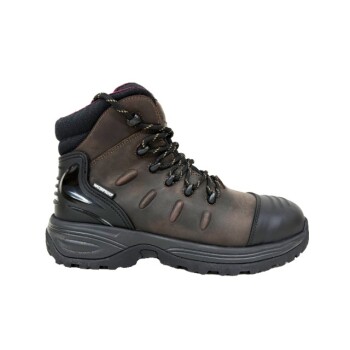
- Premium Grain Leather Safety Boots for Bulk Supply
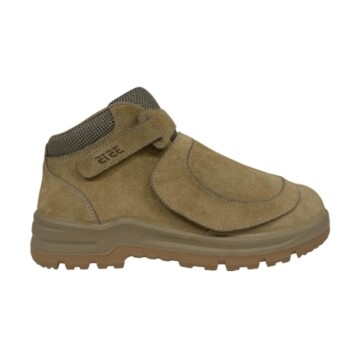
- Puncture-Resistant Velcro Safety Boots for Wholesale & Custom Manufacturing
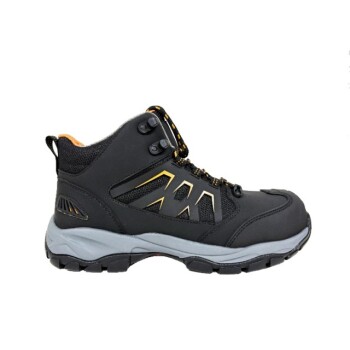
- Heavy-Duty Waterproof Nubuck Safety Boots Safety Shoes for Bulk Supply
- Premium Oil Wax Leather Safety Boots for Bulk Purchase
- Wholesale Durable Safety Boots | Custom Steel Toe & Puncture-Resistant Manufacturing
People Also Ask
- What materials are commonly used for outsoles in safety boots? A Guide to Durability, Grip, and Comfort
- What primary protective functions do professional safety boots provide in urban solid waste recovery and waste picking processes? Discover Dual-Layer Protection.
- What makes durable safety boots? The Ultimate Guide to Long-Lasting Work Footwear
- What are the risks of using ordinary rubber boots in forest clearing? Why professional safety boots are essential
- Why is proper storage important for safety boots? Preserve Protection and Extend Lifespan