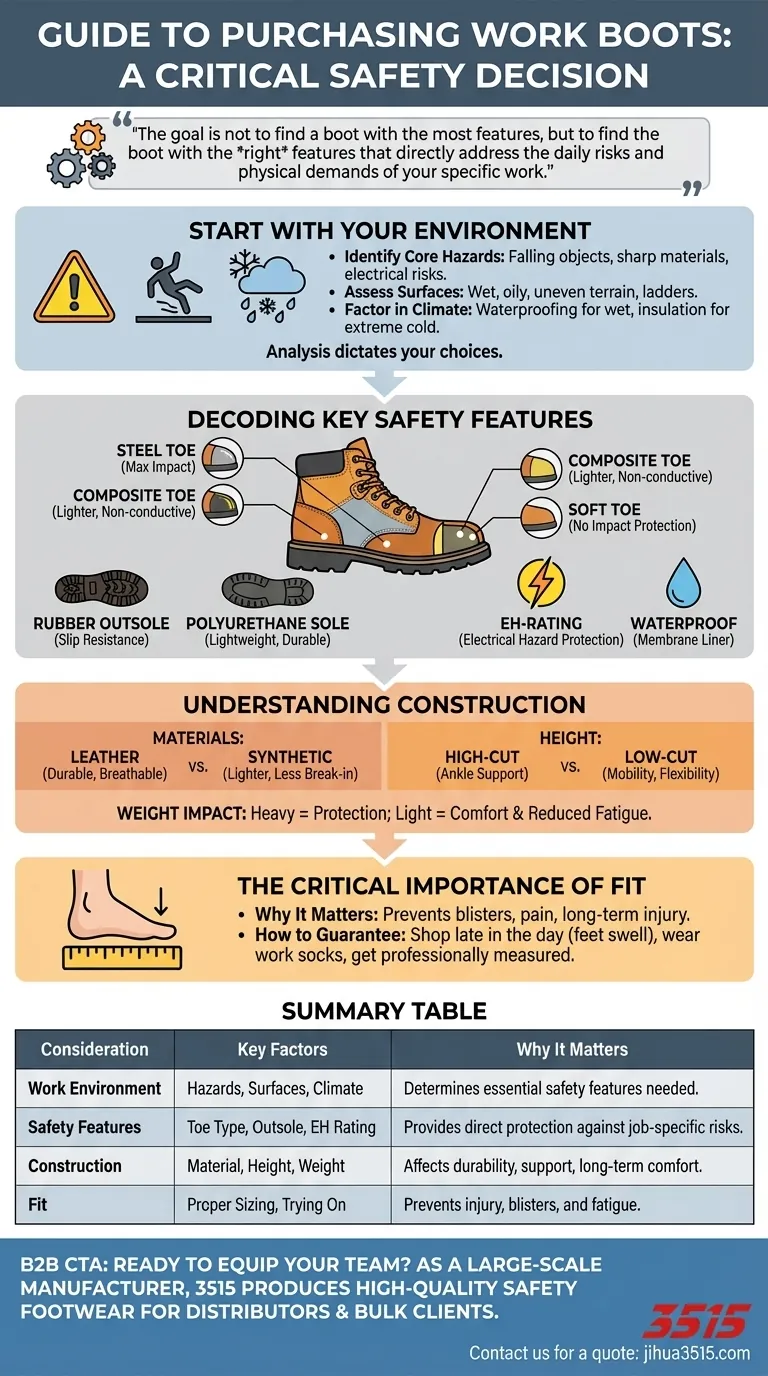
Choosing the right work boot is a critical safety decision, not a simple purchase. The most important factors to consider are the specific hazards of your job environment, the essential safety features required to mitigate those risks, the boot's core construction, and a precise, comfortable fit that prevents injury and fatigue.
The goal is not to find a boot with the most features, but to find the boot with the right features that directly address the daily risks and physical demands of your specific work.
Start with Your Environment, Not the Boot
Before you look at a single boot, you must first analyze your work environment. This assessment dictates every other choice you will make.
Identify Core Workplace Hazards
The primary function of a work boot is protection. Identify the most probable dangers you face, such as heavy falling objects, sharp materials on the ground, or exposure to live electrical circuits. This analysis determines your need for features like safety toes or EH-ratings.
Assess Surface and Ground Conditions
Consider the surfaces you walk on all day. Are they often wet, oily, or slippery? Are you navigating uneven terrain or climbing ladders? The answers will guide your choice of outsole material and tread pattern for optimal slip resistance and stability.
Factor in Climate and Temperature
Working in outdoor or temperature-variable environments demands specific features. Exposure to rain, snow, or puddles makes waterproofing essential, while extreme cold necessitates proper insulation to ensure safety and comfort.
Decoding Key Safety Features
Once you understand your environment, you can translate those needs into specific boot features. These are the non-negotiable technical specifications that keep you safe.
The Three Types of Protective Toes
A steel toe offers maximum impact protection and is a long-standing industry standard. A composite toe, made from materials like carbon fiber or plastic, is lighter and doesn't conduct cold or electricity. A soft toe offers no impact protection and is only suitable for jobs with no risk of falling objects.
Outsole Materials and Tread
The outsole is your connection to the ground. Rubber is an excellent choice for slip resistance, especially on wet or oily surfaces. Polyurethane soles are significantly lighter and offer good durability, reducing fatigue over a long day.
Specialized Protections
For electricians or anyone working near live circuits, an Electrical Hazard (EH) rating is critical. These boots are built with non-conductive materials to prevent electric shock. For wet environments, look for waterproof boots, which use a membrane liner, not just water-resistant upper materials.
Understanding Boot Construction and Materials
The physical build of the boot affects its durability, comfort, and suitability for your job's physical demands.
Upper Materials: Leather vs. Synthetic
Natural materials like leather are highly durable, breathable, and mold to your foot over time. Synthetic materials like nylon are lighter and often require less break-in time but may offer less long-term durability.
Boot Height: Ankle Support vs. Mobility
High-cut boots (6-8 inches or more) provide crucial ankle support, which is vital for walking on uneven terrain or carrying heavy loads. Low-cut boots offer greater flexibility and mobility, which is ideal for jobs requiring agility and constant movement.
The Impact of Boot Weight
A boot's weight directly contributes to fatigue. While heavy-duty boots offer more protection, their weight can be taxing over a 10-hour day. Lighter boots, often with composite toes and polyurethane soles, can significantly increase comfort and reduce strain.
The Critical Importance of a Proper Fit
An improper fit is more than just uncomfortable; it is a direct cause of blisters, foot pain, and even long-term injury. This is the one area where you cannot compromise.
Why a "Good Enough" Fit Fails
A boot that is too tight can restrict circulation and cause chafing, while a boot that is too loose allows your foot to slide, leading to instability and blisters. The correct fit supports your foot and aligns with your body's natural mechanics.
How to Guarantee the Right Fit
Always shop for boots in the afternoon or evening, as your feet naturally swell throughout the day. Wear the same type of thick work socks you use on the job to get an accurate measurement. Because foot sizes can change over time and may differ from each other, it's wise to have your feet professionally measured.
Making the Right Choice for Your Job
Your final decision should be a logical conclusion based on your analysis of your work, required protections, and fit.
- If you work in construction or heavy industry: Prioritize maximum impact protection with a steel or composite toe and the stability of a high-cut boot for ankle support.
- If you are an electrician: Your non-negotiable feature is a verified ASTM Electrical Hazard (EH) rating to protect against shock.
- If you work outdoors in variable conditions: Focus on a boot with a reliable waterproof membrane and the appropriate level of insulation for your climate.
- If your job requires constant movement and agility: Consider a lighter, more flexible boot with a composite toe and polyurethane sole, ensuring it still meets all job-site safety standards.
Investing the time to choose the right boot is a direct investment in your daily comfort and your long-term health and safety.
Summary Table:
| Consideration | Key Factors | Why It Matters |
|---|---|---|
| Work Environment | Hazards, Surfaces, Climate | Determines the essential safety features needed. |
| Safety Features | Toe Type, Outsole, EH Rating | Provides direct protection against job-specific risks. |
| Construction | Material, Height, Weight | Affects durability, support, and long-term comfort. |
| Fit | Proper Sizing, Trying On Late in the Day | Prevents injury, blisters, and fatigue. |
Ready to Equip Your Team with the Right Work Boots?
As a large-scale manufacturer, 3515 produces a comprehensive range of high-quality safety footwear for distributors, brand owners, and bulk clients. Our production capabilities encompass all types of occupational shoes and boots, designed to meet the specific hazards and demands of any job.
We ensure your workforce is protected with durable, comfortable, and compliant footwear.
Contact us today to discuss your requirements and get a quote: Get in Touch
Visual Guide
Related Products
- Durable Leather Work Boots for Wholesale & Custom Manufacturing
- Durable Leather Work Boots for Wholesale & Custom OEM Manufacturing
- Durable Leather Work Boots Wholesale Manufacturer & Custom Factory
- Durable Leather Moc Toe Work Boots for Wholesale & Custom Manufacturing
- Wholesale Leather Work Boots with Customizable Wedge Sole for Brands
People Also Ask
- What is the difference between full-grain and top-grain leather? Premium Material Guide for Boot Manufacturers
- What are the common workplace hazards that can be mitigated with the right work boots? Protect Your Workforce
- What are the common foot issues workers face due to uncomfortable work boots? Prevent Pain & Deformities
- What are the advantages of leather versus synthetic work boots? A Guide to Choosing the Right Material
- What are the key components of modern work boots? Engineered for Ultimate Durability and Comfort