Okay, so I've got this task: write a guide for choosing men's winter boots. First, I need to understand what the user truly wants. Surface level, they want a checklist, but underneath, they're probably overwhelmed by choices and scared of making a bad purchase. They need help connecting the right boot to their specific life and environment. That's the core problem I need to solve.
2. Breaking Down the Information
Next, I'll dissect the information I have. I'll identify the critical features: insulation for warmth, waterproofing to keep things dry, and traction for grip. Height matters, as do the materials used – quality and suitability are key. Weight is a consideration, but less crucial. I can't forget about fit and comfort, proper sizing, and the idea that the right boot is the perfect fit to each user's lifestyle.
3. Structuring a Useful Guide
I'll start with a strong opening that highlights the core functional aspects. Then, I'll create a section that addresses the deeper need: that perfect match between the user's life and the boot. I'll use headings and subheadings to break down my points, explaining the “why” behind each feature, and I'll include sections on trading off features, like warmth for breathability, and style for performance. I’ll make sure to point out any common mistakes to avoid. Finally, I will provide actionable advice and simple scenarios.
4. Writing with Purpose and Clarity
I'll write with a professional tone, avoiding jargon. Short paragraphs and bolding will help emphasize important points. My goal is to synthesize the information, not just repeat it. I will weave this information into a logical narrative that flows smoothly from core principles to real-world application. I’m thinking this will be a valuable and easy-to-use guide. Choosing the right winter boot is about prioritizing three core functional pillars: warmth, waterproofing, and traction. The best choice depends less on a single brand or feature and more on how well the boot's construction aligns with the specific environment and activities you will face.
The most common mistake is over-investing in features you don't need or under-investing in the one you do. The truly "best" winter boot is the one that is perfectly matched to your personal lifestyle, whether that involves navigating icy city sidewalks or trekking through deep snow.
The Three Pillars of Winter Boot Performance
Every quality winter boot is built on a foundation of three critical technical features. Understanding these pillars is the first step to making an informed decision.
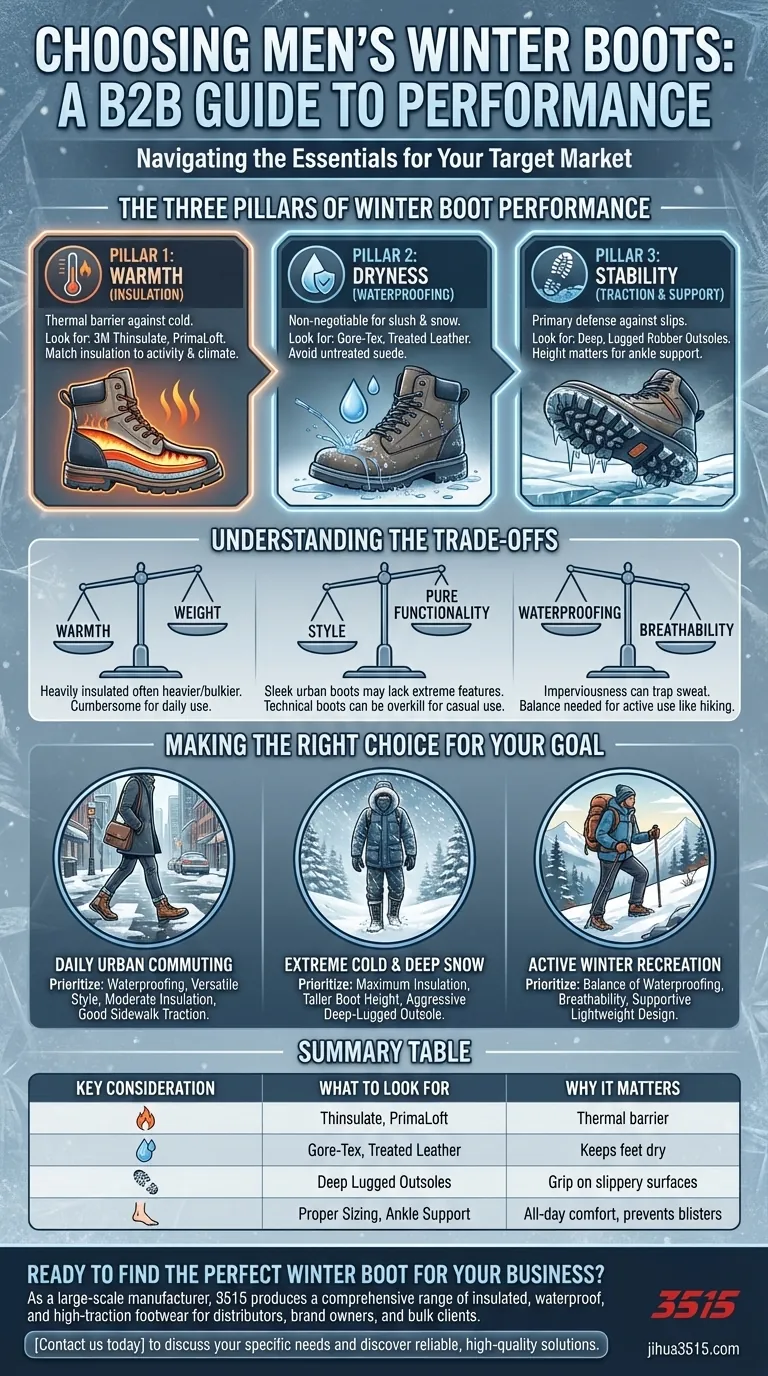
Pillar 1: Warmth (Insulation)
Insulation acts as the thermal barrier between your feet and the cold ground. It is arguably the most important factor for winter comfort.
Look for specific insulation technologies like 3M Thinsulate or PrimaLoft, which provide excellent warmth without excessive bulk. The amount of insulation needed varies with your activity level and climate.
Pillar 2: Dryness (Waterproofing)
Wet feet become cold feet, regardless of insulation. Effective waterproofing is non-negotiable for slush, snow, and winter rain.
Materials like Gore-Tex offer a waterproof yet breathable membrane. Treated leather or faux leather provides excellent water resistance for everyday use, but be wary of materials like suede, which require a protective treatment to prevent water damage.
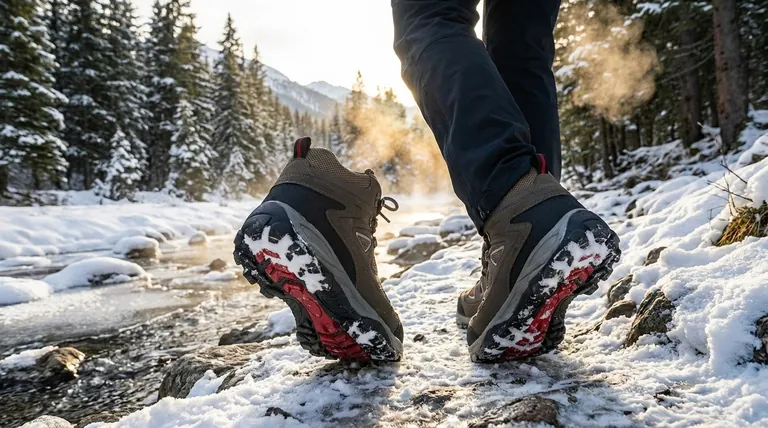
Pillar 3: Stability (Traction & Support)
Winter surfaces are unpredictable and often slippery. A boot's outsole is your primary defense against slips and falls.
Seek out deep, lugged treads made from high-traction rubber compounds. The boot's height—from ankle to mid-calf—also contributes to stability by providing ankle support and acting as a barrier against deep snow.
Understanding the Trade-offs
Choosing a boot involves balancing competing priorities. Excelling in one area often means a compromise in another.
Warmth vs. Weight
Heavily insulated boots designed for extreme cold are often heavier and bulkier. This can be cumbersome for daily commuting or if you are highly active.
Style vs. Pure Functionality
Sleek, stylish leather boots are excellent for urban environments but may lack the aggressive traction and heavy insulation needed for severe winter conditions. A technical snow boot, conversely, is functionally superior but may be overkill for a casual night out.
Waterproofing vs. Breathability
Truly impervious waterproofing can sometimes trap sweat, leading to dampness from the inside during high-exertion activities. For winter hiking, a boot that balances waterproofing with breathability is often the better choice.
Making the Right Choice for Your Goal
Select your boot by focusing on the single most important challenge you need it to solve.
- If your primary focus is daily urban commuting: Prioritize waterproofing and a versatile style with moderate insulation and good sidewalk traction.
- If your primary focus is facing extreme cold and deep snow: Prioritize maximum insulation, a taller boot height, and an aggressive, deep-lugged outsole.
- If your primary focus is active winter recreation (like hiking): Prioritize a balance of waterproofing, breathability, and a supportive, lightweight design.
By clearly defining your primary use case, you can confidently choose a boot that delivers the right performance for your needs.
Summary Table:
| Key Consideration | What to Look For | Why It Matters |
|---|---|---|
| Warmth (Insulation) | Thinsulate, PrimaLoft | Creates a thermal barrier against the cold ground. |
| Dryness (Waterproofing) | Gore-Tex, Treated Leather | Keeps feet dry from slush, snow, and rain. |
| Stability (Traction) | Deep, Lugged Rubber Outsoles | Provides grip on icy, slippery surfaces. |
| Fit & Comfort | Proper Sizing, Ankle Support | Ensures all-day comfort and prevents blisters. |
Ready to find the perfect winter boot for your business?
As a large-scale manufacturer, 3515 produces a comprehensive range of men's winter boots for distributors, brand owners, and bulk clients. Our production capabilities encompass all types of insulated, waterproof, and high-traction footwear, ensuring you get the right product for your target market.
Contact us today to discuss your specific needs and discover how we can support your business with reliable, high-quality footwear solutions.
Visual Guide
Related Products
- Premium Insulated Safety Boots and Shoes for Wholesale & Bulk Orders
- Wholesale Leather Ankle Boots with Lug Soles for Custom Brand Manufacturing
- Factory Direct Wholesale Rain Boots Durable Waterproof & Fully Customizable
- Durable Waterproof Rain Boots | Custom Manufacturer for Wholesale & Brands
- Wholesale Waterproof Tactical Boots Custom Suede & High-Traction Soles
People Also Ask
- What are the recommended insulation ratings for mild winter conditions? A Guide for Active & Stationary Workers
- How does insulation thickness correlate with temperature ranges? A Guide to Choosing the Right Warmth
- What insulation level is needed for severe cold and stationary work? 1200g or Higher is Essential
- What safety advantages do insulated boots offer beyond warmth? Dielectric Protection & Superior Grip
- How does fleece lining contribute to the warmth of insulated boots? Trapping Air for Superior Cold Protection