
In short, ventilation in motorcycle boots is designed to manage heat and moisture. Its primary role is to allow air to circulate around your feet, which helps evaporate sweat, reduce internal temperatures, and prevent the discomfort that comes from riding with damp feet, especially in warm weather or during high-exertion riding.
The central decision you face is not simply if you need ventilation, but how you prioritize it against water resistance. A boot that excels at letting air in will almost certainly let water in, forcing a choice based on your most common riding conditions.
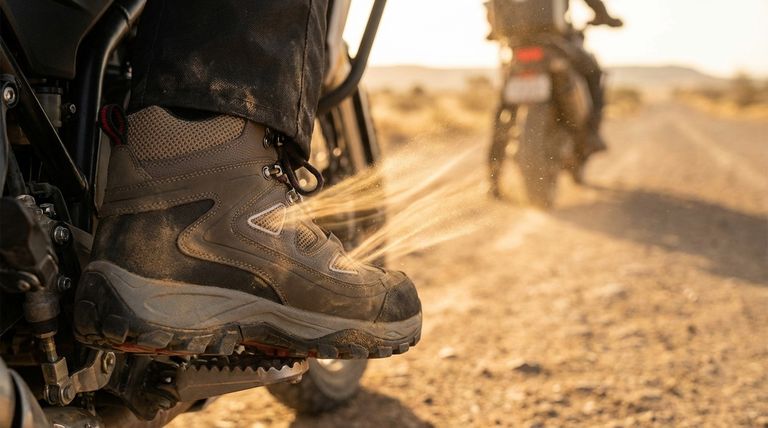
The Core Function: Why Airflow Matters
Your feet are subjected to significant heat while riding, both from the engine and from the physical exertion of controlling the motorcycle. Proper ventilation is the primary mechanism for managing the resulting heat and sweat.
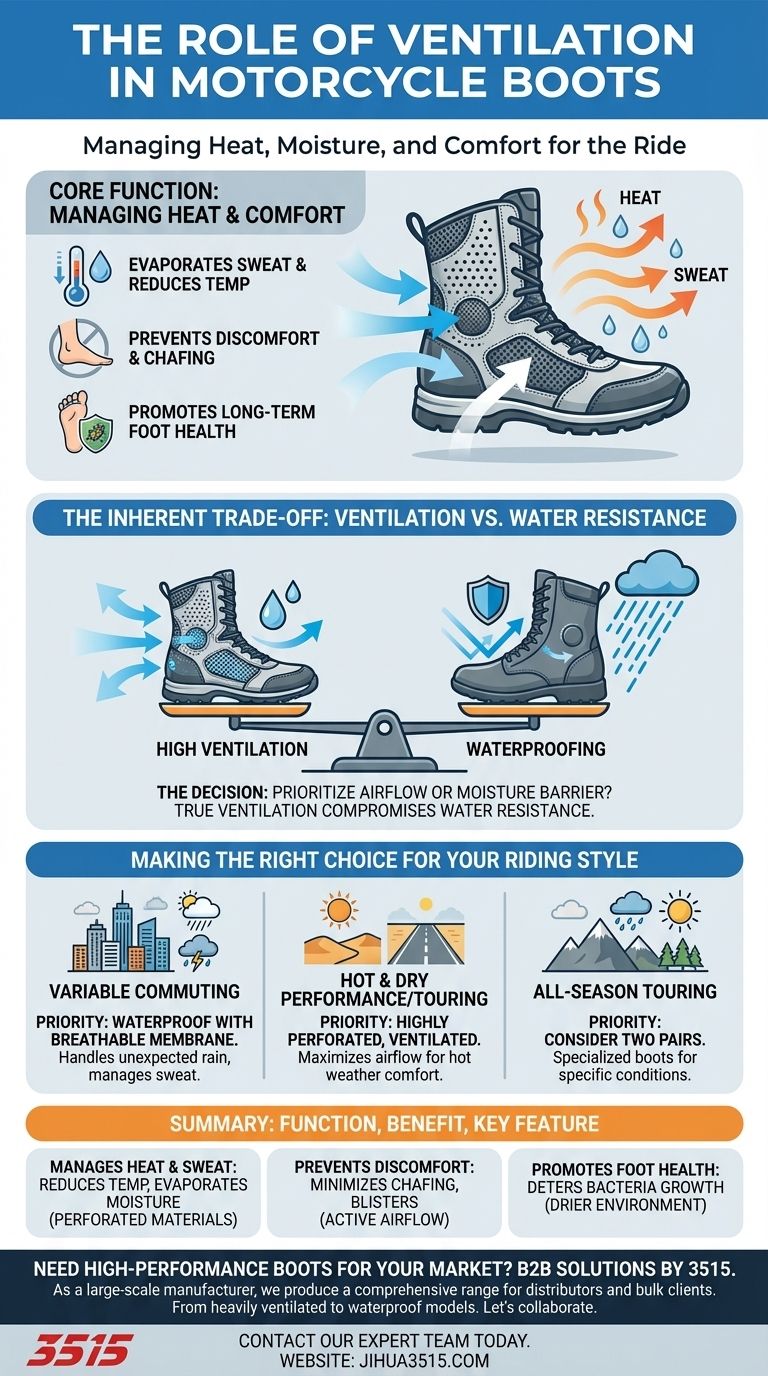
Managing Heat and Sweat
A motorcycle engine produces substantial heat that radiates directly onto your feet and lower legs. This, combined with the enclosed environment of a protective boot, can quickly lead to overheating and excessive sweating.
Ventilated boots use perforated materials or mesh panels to create active airflow. As you ride, air is forced through these openings, carrying away hot, moist air and replacing it with cooler, drier air from the outside.
Preventing Discomfort and Distraction
Damp feet are more than just a minor annoyance; they can be a significant distraction. Sweaty socks can lead to chafing, blisters, and a general feeling of discomfort that can pull your focus away from the road.
By keeping your feet drier, ventilated boots enhance comfort on long rides and help you maintain the concentration needed for safe riding.
Promoting Long-Term Foot Health
Consistently riding with damp, sweaty feet can create an environment where bacteria and fungus thrive. Proper ventilation helps mitigate this risk by keeping the environment inside your boot drier and healthier over the long term.
The Inherent Trade-off: Ventilation vs. Water Resistance
Understanding the role of ventilation requires acknowledging its direct conflict with waterproofing. The features that make a boot breathable are often the same ones that compromise its ability to keep out rain.
How True Ventilation Works
High-flow ventilation is typically achieved through physical openings in the boot's outer shell. This includes extensive perforation in leather or synthetic panels and the use of breathable mesh fabrics.
These designs are incredibly effective at moving air but offer little to no resistance against liquid water. In a downpour, a highly ventilated boot will get wet almost immediately.
The Waterproofing Dilemma
Conversely, a truly waterproof boot is designed to be a sealed barrier against external moisture. It uses a waterproof membrane—a special layer of material like Gore-Tex—sandwiched between the boot's outer shell and inner liner.
While many of these membranes are "breathable" (allowing sweat vapor to escape), they do not provide the same level of active airflow as a dedicated ventilated boot. They manage moisture, but they don't actively cool your feet with wind.
Making the Right Choice for Your Riding Style
Choosing the right boot means honestly assessing your typical environment and riding needs. There is no single boot that is perfect for every situation.
- If your primary focus is commuting in a variable climate: Prioritize a quality waterproof boot with a breathable membrane to handle unexpected rain while still managing sweat.
- If your primary focus is performance riding or touring in hot, dry weather: A highly perforated, ventilated boot will provide the most comfort by maximizing airflow.
- If your primary focus is all-season, all-weather touring: Consider owning two pairs of specialized boots—one waterproof for cold/wet days and one ventilated for hot/dry days.
Ultimately, selecting the right motorcycle boot is about choosing the right tool for your specific journey.
Summary Table:
| Function | Benefit | Key Feature |
|---|---|---|
| Manages Heat & Sweat | Reduces foot temperature, evaporates moisture | Perforated materials, mesh panels |
| Prevents Discomfort | Minimizes chafing, blisters, and distractions | Active airflow during riding |
| Promotes Foot Health | Deters bacteria and fungus growth | Drier internal environment |
| Trade-off: Ventilation vs. Waterproofing | Optimizes for specific conditions | Prioritizes airflow (ventilated) or moisture barrier (waterproof) |
Need high-performance motorcycle boots tailored to your riding conditions?
As a large-scale manufacturer, 3515 produces a comprehensive range of footwear for distributors, brand owners, and bulk clients. Our production capabilities encompass all types of motorcycle boots—from heavily ventilated designs for hot-weather performance to waterproof models for all-season touring. We ensure durability, comfort, and precise feature alignment with your market's needs.
Let’s collaborate on the perfect boot solution for your customers. Contact our expert team today to discuss your requirements!
Visual Guide
Related Products
- Wholesale Tactical Boots High-Traction & Reflective for Bulk & Brand Orders
- High Performance Fire-Retardant Waterproof Safety Boots
- Durable Goodyear Welt Leather Work Boots for Wholesale & Private Label
- Wholesale High-Traction Camo Boots - Custom Manufacturer for Brands
- Heavy-Duty Waterproof Nubuck Safety Boots Safety Shoes for Bulk Supply
People Also Ask
- How do tactical boots protect against injuries? Discover the Integrated Safety System
- What are the primary benefits of wearing tactical boots for everyday use? Get All-Day Comfort & Durability
- Importance of Professional Tactical Boots in Loess Gully Regions: Ensure Safety and Precision for Field Monitoring
- How do manufacturing processes for electronic textiles balance durability with wearing comfort? Innovation in Footwear
- How does creative short video content support functional footwear sales? Boost Trust and Traffic with Visual Proof



















