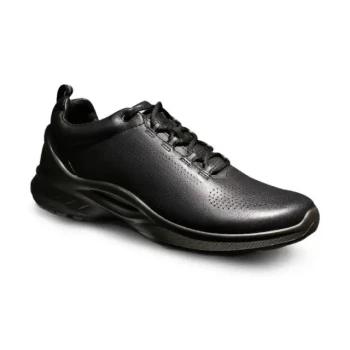
Footwear is a fundamental variable in the validity of lower limb power assessment. In the standing long jump, shoes function as the interface between the athlete's force production and the ground; they are critical for ensuring efficient energy feedback to maximize distance and providing necessary cushioning to protect joints during the high-impact landing.
Specialized footwear acts as a dual-purpose tool in power assessment: it facilitates maximum force transfer during the explosive takeoff and absorbs critical impact forces during landing to ensure athlete safety and test repeatability.
Optimizing Power Output During Takeoff
Maximizing Grip and Traction
The standing long jump relies on a sudden, explosive burst of force against the ground. Wear-resistant rubber outsoles are essential to prevent the foot from slipping externally on surfaces like synthetic tracks.
If the shoe slips even slightly during the push-off, energy is lost, and the resulting jump distance will not accurately reflect the athlete's true power.
Internal Stability and Energy Transfer
Power loss does not only occur between the shoe and the floor; it can occur inside the shoe. Reinforced upper structures are necessary to lock the foot in place.
Without this structure, the foot may slide internally during the explosive movement. This internal sliding dissipates force that should have been directed into the jump, leading to suboptimal test results.
Torsional Resistance
To convert leg strength into forward motion, the shoe must provide a stable platform. High-quality training shoes offer high torsional resistance, meaning they resist twisting during the load phase.
This stiffness ensures that the force generated by the lower limbs is directed efficiently into the ground for maximum propulsion, rather than being wasted on stabilizing a wobbly shoe.
Ensuring Safety During Landing
Critical Shock Absorption
The landing phase of a standing long jump generates significant impact forces. Specialized footwear must provide superior landing cushioning to dissipate this energy.
Effective cushioning protects the feet and knee joints from acute trauma. This is vital not only for immediate safety but for the long-term health of the athlete.
Joint Stabilization
Beyond simple impact absorption, the shoe provides mechanical support. Advanced support stability helps maintain proper alignment of the ankle and knee upon impact.
By preventing erratic movements or lateral rolling upon landing, proper footwear significantly reduces the risk of movement-related injuries to the lower limb joints.
Understanding the Trade-offs
The Balance Between Stiffness and Cushion
While cushioning is vital for landing, excessive softness in the sole can be detrimental to the takeoff. A shoe that is too "squishy" may absorb the energy meant for propulsion, dampening explosive power.
Conversely, a shoe that is purely rigid for maximum energy return may lack the necessary shock absorption for a safe landing. The ideal footwear balances energy feedback for the jump with impact protection for the landing.
Selecting the Right Gear for Assessment
To ensure accurate data and athlete safety, you must prioritize specific shoe features based on your testing environment and goals.
- If your primary focus is maximizing jump distance: Prioritize footwear with high torsional resistance and aggressive rubber outsoles to ensure zero energy loss during takeoff.
- If your primary focus is injury prevention and longevity: Select shoes with superior heel and forefoot cushioning to absorb the high-impact forces transferred to the knees and ankles.
- If your primary focus is data consistency: Ensure the footwear has a reinforced upper structure to prevent internal foot sliding, guaranteeing that every jump reflects the athlete's power, not their equipment's failure.
The right footwear transforms the standing long jump from a test of traction into a true assessment of explosive power.
Summary Table:
| Key Feature | Role in Power Assessment | Primary Benefit |
|---|---|---|
| Rubber Outsole | Traction & Grip | Prevents slipping to ensure 100% force transfer |
| Reinforced Upper | Internal Stability | Prevents foot sliding to maintain data accuracy |
| Torsional Resistance | Platform Stiffness | Directs leg strength into efficient forward propulsion |
| Shock Absorption | Impact Mitigation | Protects knee and ankle joints during high-impact landings |
| Energy Feedback | Force Return | Balances sole stiffness with cushioning for max distance |
Partner with 3515 for High-Performance Athletic & Tactical Footwear
As a premier large-scale manufacturer serving global distributors and brand owners, 3515 delivers professional-grade footwear engineered for peak performance and safety. Our flagship Safety Shoes series and extensive portfolio—including training shoes, sneakers, tactical boots, and outdoor footwear—provide the perfect balance of energy feedback and impact protection required for rigorous physical assessments.
Whether you are a distributor looking to expand your inventory with durable, high-torsion training shoes or a brand owner seeking specialized production capabilities for dress or formal footwear, we offer comprehensive solutions tailored to your bulk requirements.
Ready to elevate your product line? Contact us today to discuss your manufacturing needs and discover the 3515 advantage.
References
- Matteo Giuriato, Scott Talpey. Do maturation, anthropometrics and leg muscle qualities influence repeated change of direction performance in adolescent boys and girls?. DOI: 10.5114/biolsport.2023.123322
This article is also based on technical information from 3515 Knowledge Base .
Related Products
- Wholesale Durable Camouflage Canvas Shoes with High-Traction Cleated Rubber Sole
- Premium Suede Sport Safety Shoes for Wholesale & Bulk Orders
- Wholesale Durable & Breathable Training Shoes for Custom Brands
- Wholesale Breathable Training Shoes Custom Athletic Footwear Manufacturer
- Custom OEM Training Shoes Wholesale Manufacturer Durable & Breathable
People Also Ask
- Why is the selection of high-strength fabric materials necessary in the production of canvas shoes and training shoes?
- What are the properties of canvas as a shoe material? A Guide to Lightweight Comfort & Style
- Can canvas shoes be worn in rainy conditions? The Truth About Water Resistance
- What are some examples of vulcanized shoes? Discover the Flexibility and Board Feel of Classic Sneakers
- What are the characteristics of canvas as a shoe material? A Guide to Lightweight, Breathable Footwear