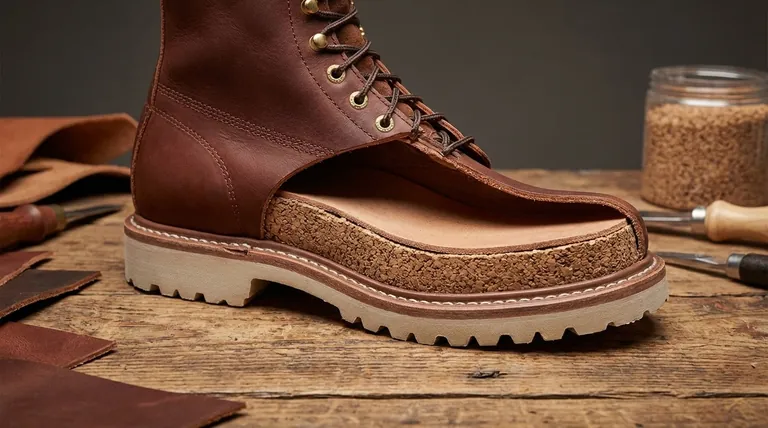
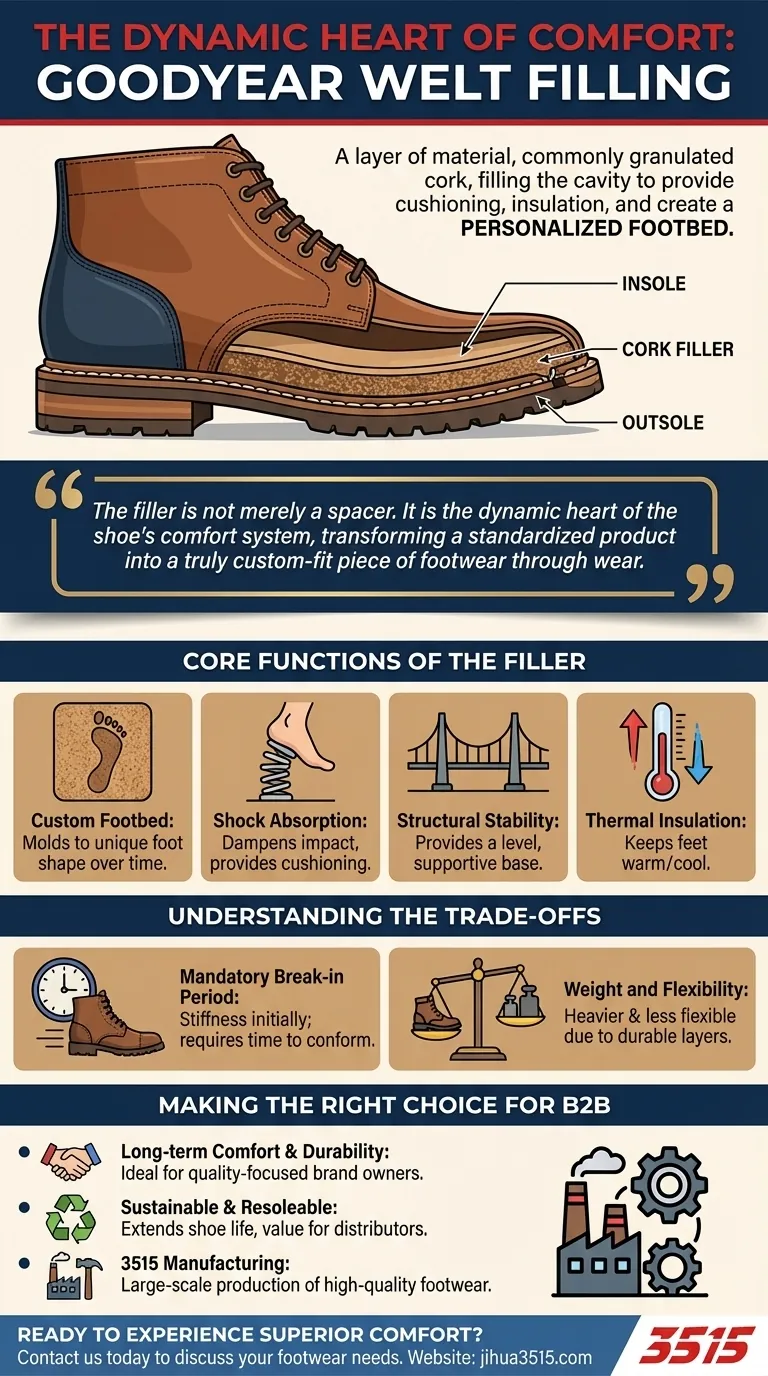
In Goodyear welt construction, the filling is a layer of material, most commonly granulated cork, that is packed into the cavity between the insole and the outsole. Its primary role is to provide cushioning, thermal insulation, and, most importantly, to create a personalized footbed by gradually molding to the unique shape of the wearer's foot over time.
The filler is not merely a spacer. It is the dynamic heart of the shoe's comfort system, transforming a standardized product into a truly custom-fit piece of footwear through wear.
The Anatomy of the Welt: Why a Filler is Necessary
To understand the filler's role, you must first understand the void it occupies. Goodyear welt construction creates this space as a natural consequence of its durable assembly method.
The Foundation: The Insole and Rib
The entire shoe is built upon the insole. A canvas or leather rib is either carved from or cemented onto the underside of this insole, creating a vertical "wall" to which other components will be stitched.
Creating the Cavity
The shoe's upper (the main leather body) is stretched over a last and attached to the insole rib. Simultaneously, a leather strip called the welt is stitched through the upper and into that same rib. This process leaves a distinct void in the center of the shoe, bounded by the insole rib.
The Core Functions of the Filler
This void must be filled to create a stable and comfortable shoe. This is where the filler, typically cork, performs its critical functions.
Creating a Custom Footbed
This is the most celebrated benefit. Cork is pliable and resilient. As you walk, your body weight and heat cause the cork filler to compress and mold precisely to the contours of your foot, creating a custom orthotic-like impression.
Providing Shock Absorption
The filler acts as a natural cushioning layer between the rigid insole and the hard outsole. This dampens impact during walking, providing a level of comfort that simpler shoe constructions cannot match.
Ensuring Structural Stability
Without a filler, the insole would be unsupported and could collapse into the void, creating an unstable and uncomfortable platform. The filler provides a level, supportive base that distributes pressure evenly across the foot.
Adding Natural Insulation
Materials like cork have excellent thermal properties. The filler layer serves as a barrier, helping to keep your feet warmer in the cold and cooler in the heat.
Understanding the Trade-offs
The benefits of this construction method come with specific considerations that are important for any owner to understand.
The Mandatory Break-in Period
The custom molding process is not instant. Goodyear welted shoes are famously stiff out of the box. This stiffness is the feeling of the leather and the cork filler resisting your foot before they begin to conform. This break-in period is the necessary trade-off for achieving a truly personalized fit.
Weight and Flexibility
The multiple layers—insole, filler, midsole, and outsole—add structural integrity but also result in a shoe that is generally heavier and less flexible than one with a cemented or Blake-stitched construction.
Making the Right Choice for Your Goal
Understanding the role of the filler helps you decide if this time-honored construction method aligns with your priorities.
- If your primary focus is personalized, long-term comfort: The molding capability of the cork filler is unmatched, making it the ideal choice once broken in.
- If your primary focus is durability and sustainability: The filler is a key component in a system designed to be resoled repeatedly, dramatically extending the shoe's life.
- If your primary focus is immediate, out-of-the-box comfort: Be prepared for a significant break-in period, as the filler requires time and wear to achieve its signature fit.
Ultimately, the filler is the component that ensures a Goodyear welted shoe gets better with age.
Summary Table:
| Function | Key Benefit |
|---|---|
| Custom Footbed | Molds to the unique shape of your foot over time. |
| Shock Absorption | Provides cushioning between the insole and outsole. |
| Structural Stability | Creates a stable, supportive base for the foot. |
| Thermal Insulation | Helps keep feet warm in winter and cool in summer. |
Ready to experience the superior, long-lasting comfort of welted footwear?
As a large-scale manufacturer, 3515 produces a comprehensive range of Goodyear welted and other construction footwear for distributors, brand owners, and bulk clients. Our production capabilities encompass all types of durable shoes and boots, ensuring you receive high-quality products built to last.
Contact us today to discuss your footwear needs and discover how we can bring value to your business.
Visual Guide
Related Products
- Durable Goodyear Welt Leather Work Boots for Wholesale & Private Label
- Wholesale Durable Leather Work Boots | 8-Inch Goodyear Welt Manufacturer
- Wholesale Durable & Breathable Training Shoes for Custom Brands
- Custom OEM Training Shoes Wholesale Manufacturer Durable & Breathable
- Lightweight Breathable Training Shoes for Wholesale & Custom OEM Manufacturing
People Also Ask
- What is the difference between full-grain and top-grain leather? Premium Material Guide for Boot Manufacturers
- What are the advantages of leather as an upper material for work boots? Unmatched Durability & Custom Comfort
- Why is it important to waterproof leather work boots? Protect Your Investment and Performance
- How should new leather work boots be broken in? A Guide to Comfort and Durability
- What are the advantages of leather uppers in work boots? Unmatched Durability & Protection