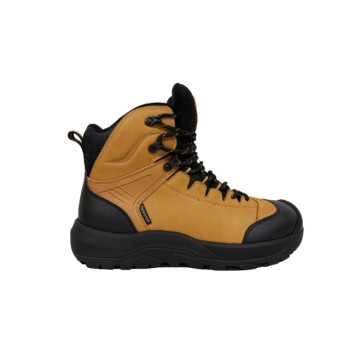
At their core, waterproofing treatments for winter boots serve one primary function: to create a physical barrier that prevents external moisture from snow, slush, and rain from penetrating the boot. This barrier is critical for keeping your feet dry, which is the first and most important step to keeping them warm and comfortable in cold conditions.
The role of waterproofing goes beyond simply blocking water; it is a fundamental component of thermal regulation. By keeping your feet dry, these treatments prevent the rapid heat loss that occurs when moisture is present, directly impacting your warmth, comfort, and even your safety in winter weather.

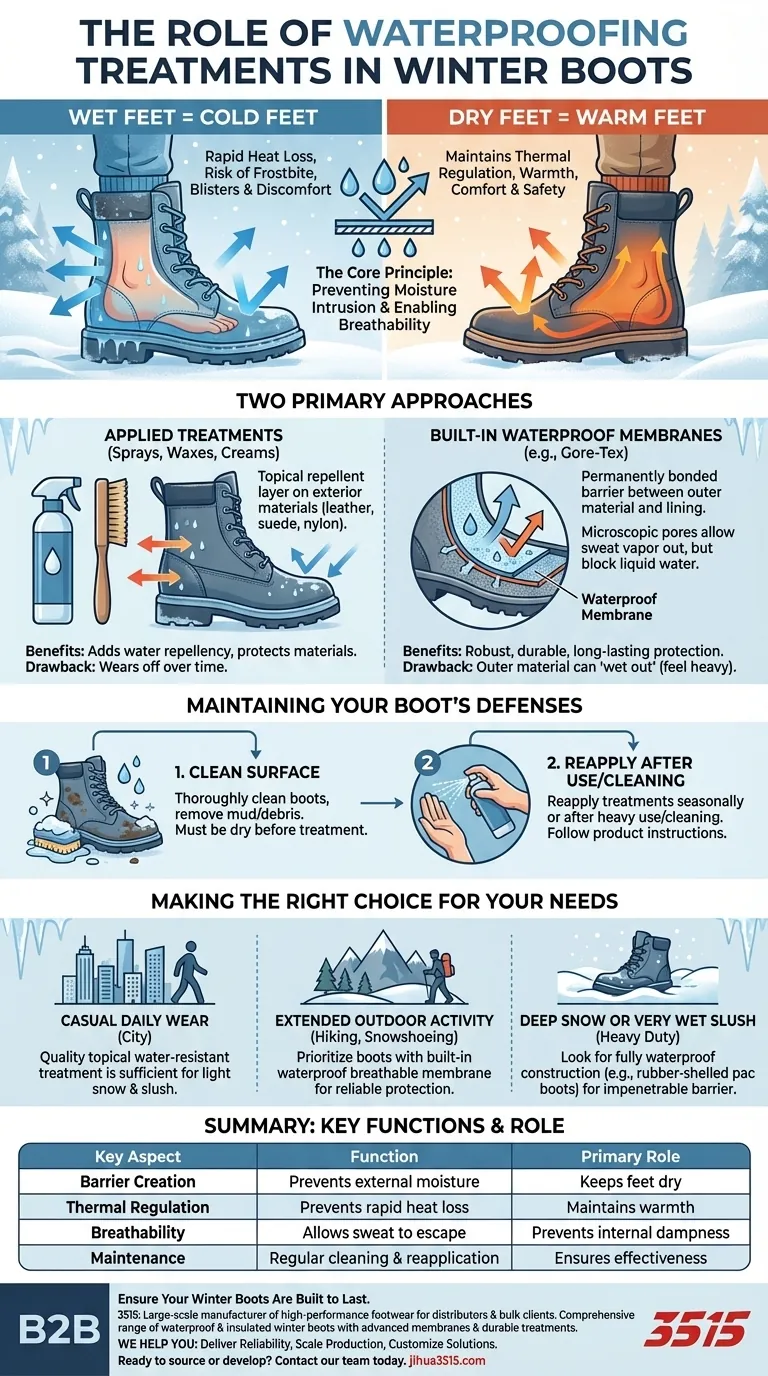
The Core Principle: Dry Feet are Warm Feet
Your body’s ability to stay warm in cold weather is severely compromised by moisture. Waterproofing is the first line of defense against this.
The Dangers of Wet Feet
When your feet get wet, water pulls heat away from your body at a much faster rate than air does. This can quickly lead to cold, numb feet, increasing the risk of frostbite in extreme conditions.
Furthermore, moisture inside your boot softens the skin, creating friction that can easily lead to painful blisters and other injuries.
The Importance of Breathability
True waterproofing isn't just about keeping water out; it's also about letting moisture escape. Your feet sweat, and if that sweat vapor has nowhere to go, your socks and feet will become damp from the inside.
High-quality winter boots often use built-in waterproof membranes like Gore-Tex or proprietary equivalents. These materials have microscopic pores large enough to let water vapor (sweat) out, but too small for liquid water droplets (rain and snow) to get in.
Two Approaches to Waterproofing
Waterproofing in winter boots is achieved through two primary methods: applied treatments and built-in membranes. They often work together.
Applied Treatments (Sprays, Waxes, and Creams)
These are topical products you apply to the boot's exterior. They add a water-repellent layer to materials like full-grain leather, suede, or nylon.
These treatments are your boot's renewable defense. They wear off over time with use and cleaning, requiring regular reapplication to remain effective.
Built-in Waterproof Membranes
This is a waterproof, breathable layer that is permanently bonded between the outer material and the inner lining of the boot.
This built-in system provides a much more robust and durable form of waterproofing. However, the outer material can still get saturated with water (known as "wetting out"), making the boot feel heavy and cold, which is why topical treatments are still beneficial.
Maintaining Your Boot's Defenses
Waterproofing is not a one-time feature; it requires maintenance to perform correctly. Neglecting it will compromise your boot's ability to keep you dry.
Start with a Clean Surface
Before applying any treatment, you must clean your boots thoroughly. Remove any caked-on mud or debris and use a simple soap and water solution if necessary.
Applying a waterproofing product over a dirty surface prevents it from bonding properly and will be far less effective. Always allow boots to dry naturally before treatment.
Reapply After Extended Use or Cleaning
A good rule of thumb is to reapply your waterproofing spray or wax at the beginning of the winter season and again after any deep cleaning or particularly heavy use. Follow the specific product's instructions for the best results.
Making the Right Choice for Your Needs
The level of waterproofing you need depends entirely on how you plan to use your boots.
- If your primary focus is casual daily wear in the city: A boot with a quality topical water-resistant treatment is often sufficient to handle light snow and slush.
- If your primary focus is extended outdoor activity like hiking or snowshoeing: Prioritize boots with a built-in waterproof and breathable membrane like Gore-Tex for reliable, long-lasting protection.
- If your primary focus is deep snow or very wet slush: Look for fully waterproof construction, often found in rubber-shelled "pac boots," which offer an impenetrable barrier against moisture intrusion.
Ultimately, investing in proper waterproofing ensures your winter boots can perform their most critical function: keeping you warm, dry, and comfortable.
Summary Table:
| Key Aspect | Function |
|---|---|
| Primary Role | Creates a barrier to prevent external moisture (snow, rain) from entering. |
| Thermal Regulation | Keeps feet dry to prevent rapid heat loss, maintaining warmth. |
| Breathability | Allows sweat vapor to escape, preventing internal dampness. |
| Maintenance | Requires regular cleaning and reapplication of treatments for effectiveness. |
Ensure Your Winter Boots Are Built to Last
As a large-scale manufacturer, 3515 produces a comprehensive range of high-performance footwear for distributors, brand owners, and bulk clients. Our production capabilities encompass all types of waterproof and insulated winter boots, integrating advanced membranes and durable treatments for superior protection.
We help you:
- Deliver Reliability: Provide your customers with boots that offer proven warmth and dryness in harsh conditions.
- Scale Production: Meet large-volume orders with consistent quality and competitive pricing.
- Customize Solutions: Develop branded footwear tailored to your specific market needs, from urban styles to heavy-duty outdoor boots.
Ready to source or develop your next line of high-quality winter boots? Contact our team today to discuss your project requirements and how we can add value to your business.
Visual Guide
Related Products
- Premium Insulated Safety Boots and Shoes for Wholesale & Bulk Orders
- Factory Direct Wholesale Rain Boots Durable Waterproof & Fully Customizable
- Durable Waterproof Rain Boots | Custom Manufacturer for Wholesale & Brands
- Wholesale Waterproof Tactical Boots Custom Suede & High-Traction Soles
- Premium Waterproof High-Cut Industrial Safety Boots for Wholesale and Bulk Orders
People Also Ask
- What are the recommended insulation ratings for mild winter conditions? A Guide for Active & Stationary Workers
- How does insulation thickness correlate with temperature ranges? A Guide to Choosing the Right Warmth
- What insulation level is needed for severe cold and stationary work? 1200g or Higher is Essential
- What safety advantages do insulated boots offer beyond warmth? Dielectric Protection & Superior Grip
- How does fleece lining contribute to the warmth of insulated boots? Trapping Air for Superior Cold Protection