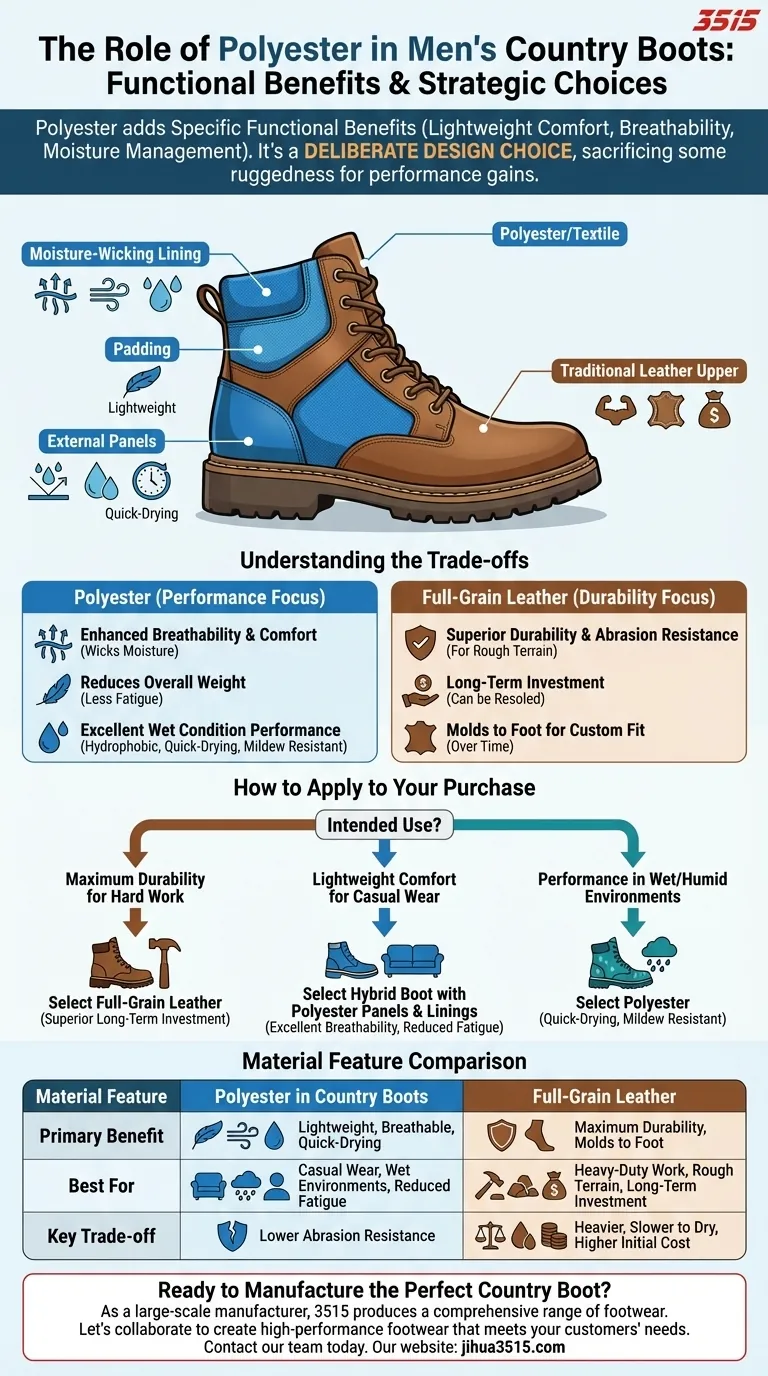
In men's country boots, textile materials like polyester are primarily used to add specific functional benefits such as lightweight comfort, breathability, and moisture management. While not a direct replacement for the durability of leather, polyester is strategically incorporated into linings, padding, and even external panels to create boots better suited for certain environments and activities.
The use of polyester in a country boot is not inherently a sign of low quality, but a deliberate design choice. It signals a trade-off: sacrificing some of the rugged, long-term durability of leather to gain improvements in weight, breathability, and performance in wet conditions, often at a more accessible price point.
The Strategic Role of Textiles in Boot Design
Modern boot construction often involves a blend of materials, where each component is chosen to serve a specific purpose. Textiles like polyester play a critical role in enhancing performance beyond what traditional materials can offer alone.
Enhancing Breathability and Comfort
The interior of a boot is a demanding environment. Polyester is often used in linings because it excels at moisture-wicking, pulling sweat away from the foot to keep you dry and comfortable. This is a significant advantage over some traditional materials that can trap moisture.
Reducing Overall Weight
Leather is exceptionally durable, but it is also heavy. Incorporating textile panels and linings can significantly reduce the overall weight of a boot. This makes them more comfortable for casual, all-day wear where ruggedness is less critical than avoiding fatigue.
Improving Performance in Wet Conditions
Unlike leather, which absorbs water and can take a long time to dry, polyester is inherently hydrophobic (resists water) and quick-drying. This property, combined with its resistance to mildew, makes it an excellent material for boots intended for use in damp or wet environments.
Understanding the Trade-offs: Polyester vs. Leather
Choosing a boot with textile components involves understanding a clear set of compromises. The right choice depends entirely on how you intend to use the boot.
The Durability Compromise
The primary drawback of textiles is durability. Materials like polyester and nylon are simply not as abrasion-resistant as high-quality, full-grain leather. For heavy-duty work or navigating rough terrain, a boot with a full leather upper will provide superior protection and a longer service life.
The Cost and Investment Factor
Polyester is significantly more affordable to produce and use than premium leather. This makes boots with textile components more cost-effective upfront. However, a high-quality leather boot is often seen as a long-term investment because it can be resoled and will last for years, potentially making it cheaper in the long run.
The "Break-In" and Fit Difference
A key feature of premium leather is its ability to mold to your foot over time, creating a custom, comfortable fit. Synthetic textiles do not share this characteristic; their fit and feel will remain relatively unchanged from the first wear to the last.
How to Apply This to Your Purchase
Ultimately, the materials should match your intended use. Evaluating the role of polyester in a boot's construction allows you to select the right tool for the job.
- If your primary focus is maximum durability for hard work: A boot made entirely of high-quality leather is the superior long-term investment.
- If your primary focus is lightweight comfort for casual wear: A hybrid boot incorporating polyester panels and linings offers excellent breathability and reduces fatigue.
- If your primary focus is performance in wet or humid environments: The quick-drying and mildew-resistant properties of polyester make it a highly practical choice.
Understanding these material choices empowers you to select a boot based on its intended performance, not just its price tag.
Summary Table:
| Material Feature | Polyester in Country Boots | Full-Grain Leather |
|---|---|---|
| Primary Benefit | Lightweight, breathable, quick-drying | Maximum durability, molds to foot |
| Best For | Casual wear, wet environments, reduced fatigue | Heavy-duty work, rough terrain, long-term investment |
| Key Trade-off | Lower abrasion resistance | Heavier, slower to dry, higher initial cost |
Ready to Manufacture the Perfect Country Boot?
As a large-scale manufacturer, 3515 produces a comprehensive range of footwear for distributors, brand owners, and bulk clients. Whether you need boots optimized for breathability with polyester components or rugged, full-leather workhorses, our production capabilities encompass all types of shoes and boots.
Let’s collaborate to create high-performance footwear that meets your customers' needs.
Contact our team today to discuss your manufacturing requirements!
Visual Guide
Related Products
- Wholesale Leather Ankle Boots with Lug Soles for Custom Brand Manufacturing
- Custom Breathable Perforated Leather Derby Shoes for Wholesale & Brands
- Wholesale Lightweight Tactical Boots Custom Manufacturer for Desert & Combat Use
- High-Traction Suede Tactical Boots Wholesale & Custom Manufacturing
- Durable Leather Tactical Boots Wholesale & Custom Manufacturing for Brands
People Also Ask
- What is the difference between full-grain and top-grain leather? Premium Material Guide for Boot Manufacturers
- What are the key qualities of leather for work boots? Superior Durability, Breathability & Custom Fit
- What is the complete process for deep cleaning leather work boots? A Step-by-Step Guide to Preserve Your Investment
- What are the advantages of leather uppers in work boots? Unmatched Durability & Protection
- How should new leather work boots be broken in? A Guide to Comfort and Durability