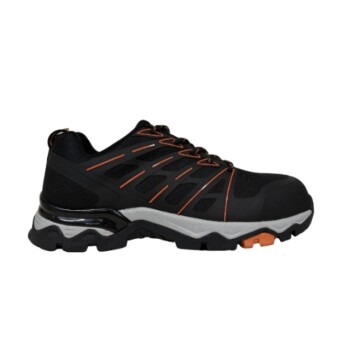
Industrial-grade safety shoes serve as a fundamental hardware control within the Occupational Health and Safety Management System (SMK3) for the concrete industry. They function as the primary defense against specific site hazards—such as crushing from heavy precast components and punctures from rebar—while simultaneously satisfying critical audit indicators required to achieve work safety guarantees.
Industrial-grade footwear is not merely a precautionary measure; in the concrete sector, it acts as a mandatory compliance artifact that validates an organization's ability to protect personnel from high-impact mechanical risks under the SMK3 framework.
The Mechanics of Protection in Concrete Environments
Defense Against Crushing Injuries
In concrete production, the mass of materials handled is substantial. Workers frequently maneuver heavy precast components, such as concrete power poles and railway sleepers.
Industrial safety shoes mitigate the risk of catastrophic foot injury through reinforced steel toes. This structural reinforcement absorbs and deflects impact energy, protecting the metatarsal and phalanges from being crushed if a heavy object falls or shifts unexpectedly during material handling.
Mitigating Ground-Level Hazards
Concrete production floors are rarely pristine; they are often littered with sharp debris.
To counter this, industrial safety footwear utilizes puncture-resistant midsoles. This layer prevents sharp objects, such as steel rebar ends or jagged aggregate, from penetrating the sole and injuring the foot, ensuring mobility remains uncompromised.
The Role in SMK3 Compliance
Fulfilling Hardware Indicators
The SMK3 audit framework relies on tangible evidence to verify safety standards.
Equipping personnel with standardized safety shoes serves as a critical hardware indicator. It provides auditors with visible proof that the organization has invested in the necessary physical controls to safeguard its workforce.
Achieving Work Safety Guarantees
Beyond simple compliance, the presence of appropriate footwear contributes to the broader concept of a work safety guarantee.
By standardizing protective gear, management demonstrates a systematic approach to risk reduction. This aligns with SMK3 objectives by moving safety from a theoretical policy to an applied practice on the production floor.
Understanding the Trade-offs
Protection vs. Mobility
While steel toes and reinforced midsoles offer maximum protection, they add significant weight to the footwear.
In fast-paced production environments, heavier footwear can contribute to operator fatigue over long shifts. It is essential to balance the grade of protection with the ergonomic needs of the worker to maintain agility.
The Illusion of Invincibility
Industrial footwear protects the foot, but it does not eliminate the hazard of heavy machinery itself.
There is a risk that workers may become complacent around suspended loads, relying too heavily on their PPE. It is vital to remember that safety shoes are the last line of defense, not a substitute for safe handling protocols.
Making the Right Choice for Your Goal
- If your primary focus is Passing an SMK3 Audit: Ensure that every pair of shoes issued meets the specific standardization requirements documented in your safety policy to satisfy the hardware indicator check.
- If your primary focus is Reducing Lost-Time Injuries: Prioritize footwear with the highest impact rating for steel toes, specifically targeting areas where workers handle heavy precast elements like power poles.
By integrating the right protective hardware, you transform safety from a compliance obligation into a competitive operational advantage.
Summary Table:
| Feature | Benefit in Concrete Industry | SMK3 Compliance Aspect |
|---|---|---|
| Reinforced Steel Toes | Defends against crushing from heavy components like precast concrete power poles and railway sleepers. | Critical hardware indicator for physical risk control. |
| Puncture-Resistant Midsoles | Prevents injuries from sharp ground debris, such as steel rebar and jagged aggregate. | Demonstrates systematic approach to hazard mitigation. |
| High Impact Rating | Reduces lost-time injuries from falling objects. | Aligns with work safety guarantee objectives. |
| Standardized PPE | Provides tangible evidence of safety investment during audits. | Fulfills audit requirements for safety controls. |
As a large-scale manufacturer serving distributors and brand owners, 3515 offers comprehensive production capabilities for all footwear types, anchored by our flagship Safety Shoes series. Our extensive portfolio covers work and tactical boots, outdoor shoes, training shoes, and sneakers, as well as Dress & Formal shoes to meet diverse bulk requirements.
Ready to elevate your product line with robust, compliant, and high-quality industrial-grade safety shoes and a full range of other footwear? Partner with 3515 to meet your bulk manufacturing needs and ensure your customers' safety and satisfaction.
Contact us today to discuss your next order and partnership opportunities!
References
- Milla Wahyu Wulandari, Bima Agung Lande. Analysis of occupational health and safety management system internal audit implementation based on SMK3 PP No. 50, 2012 (Study at Pasuruan Concrete Industry, Indonesia). DOI: 10.30574/wjarr.2024.21.1.0244
This article is also based on technical information from 3515 Knowledge Base .
Related Products
- Premium Suede Sport Safety Shoes for Wholesale & Bulk Orders
- Premium Lightweight Safety Shoes for Wholesale & Bulk Orders
- Wholesale Anti-Smash & Puncture-Proof Safety Shoes Custom Manufacturing for Brands
- Premium KPU Injection Athletic Style Safety Shoes
- Premium Safety Shoes with Rotating Buckle Safety Sneakers
People Also Ask
- What are the primary functions of professional safety shoes? Maximize Safety in Water Supply Confined Spaces
- What industries have specific OSHA footwear requirements? Ensure Compliance & Protect Your Workforce
- What role do specialized safety shoes play in preventing falls? Engineering Stability in Industrial Environments
- What are the technical advantages of integrating sensors into safety shoes? Achieve Superior Motion Capture Precision
- How do complex outsole tread designs in safety shoes work with coated floors? Master Slip Resistance Engineering