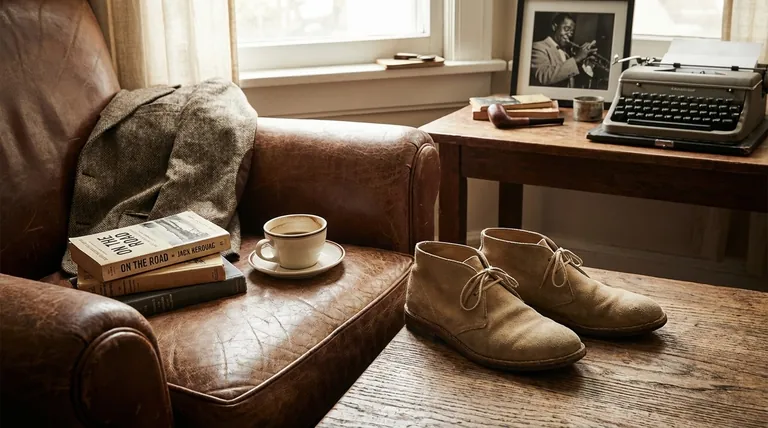
In the 1950s, Chukka boots became a definitive symbol of a new kind of casual cool. Spearheaded by the iconic Clarks Desert Boot, they moved beyond mere footwear to represent a quiet rebellion against the rigid formality of the post-war era. They were quickly adopted by counter-cultural movements, creatives, and intellectuals who valued their comfort and unpretentious style.
The Chukka boot's role in the 1950s was not just about fashion; it was about identity. It offered a clear visual alternative to the polished, structured footwear of the establishment, making it the unofficial uniform for the beatniks and rebels of the era.
The Rise of a Counter-Cultural Icon
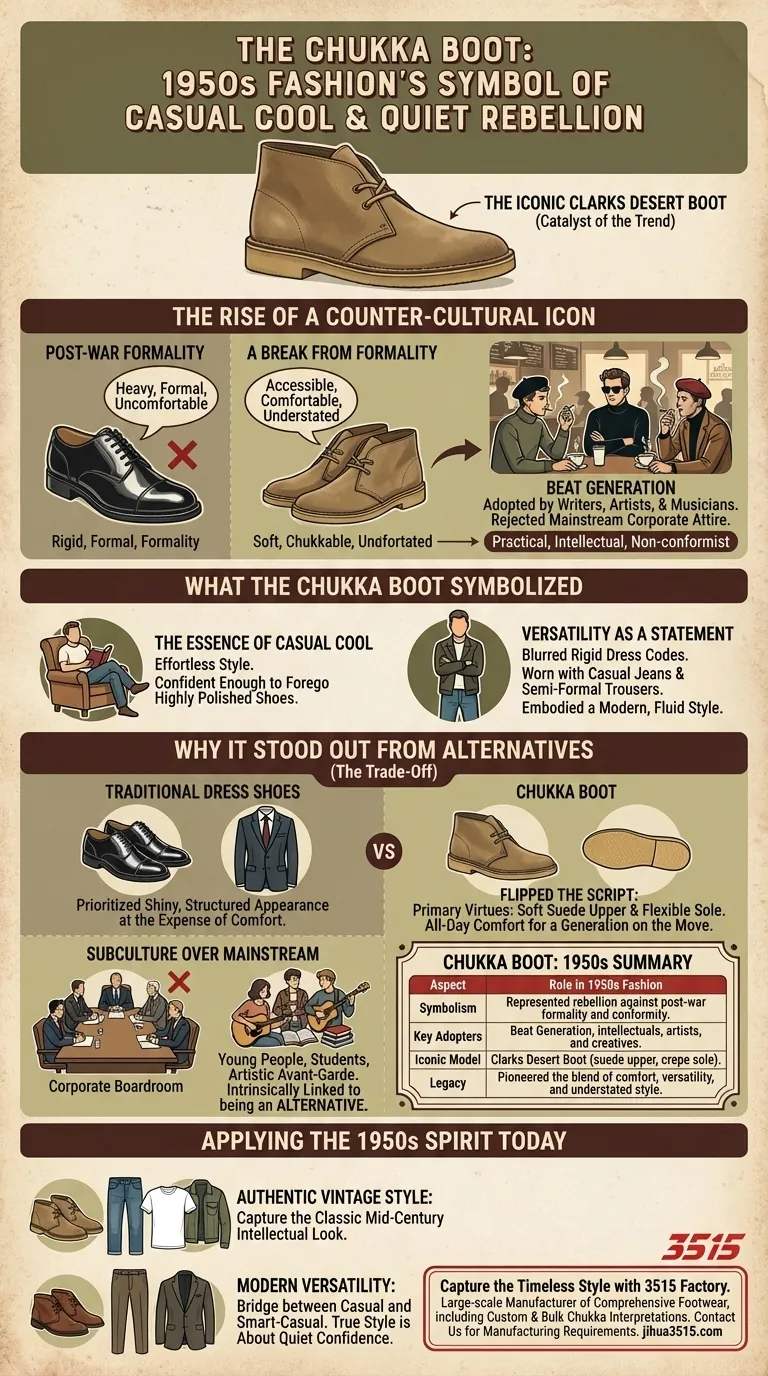
To understand the Chukka's impact, you have to see it in contrast to what came before. The early 1950s were still dominated by heavy, formal, and often uncomfortable dress shoes.
A Break from Post-War Formality
The generation coming of age in the 1950s sought alternatives that reflected a more relaxed and individualistic mindset.
The Chukka boot, with its simple construction and soft materials like suede, was a radical departure from the norm. It was accessible, comfortable, and understated.
The Clarks Desert Boot Catalyst
While the Chukka style had existed for decades, the Clarks Desert Boot, introduced in 1950, was the specific model that ignited the trend.
Its simple, two-piece suede construction and crepe rubber sole defined the look and feel that became iconic throughout the decade in both the U.K. and the U.S.
Adopted by the Beat Generation
The boot's most significant role was as a staple for the Beat Generation and other creative subcultures.
Writers, artists, and musicians embraced the Chukka as part of a look that rejected mainstream corporate attire. It was practical, intellectual, and decidedly non-conformist.
What the Chukka Boot Symbolized
Wearing Chukka boots in the 1950s was a subtle but clear statement. It signaled an alignment with a different set of values.
The Essence of Casual Cool
The Chukka boot projected an image of effortless style. It suggested that the wearer was confident enough not to need the validation of a highly polished, formal shoe.
This aligned perfectly with the "cool" aesthetic popularized by cultural figures of the time.
Versatility as a Statement
The boot's ability to be worn with both casual jeans and more semi-formal trousers was revolutionary.
This versatility blurred the rigid lines of old dress codes, embodying a modern, more fluid approach to personal style.
Why It Stood Out from the Alternatives
The Chukka boot's success was defined as much by what it wasn't as by what it was. It represented a deliberate trade-off that its wearers were happy to make.
Comfort Over Polish
Traditional men's shoes of the era prioritized a shiny, structured appearance, often at the expense of comfort.
The Chukka boot flipped this script. Its primary virtues were its soft suede upper and flexible sole, offering all-day comfort for a generation on the move.
Subculture Over Mainstream
Initially, the Chukka was not footwear for the corporate boardroom. Its appeal was concentrated among young people, students, and the artistic avant-garde.
Its identity was intrinsically linked to being an alternative to the mainstream, which only made it more desirable within those influential circles.
Applying the 1950s Chukka Spirit Today
The legacy of the 1950s Chukka is its timeless blend of comfort, style, and subtle rebellion. You can channel that spirit based on your modern goals.
- If your primary focus is authentic vintage style: Pair suede Desert Boots with straight-leg denim or chinos, a simple white t-shirt, and a casual jacket to capture the classic mid-century intellectual look.
- If your primary focus is modern versatility: Use the Chukka's history as a bridge between casual and smart-casual, wearing a darker leather or suede pair with tailored trousers and a blazer.
Ultimately, the Chukka boot endures because it proved that true style is about quiet confidence, not rigid conformity.
Summary Table:
| Aspect | Role in 1950s Fashion |
|---|---|
| Symbolism | Represented rebellion against post-war formality and conformity. |
| Key Adopters | Beat Generation, intellectuals, artists, and creatives. |
| Iconic Model | Clarks Desert Boot (suede upper, crepe sole). |
| Legacy | Pioneered the blend of comfort, versatility, and understated style. |
Capture the timeless style of the Chukka boot with 3515 Factory. As a large-scale manufacturer, we produce a comprehensive range of footwear for distributors, brand owners, and bulk clients. Our production capabilities encompass all types of shoes and boots, including modern interpretations of classic styles like the Chukka. Whether you're looking to develop a custom line or source high-quality footwear in bulk, we provide the expertise and scale to meet your needs. Contact us today to discuss your manufacturing requirements and bring your vision to life.
Visual Guide
Related Products
- Durable Spiked Camouflage Boots Wholesale & Factory Production
- Wholesale High-Traction Camo Boots - Custom Manufacturer for Brands
- High-Traction Suede Tactical Boots Wholesale & Custom Manufacturing
- Durable Leather High-Ankle Tactical Boots for Wholesale & Custom Manufacturing
- Premium Wholesale Tactical Style Safety Shoes Boots with Quick Lacing
People Also Ask
- How does boot height affect waterproofing? Choose the Right Height for Ultimate Protection
- What are the best types of shoes for different gardening conditions? Find Your Perfect Match.
- What role does camouflage play in hunting boots? It's More Than Just a Pattern
- What should you look for to ensure boots are fully waterproof? The Essential 2-Part System
- How does boot construction affect waterproofing? The Science Behind Truly Dry Feet