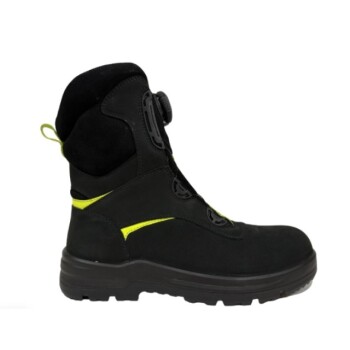
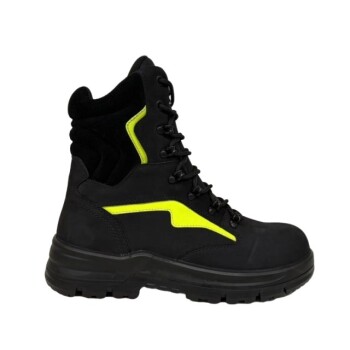
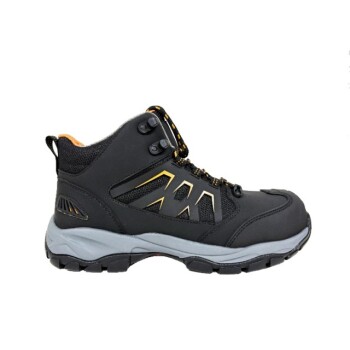
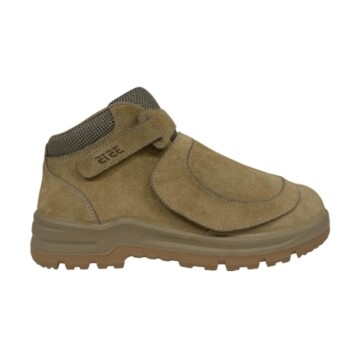
To ensure adequate protection in environments where LiDAR-equipped Agricultural All-Terrain Vehicles operate, personnel must wear Safety Boots featuring reinforced toe caps and puncture-resistant soles. These specific features are required not to interact with the vehicle's sensors, but to shield the wearer from the hazardous, non-structured terrain that characterizes these worksites.
Core Insight: The safety requirements for footwear in these zones are dictated by the environment, not the autonomous technology. While LiDAR enables the ATV to detect and avoid obstacles, the human operator requires physical PPE—specifically reinforced toes and puncture-resistant soles—to withstand the sharp vegetation and rocky debris present in orchards and forests.
The Connection Between LiDAR Environments and PPE
Understanding the Hazard Profile
Agricultural ATVs utilizing LiDAR (Light Detection and Ranging) are typically deployed in non-structured environments.
These areas, such as dense orchards or forests, are defined by their lack of paved pathways and the prevalence of unpredictable physical obstacles.
The Role of LiDAR vs. The Role of Boots
The autonomous vehicle uses LiDAR to map and avoid obstacles like rocks, fallen branches, and uneven ground.
However, the human personnel working alongside these machines traverse the exact same ground. Therefore, the Safety Boots must provide physical defense against the same hazardous terrain features that the vehicle is programmed to navigate around.
Critical Protective Features
Reinforced Toe Caps
In environments laden with rocky debris and heavy obstacles, foot impact injuries are a primary risk.
Reinforced toe caps provide a hardened shell at the front of the boot. This feature is essential for deflecting impacts from loose rocks or accidental collisions with the rigorous terrain found in agricultural settings.
Puncture-Resistant Soles
Forests and orchards often conceal sharp hazards beneath the undergrowth, such as thorns, sharp vegetation, or jagged stones.
Puncture-resistant soles are a non-negotiable requirement in these zones. They create a barrier between the foot and the ground, preventing sharp objects from penetrating the shoe and causing injury to the wearer.
Common Misconceptions and Safety Pitfalls
The "Tech-Safety" Trap
A common pitfall is assuming that because an environment is managed by high-tech autonomous systems, the physical risks to humans are reduced.
This is a dangerous misconception. The LiDAR system protects the vehicle and prevents vehicle-to-object collisions, but it does nothing to alter the physical nature of the ground.
Reliance on Active vs. Passive Safety
The ATV employs active safety (avoidance algorithms) to handle debris.
The human operator must rely on passive safety (PPE). Neglecting to wear boots with both reinforced toes and puncture resistance leaves the operator vulnerable to the very hazards the machine has identified as dangerous.
Making the Right Choice for Your Safety
To select the appropriate footwear for operations alongside autonomous agricultural machinery, assess your specific environmental risks.
- If your primary focus is Impact Protection: Ensure the boots feature certified reinforced toe caps to guard against rocky debris and heavy shifts in terrain.
- If your primary focus is Underfoot Hazards: Verify that the footwear includes puncture-resistant soles to neutralize the threat of sharp vegetation and thorns common in orchards.
Match your personal protective equipment to the reality of the terrain, ensuring your safety measures are as robust as the vehicle’s detection systems.
Summary Table:
| Feature | Protection Goal | Terrain Risk Addressed |
|---|---|---|
| Reinforced Toe Caps | Impact Resistance | Heavy rocky debris, falling objects, and collisions |
| Puncture-Resistant Soles | Underfoot Protection | Sharp thorns, jagged stones, and jagged vegetation |
| Slip-Resistant Outsoles | Stability | Uneven forest floors and slippery orchard terrain |
| Durable Upper Material | Abrasion Resistance | Dense undergrowth and harsh environmental exposure |
Secure Your Workforce with High-Performance Safety Footwear
Operating alongside autonomous agricultural technology requires physical protection that is as advanced as the machinery itself. As a leading large-scale manufacturer, 3515 specializes in providing distributors and brand owners with premium safety solutions designed for the toughest terrains.
Our flagship Safety Shoes series features certified reinforced toe caps and puncture-resistant soles, perfectly suited for the hazardous, non-structured environments of orchards and forests. Beyond tactical and work boots, our extensive portfolio includes outdoor shoes, training shoes, and sneakers to meet your diverse bulk requirements with uncompromising quality.
Partner with 3515 to elevate your product range and protect your clients. Contact us today to discuss your bulk production needs!
References
- Hamed Etezadi, Sulaymon Eshkabilov. A Comprehensive Overview of Control Algorithms, Sensors, Actuators, and Communication Tools of Autonomous All-Terrain Vehicles in Agriculture. DOI: 10.3390/agriculture14020163
This article is also based on technical information from 3515 Knowledge Base .
Related Products
- Puncture-Resistant Velcro Safety Boots for Wholesale & Custom Manufacturing
- Wholesale Durable Safety Boots | Custom Steel Toe & Puncture-Resistant Manufacturing
- Premium Grain Leather Safety Boots for Bulk Supply
- Heavy-Duty Waterproof Nubuck Safety Boots Safety Shoes for Bulk Supply
- Premium High-Cut Waterproof Safety Boots Manufacturing & Wholesale Solutions
People Also Ask
- Why are industrial safety boots with steel toes necessary for machine operators? Essential Foot Protection for Safety
- What are the characteristics of steel toe safety boots? Maximum Protection, Key Trade-offs
- Is it true that steel toes can cause toes to get cut off? Debunking the Dangerous Myth
- What are the primary safety functions of safety boots with steel-toe designs? Essential Protection for Industry
- What do the symbols M, F, I, and C represent on safety toe boots? Decode ASTM F2413 for Maximum Protection