
Beyond simple footwear, police boots are engineered systems of personal protective equipment. They provide safety through features like impact-resistant toe caps, slip-resistant outsoles for superior traction, waterproof materials for environmental defense, and specialized ratings for hazards like electrical shock.
Police work involves unpredictable environments where the right gear can prevent serious injury. The key is to understand that police boot safety features are not just a checklist, but an integrated system designed to mitigate specific, real-world risks an officer faces on every shift.
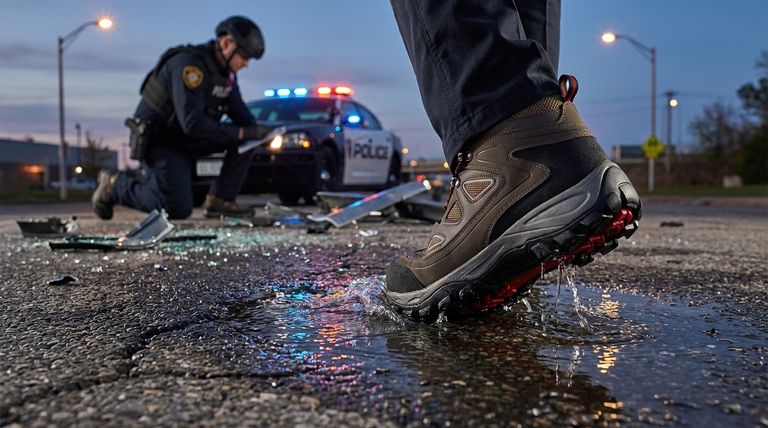
Foundational Protection: Guarding Against Physical Impact
The most immediate threats in law enforcement often involve physical force and unstable terrain. A boot's core structure is its first line of defense.
Impact & Compression Resistance
Steel or composite toe caps are the most recognized safety feature. They are designed to protect the foot from injury caused by falling objects or compression, such as a vehicle tire rolling over the foot.
Composite toes offer similar protection to steel but are lighter and do not conduct heat, cold, or electricity, making them a common choice in modern tactical boots.
Puncture Resistance
The sole of the boot provides protection from hazards underfoot. Kevlar or composite plates are often integrated into the midsole to prevent sharp objects like glass, nails, or other debris from piercing through to the foot.
Structural Support & Stability
Ankle injuries are a constant risk during pursuits or on uneven ground. Boots with enhanced ankle support, often found in 8-inch shaft models, help prevent twists and sprains.
This structural integrity, combined with reinforced heel areas, provides the stability needed for high-intensity movements and long periods of standing.
Mastering the Environment: Traction and Elemental Defense
An officer's effectiveness depends on their ability to navigate any environment safely. Modern boots are built to counter environmental and weather-related challenges.
Critical Slip Resistance
Maintaining footing is non-negotiable. Police boots feature specialized slip-resistant outsoles with deep grooves and aggressive tread patterns designed to channel away water and oil.
This ensures maximum traction and a stable footing on slick surfaces like wet pavement or oily garage floors, preventing potentially catastrophic falls.
Waterproofing and Breathability
Keeping feet dry is critical for both comfort and health over a long shift. Boots often use a waterproof membrane to block external moisture from rain, puddles, or spills.
Simultaneously, these boots incorporate breathable, moisture-wicking linings. This allows sweat vapor to escape, keeping the foot dry from the inside and helping to prevent blisters and discomfort.
Abrasion and Durability
Duty boots are built to withstand harsh conditions. Materials are often selected for scratch and oil resistance, with extra layers of durable rubber or TPU (thermoplastic polyurethane) reinforcing high-wear areas like the toe and heel.
Mitigating Invisible Threats: Specialized Hazard Ratings
Some of the most serious dangers are the ones you cannot see. Specialized boots offer protection against specific, less common hazards.
Electrical Hazard (EH) Protection
Boots with an Electrical Hazard (EH) rating are constructed with non-conductive, shock-resistant soles and heels.
This feature is designed to provide a secondary source of protection against accidental contact with live electrical circuits, offering a crucial layer of safety in uncertain environments.
Understanding the Trade-offs
No single boot is perfect for every scenario. Choosing the right protection involves balancing competing needs.
Protection vs. Agility
A heavily armored boot with a steel toe and high 8-inch shaft offers maximum protection. However, it can be heavier and less flexible than a mid-height boot with a lighter composite toe, which may be preferable for roles requiring more running and agility.
Waterproofing vs. Breathability
While modern waterproof membranes are highly advanced, a fully sealed boot will inherently be less breathable than a non-waterproof alternative. In hot, dry climates, an officer might prioritize maximum ventilation over waterproofing to manage heat and sweat.
Durability vs. Weight
Traditional materials like thick leather offer exceptional durability but add significant weight. Modern synthetic materials can provide excellent resilience at a fraction of the weight, improving comfort and reducing fatigue over a 12-hour shift.
Selecting the Right Boot for Your Duty
Your specific role and typical work environment dictate which safety features should be prioritized.
- If your primary focus is patrol or general duty: Prioritize a balance of all-day comfort, certified slip resistance, and moderate ankle support for long hours on your feet.
- If your primary focus is tactical operations: Emphasize lightweight construction for speed, exceptional ankle stability for dynamic movement, and robust toe protection.
- If you frequently work in industrial or accident scenes: Ensure your boots have certified EH ratings, puncture-resistant soles, and a durable safety toe.
A well-chosen boot is not just equipment; it is a critical piece of personal protective gear that directly enhances your safety and operational effectiveness.
Summary Table:
| Feature | Key Benefit | Common Application |
|---|---|---|
| Impact/Compression Resistance | Protects from falling objects/compression | Steel or composite toe caps |
| Puncture Resistance | Prevents sharp objects from piercing the sole | Kevlar/composite midsole plates |
| Slip Resistance | Ensures stable footing on slick surfaces | Specialized outsole treads |
| Waterproofing & Breathability | Keeps feet dry from external and internal moisture | Waterproof membranes & moisture-wicking linings |
| Electrical Hazard (EH) Rating | Provides secondary protection against live circuits | Non-conductive soles and heels |
As a leading manufacturer, 3515 produces a comprehensive range of high-performance police and tactical boots for distributors, brand owners, and bulk clients. Our boots are engineered with the exact safety features detailed above—impact-resistant toes, superior slip resistance, durable waterproofing, and specialized hazard ratings—to ensure maximum protection and operational effectiveness for law enforcement personnel.
Equip your team with reliable, duty-ready footwear. Contact us today to discuss your specific requirements and explore our full product catalog.
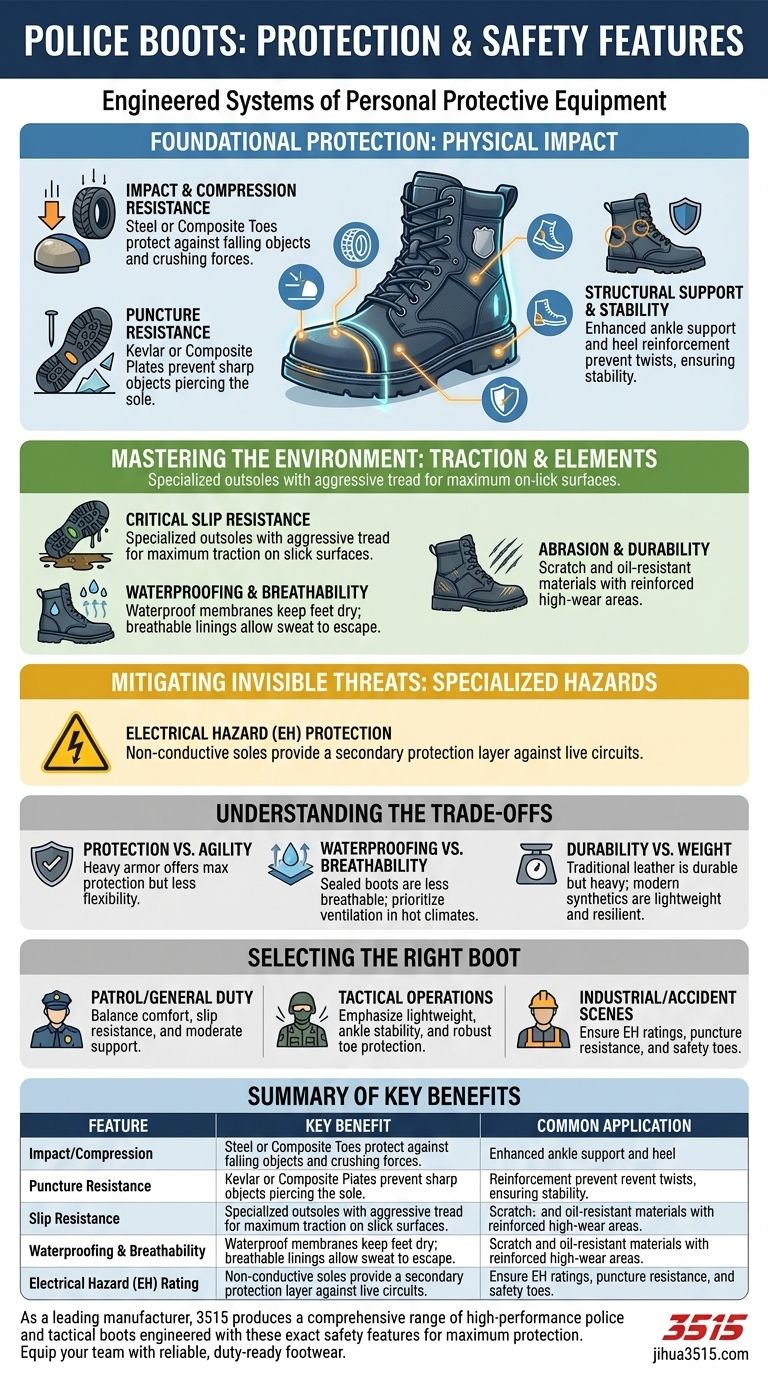
Visual Guide
Related Products
- Durable High-Ankle Tactical Boots for Wholesale & Custom Manufacturing
- Wholesale Durable Mid-Cut Tactical Boots for Custom & Private Label Brands
- Durable Mid-Cut Tactical Boots for Wholesale & Private Label
- High-Traction Suede Tactical Boots Wholesale & Custom Manufacturing
- Durable Leather Tactical Boots Wholesale & Custom Manufacturing for Brands
People Also Ask
- How do tactical boots protect against injuries? Discover the Integrated Safety System
- What are the different types of tactical boots available? Find the Right Boot for Your Mission
- What are the main construction similarities between tactical boots and tactical sneakers? Built for Performance & Durability
- How does additive manufacturing equipment reduce environmental risks? Sustainable Tactics for Modern Footwear Production
- What is the role of high-frequency acquisition hardware in technical skill analysis for outdoor and tactical boots?



















