To find the right work shoes for wide feet, you must prioritize models specifically designated with wide-width sizing (such as 2E, 4E, or W) and feature a naturally shaped toe box. Simply choosing a larger size in a standard width will not provide the necessary space, leading to pain, blisters, and long-term foot problems.
Your goal is not just to find a shoe that "fits," but one that supports the natural shape and function of your foot throughout the workday. This requires looking beyond length and focusing on three key elements: accurate width, proper shoe construction, and job-specific safety features.
Why Standard Shoes Fail Wide Feet
Most work shoes are manufactured using a standard-width mold, known as a "last." This creates a fundamental mismatch for individuals whose feet are broader than average, leading to predictable and painful consequences.
The Compression Problem
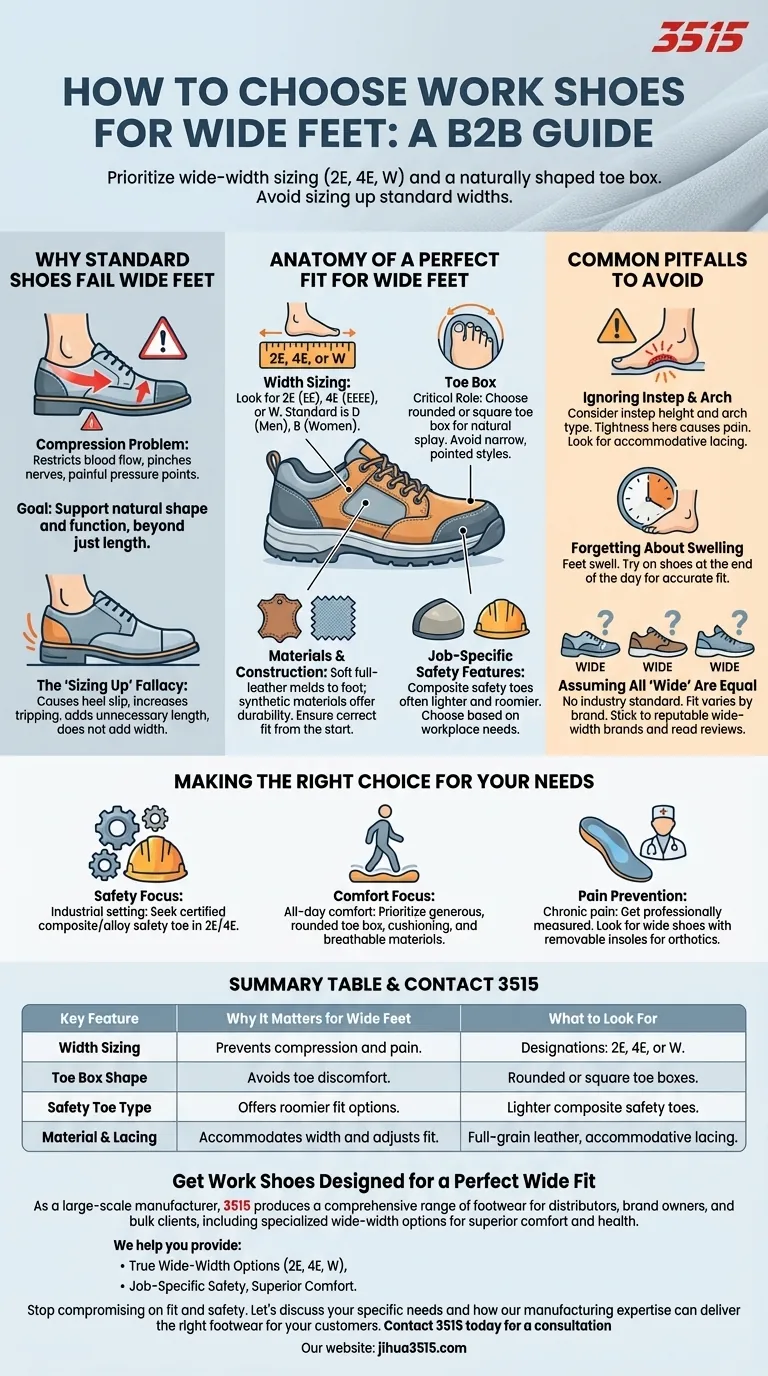
A standard-width shoe forces a wide foot into a space that is too narrow. This constant compression restricts blood flow, pinches nerves, and creates painful pressure points, especially during long hours of standing or walking.
The "Sizing Up" Fallacy
Many people try to compensate for a lack of width by buying a longer shoe. This is a critical mistake. It adds unnecessary length at the toe and heel, causing your foot to slide, your heel to slip, and increasing your risk of tripping. It does not solve the core issue of insufficient width across the ball of the foot.
The Anatomy of a Perfect Fit for Wide Feet
Finding the right work shoe is about understanding the specific features that accommodate a wider foot structure. These elements work together to provide true comfort and safety.
Understanding Width Sizing
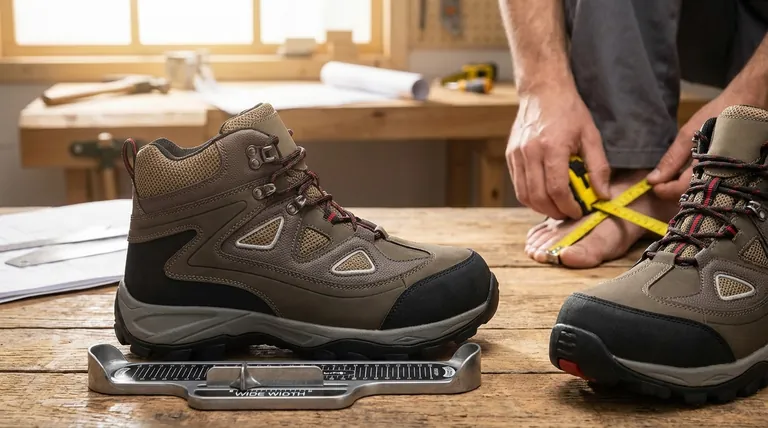
Shoe width is typically denoted by letters. In the US, 'D' is the standard width for men, and 'B' is standard for women. For wide feet, you should look for designations like 2E (or EE), 4E (EEEE), or W (Wide). Always check the manufacturer's sizing chart, as these can vary.
The Critical Role of the Toe Box
The toe box is the area at the front of the shoe where your toes sit. A narrow, pointed toe box is the enemy of a wide foot. Look for shoes with a rounded or square toe box that allows your toes to splay naturally without being constricted.
Materials and Construction
The materials of the shoe upper play a significant role in comfort. Soft, full-grain leathers have a natural ability to stretch and mold to your foot over time. Modern synthetic materials can be durable but often offer less forgiveness, so a correct fit from the start is essential.
Job-Specific Safety Features
Your work environment dictates your safety needs. For wide feet, the type of safety toe is particularly important. Composite safety toes are often lighter and less conductive of heat or cold than steel toes, and their construction can sometimes provide a roomier fit.
Common Pitfalls to Avoid
Choosing the right shoe involves more than just picking a "wide" label off the shelf. Awareness of these common mistakes will save you from discomfort and wasted money.
Ignoring Your Instep and Arch
A wide foot is not just wide at the front. You must also consider the height of your instep (the top of your foot) and your arch type. A shoe that is wide enough but too tight over the instep will still cause pain. Look for accommodative lacing systems that allow for adjustment.
Forgetting About Swelling
Feet naturally swell throughout the workday, especially if you are standing for long periods. It is best to try on shoes at the end of the day when your feet are at their largest to ensure you have enough room.
Assuming All "Wide" Shoes Are Equal
There is no industry-wide standard for what "2E" or "4E" means. The fit and volume can vary dramatically between brands. Stick with reputable work boot brands known for offering true wide-width options and always read reviews from other users with wide feet.
Making the Right Choice for Your Needs
Your ideal shoe depends on the unique demands of your job and your personal comfort priorities. Use these guidelines to make a confident decision.
- If your primary focus is safety in an industrial setting: Seek out work boots with a certified composite or alloy safety toe specifically offered in 2E or 4E widths.
- If your primary focus is all-day comfort for standing or walking: Prioritize shoes with a generous, rounded toe box, excellent cushioning, and breathable upper materials to manage foot swelling.
- If your primary focus is preventing chronic foot pain: Get your feet professionally measured and look for wide-width shoes that have removable insoles to accommodate custom orthotics.
Investing in a correctly fitted work shoe is a direct investment in your daily well-being and long-term health.
Summary Table:
| Key Feature | Why It Matters for Wide Feet | What to Look For |
|---|---|---|
| Width Sizing | Standard width (D/B) causes compression and pain. | Look for designations like 2E, 4E, or W. |
| Toe Box Shape | A narrow toe box squeezes toes, leading to discomfort. | Choose rounded or square toe boxes for natural toe splay. |
| Safety Toe Type | Some toes offer a roomier fit than others. | Composite safety toes are often lighter and less constricting. |
| Material & Lacing | Materials need to accommodate width; lacing adjusts fit. | Full-grain leather that molds to your foot; accommodative lacing systems. |
Get Work Shoes Designed for a Perfect Wide Fit
Struggling to find durable, comfortable work shoes that truly fit wide feet? As a large-scale manufacturer, 3515 produces a comprehensive range of footwear for distributors, brand owners, and bulk clients. Our production capabilities encompass all types of safety and occupational shoes and boots, including specialized wide-width options designed for superior comfort and long-term foot health.
We help you provide:
- True Wide-Width Options: Correct sizing (2E, 4E, W) to prevent compression and pain.
- Job-Specific Safety: Composite and alloy safety toes in roomier fits.
- Superior Comfort: Designs with rounded toe boxes and quality materials that support all-day wear.
Stop compromising on fit and safety. Let's discuss your specific needs and how our manufacturing expertise can deliver the right footwear for your customers.
Contact 3515 today for a consultation
Visual Guide
Related Products
- Wholesale Durable Leather Work Boots | 8-Inch Goodyear Welt Manufacturer
- Durable Canvas Work Shoes with Rubber Lug Sole | Wholesale Manufacturer
- Durable Moc-Toe Wedge Work Boots | Wholesale Manufacturing for Brands
- Durable Leather Moc Toe Work Boots for Wholesale & Custom Manufacturing
- Durable Goodyear Welt Leather Work Boots for Wholesale & Private Label
People Also Ask
- What is the difference between full-grain and top-grain leather? Premium Material Guide for Boot Manufacturers
- What is the complete process for deep cleaning leather work boots? A Step-by-Step Guide to Preserve Your Investment
- Why is it important to waterproof leather work boots? Protect Your Investment and Performance
- What are the advantages of leather as an upper material for work boots? Unmatched Durability & Custom Comfort
- What are the key qualities of leather for work boots? Superior Durability, Breathability & Custom Fit