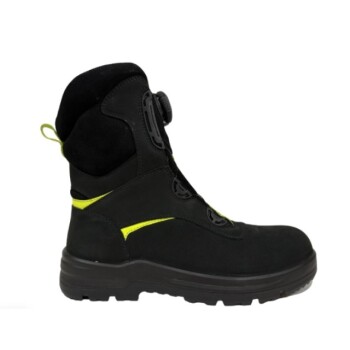
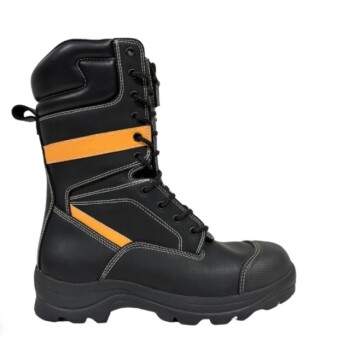
Contrary to common belief, the National Fire Protection Association (NFPA) does not certify firefighting boots itself. The NFPA is the organization that develops and publishes the safety standards. The actual testing and certification to meet those standards are performed by independent, accredited third-party organizations to ensure unbiased verification.
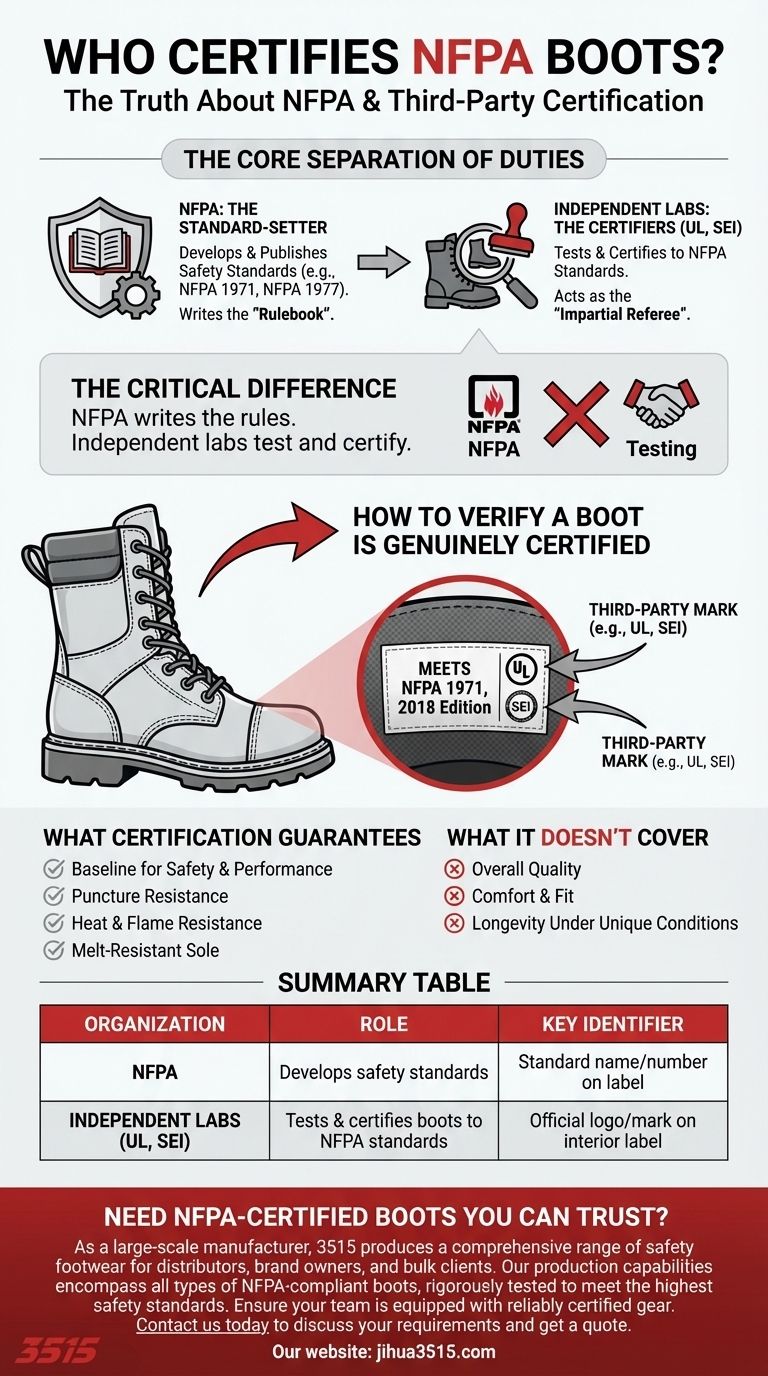
The core principle to understand is the separation of duties: The NFPA writes the safety "rulebook" (the standard), while independent labs like UL or SEI act as the impartial referees who test and certify that a boot follows those rules.
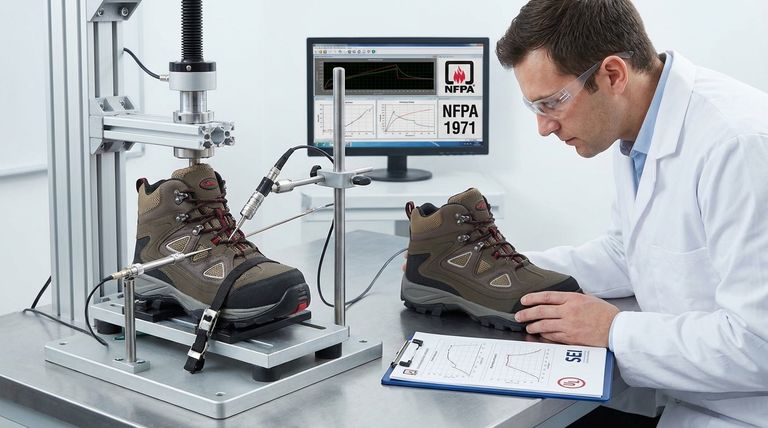
The NFPA's Role vs. The Certifying Body's Role
To trust your equipment, it's critical to understand who is responsible for each part of the safety process. This separation is what gives the certification its integrity.
The NFPA: The Standard-Setter
The NFPA is a global non-profit organization. Its mission is to create and maintain standards and codes to minimize the risk of fire and other hazards.
For footwear, they publish specific, detailed standards like NFPA 1971 for structural firefighting or NFPA 1977 for wildland firefighting. These documents define the exact performance requirements a boot must meet.
Independent Labs: The Certifiers
Accredited testing laboratories are the organizations that perform the actual certification. Manufacturers submit their boots to these labs for rigorous evaluation.
The most common certifiers for personal protective equipment (PPE) in North America are Underwriters Laboratories (UL) and the Safety Equipment Institute (SEI). Their job is to test the product against every requirement in the relevant NFPA standard.
Why This Separation is Critical
This two-part system prevents any conflict of interest. The body that writes the standard is not the same one that profits from testing and certification.
This ensures that the certification mark on your boot represents a truly objective and stringent validation of its safety features.
How to Verify a Boot is Genuinely Certified
Knowing what to look for is the only way to be certain you are protected by equipment that meets the standard.
Look for the Interior Label
Every boot that is properly certified will have a permanent label stitched inside. This label is the boot's official compliance document.
Read the Label Details
The label must clearly state that the component is certified to a specific standard, including the edition year (e.g., "Meets NFPA 1971, 2018 Edition").
Find the Third-Party Mark
Crucially, the label must also feature the official logo or mark of the third-party certifying organization, such as the UL or SEI logo. A boot that only claims "NFPA compliant" without a third-party mark is not certified.
What Certification Guarantees
An NFPA certification is a baseline for safety and performance against specific, defined hazards, not a guarantee of overall quality or comfort.
A Baseline of Safety
Certification means the boot has passed dozens of specific tests. These include tests for puncture resistance, heat insulation, flame resistance, and ensuring the sole is melt-resistant under high heat.
What Certification Doesn't Cover
Certification doesn't guarantee a boot will be comfortable, fit you perfectly, or last for a specific amount of time under your unique working conditions. It is a safety verification, not a user review.
Making the Right Choice for Your Role
Use your understanding of the certification process to make informed decisions when selecting your gear.
- If your primary focus is safety and compliance: Always confirm the interior label shows both the specific NFPA standard and the official mark of a third-party certifier like UL or SEI.
- If your primary focus is verifying authenticity: Cross-reference the boot model with the online certified product database of the certifying organization shown on the label.
- If your primary focus is long-term performance: Use NFPA certification as your mandatory starting point, then compare qualified boots based on fit, materials, and comfort for your specific tasks.
Understanding this process empowers you to select gear based on verified safety, not just marketing claims.
Summary Table:
| Organization | Role | Key Identifier |
|---|---|---|
| NFPA | Develops safety standards (e.g., NFPA 1971) | Standard name/number on label |
| Independent Labs (UL, SEI) | Tests & certifies boots to NFPA standards | Official logo/mark on interior label |
Need NFPA-Certified Boots You Can Trust?
As a large-scale manufacturer, 3515 produces a comprehensive range of safety footwear for distributors, brand owners, and bulk clients. Our production capabilities encompass all types of NFPA-compliant boots, rigorously tested to meet the highest safety standards. Ensure your team is equipped with reliably certified gear.
Contact us today to discuss your requirements and get a quote.
Visual Guide
Related Products
- High Performance Fire-Retardant Waterproof Safety Boots
- Premium Wholesale Tactical Style Safety Shoes Boots with Quick Lacing
- Premium High-Cut Waterproof Safety Boots Manufacturing & Wholesale Solutions
- Premium Wholesale Waterproof Safety Boots High Performance Protection for Industrial Markets
- Heavy-Duty Waterproof Nubuck Safety Boots Safety Shoes for Bulk Supply
People Also Ask
- Why are waterproof safety boots recommended for certain work environments? Essential Protection for Wet & Hazardous Jobs
- What roles do 3D vision systems and industrial robots play in the manufacturing of fire safety boots? Smart Automation
- What are the primary benefits of incorporating waterproof technology into professional and outdoor boots? Boost Value
- What is the difference between waterproof and water-resistant boots? Choose the Right Footwear for Any Condition
- What's the difference between waterproof and water-resistant boots? Choose the Right Footwear for Your Environment