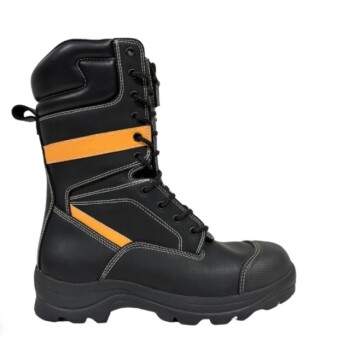
To be considered NFPA-compliant, a fire boot must be an 8-inch, lace-up style boot constructed with an all-leather upper. It must also feature a melt-resistant sole and be stitched with inherently flame-resistant thread that will not ignite, melt, or char when exposed to extreme heat.
The National Fire Protection Association (NFPA) standards for fire boots are not a checklist of features, but a comprehensive system designed to protect against the unique thermal, physical, and structural hazards encountered in firefighting. Understanding the purpose behind each requirement is critical for ensuring genuine safety.
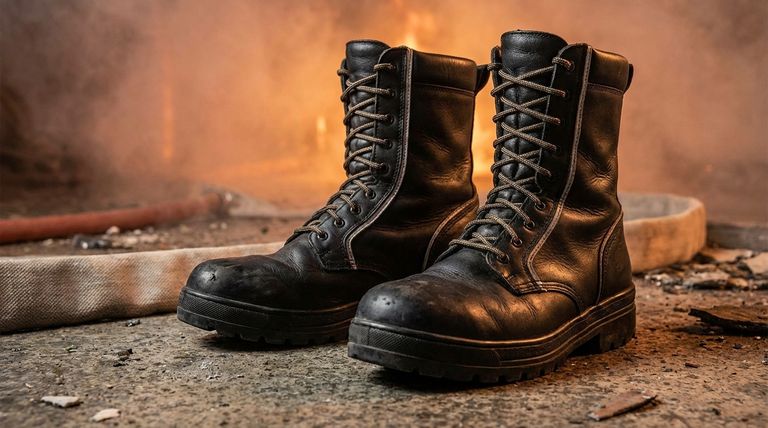
Deconstructing the NFPA Standard
Each component of an NFPA-certified boot is specified to counteract a specific, life-threatening risk on the fireground. These requirements are most often defined under standards like NFPA 1971, which covers protective ensembles for structural and proximity firefighting.
The 8-Inch Height Requirement
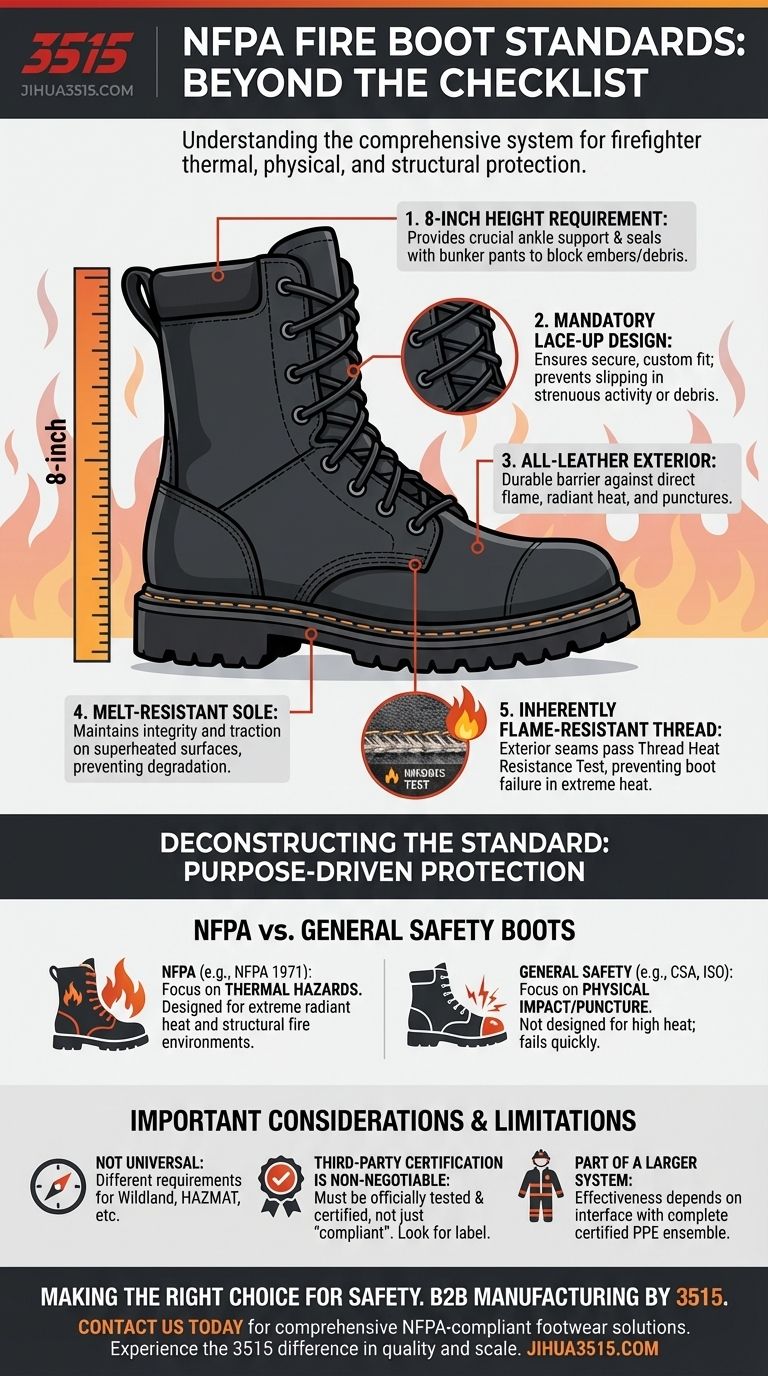
The mandatory 8-inch height from the heel's base to the boot's top serves two functions. It provides crucial ankle support for stability on uneven or collapsing surfaces and creates a protective seal with the bunker pants, preventing hot embers, chemicals, and hazardous debris from entering the boot.
Why Lace-Up is Mandatory
NFPA standards explicitly require a lace-up design. Unlike pull-on boots, laces allow for a secure, customized fit that prevents the boot from slipping or being pulled off during strenuous activity or when navigating debris. This ensures the boot remains in place when it is needed most.
The All-Leather Exterior
The requirement for an entirely leather upper is based on the material's natural durability and resistance to heat. Leather provides a robust barrier against direct flame, radiant heat, and punctures from sharp objects, protecting the foot from thermal and physical injury.
Melt-Resistant Soles
A boot's sole is its foundation. NFPA mandates a melt-resistant material, often a Vibram-type sole, to ensure it does not degrade or lose its structural integrity when walking on superheated surfaces. This preserves the protective barrier for the foot and guarantees stable, reliable traction.
Inherently Flame-Resistant Thread
A boot is only as strong as its seams. All exterior threads must pass the Thread Heat Resistance Test. This ensures that the stitching holding the boot together will not melt or burn away, which would cause the boot to fall apart and lead to catastrophic failure of the entire protective system.
How NFPA Differs from General Safety Boots
It is a common mistake to equate NFPA-certified boots with standard industrial safety footwear. While both provide protection, their focus is fundamentally different.
A Focus on Thermal Hazards
General safety standards like CSA or ISO often prioritize protection against impact (protective toe caps), punctures (sole plates), or specific industrial risks like electrical shock (ESR) or static discharge (SD).
A System for Extreme Environments
The NFPA standard integrates these physical protections but places a much heavier emphasis on performance in extreme thermal environments. A standard steel-toed work boot is not designed to withstand the radiant heat of a structure fire and would fail quickly, offering little to no protection.
Understanding the Limitations
While NFPA standards are rigorous, it's important to understand their specific context and application to avoid misuse.
Not a Universal Standard
These standards are designed primarily for structural and proximity firefighting. Other applications, such as wildland firefighting, may have different requirements or exemptions. For example, some regions allow for different sole types better suited for rugged terrain.
Certification is Non-Negotiable
A boot that is merely "compliant" or "meets the requirements" is not sufficient. For guaranteed safety and regulatory compliance, the footwear must be officially tested and certified by a third party as meeting the specific NFPA standard. Always look for the official certification label inside the boot.
Part of a Larger System
A fire boot's effectiveness is dependent on being used as part of a complete, certified Personal Protective Equipment (PPE) ensemble. The interface between the boot and the pant leg is a critical point of protection that must not be overlooked.
Making the Right Choice for Your Goal
Selecting the correct footwear is a critical safety decision. Your role and environment dictate the necessary level of protection.
- If your primary focus is structural firefighting: Your boots must strictly adhere to NFPA 1971, with no compromises on height, material, lacing, or sole composition.
- If your primary focus is purchasing equipment: Always verify that the boot has a current, visible NFPA certification label from an accredited third-party organization.
- If your primary focus is a specialized task (e.g., wildland, HAZMAT): Ensure your footwear is certified for that specific hazard, as the requirements may differ significantly from structural gear.
Ultimately, understanding the "why" behind each NFPA standard empowers you to make informed decisions that ensure your equipment provides the protection you need when facing extreme conditions.
Summary Table:
| Key NFPA Fire Boot Requirement | Purpose & Safety Benefit |
|---|---|
| 8-Inch Height | Ankle support; seals with bunker pants to block embers/debris. |
| Lace-Up Design | Secure, custom fit to prevent slipping or boot removal in debris. |
| All-Leather Upper | Durable barrier against direct flame, radiant heat, and punctures. |
| Melt-Resistant Sole | Maintains integrity and traction on superheated surfaces. |
| Flame-Resistant Thread | Stitching won't melt or burn, preventing boot failure in extreme heat. |
Ensure your team is equipped with certified, reliable safety gear. As a large-scale manufacturer, 3515 produces a comprehensive range of NFPA-compliant footwear for distributors, brand owners, and bulk clients. Our production capabilities encompass all types of certified safety boots and boots, ensuring your procurement meets the highest standards of protection and durability.
Contact us today for a consultation on your fire boot needs and experience the 3515 difference in quality and scale.
Visual Guide
Related Products
- High Performance Fire-Retardant Waterproof Safety Boots
- Premium Flame-Retardant Waterproof Safety Boots and Shoes
- Wholesale Lightweight Tactical Boots Custom Manufacturer for Desert & Combat Use
- High-Traction Suede Tactical Boots Wholesale & Custom Manufacturing
- Wholesale Waterproof Tactical Boots Custom Suede & High-Traction Soles
People Also Ask
- Why are waterproof safety boots recommended for certain work environments? Essential Protection for Wet & Hazardous Jobs
- What roles do 3D vision systems and industrial robots play in the manufacturing of fire safety boots? Smart Automation
- What materials make waterproof boots durable? The Ultimate Guide to Long-Lasting Footwear
- What is a drawback of waterproof boots? The Hidden Cost of Trapped Sweat and Heat
- How should you maintain waterproof boots? A Simple 3-Step Guide to Long-Lasting Performance