
The original Chukka Boot was defined by two primary materials: a lightweight suede upper and a natural crepe rubber sole. This specific combination was not an aesthetic choice but a functional one, engineered for comfort, durability, and grip in demanding desert environments.
The Chukka is a masterclass in functional minimalism. Its iconic design—from the suede upper to the minimal eyelets—was a direct solution to the practical needs of British soldiers who required a boot that was both comfortable off-duty and resilient enough for rugged terrain.
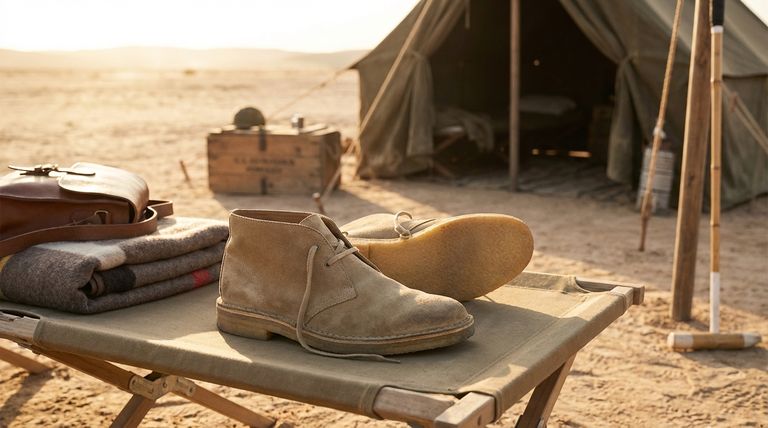
The Anatomy of an Original Chukka
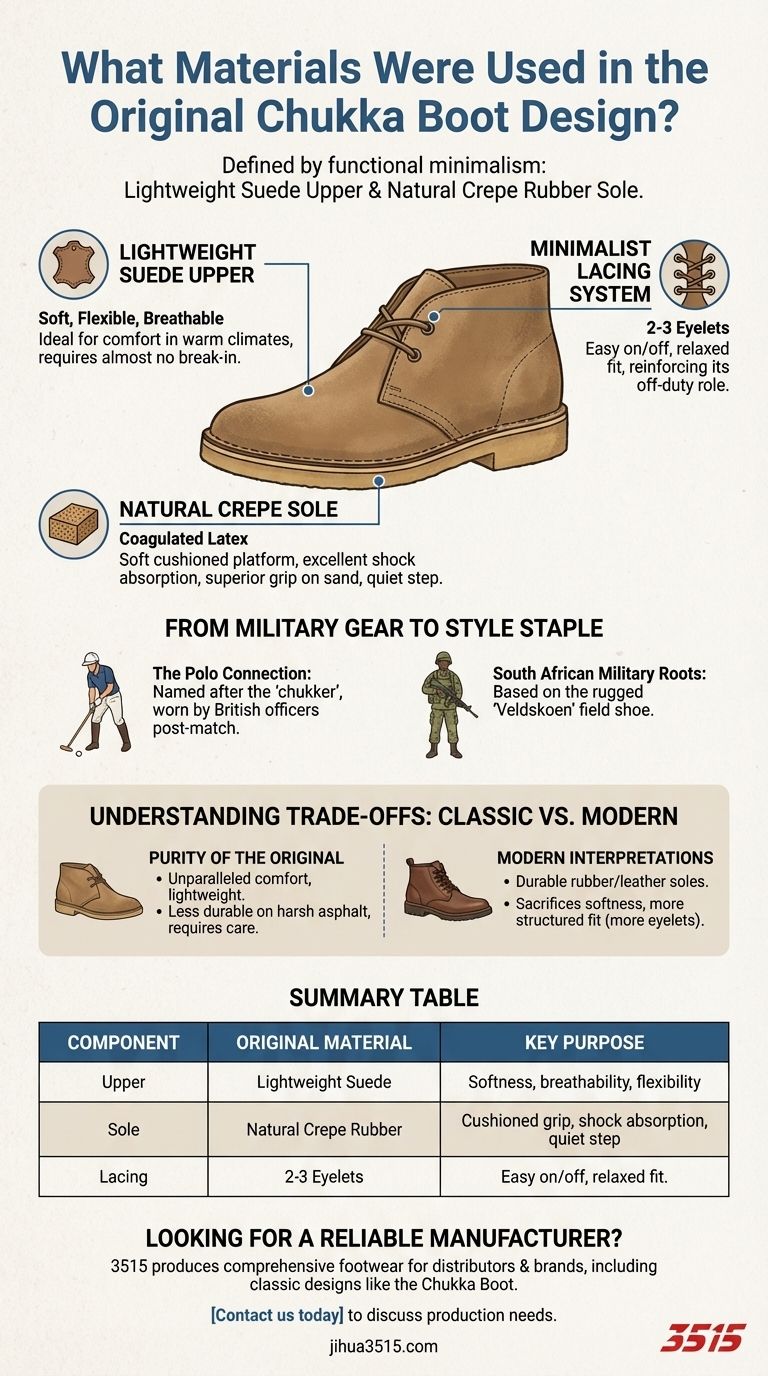
To understand the Chukka, you must look at its core components as a complete system. Each element serves a distinct purpose that contributes to the boot's unique character.
The Lightweight Suede Upper
The choice of suede was critical. Unlike polished leather, unlined suede is exceptionally soft, flexible, and breathable, requiring almost no break-in period.
This made it the ideal material for a comfortable, lightweight boot that could be worn for extended periods in warm climates.
The Natural Crepe Sole
The crepe sole, made from coagulated latex, provided a soft, cushioned platform with excellent shock absorption.
Its texture offered superior grip on sand and uneven ground, a key advantage for soldiers in desert conditions. This material gave the boot its signature bounce and quiet step.
The Minimalist Lacing System
A defining feature of a traditional Chukka is its lacing system, which features no more than two or three pairs of eyelets.
This minimalist design allows for a loose, comfortable fit and makes the boot incredibly easy to slip on and off, reinforcing its role as a relaxed, off-duty piece of footwear.
From Military Gear to Style Staple
The Chukka's history is rooted in practicality, born from the intersection of military need and colonial sport. Its evolution from a functional piece of kit to a menswear icon is a testament to its perfect design.
The Polo Connection
The name "Chukka" is directly linked to the game of polo. It derives from the "chukker," a seven-and-a-half-minute playing period.
British Army officers stationed in India would wear a version of these ankle boots during their downtime after matches, valuing their comfort after shedding rigid riding boots.
The South African Military Roots
The boot's design DNA can be traced back even further to the South African "Veldskoen" (meaning "field shoe").
This Dutch-South African design was a rugged, simple boot that South African troops wore as a practical alternative to standard-issue military footwear, proving its durability and utility in the field.
Understanding the Trade-offs: Classic vs. Modern
While the original design is a benchmark, many modern variations exist. Understanding the differences is key to choosing the right boot.
The Purity of the Original
The classic suede and crepe combination offers unparalleled comfort and flexibility. It is lightweight and conforms to the foot, making it an excellent choice for casual wear and walking.
However, traditional crepe soles can be less durable on harsh asphalt and may become sticky in high heat. Suede also requires more care to protect against water and stains.
The Compromises of Modern Interpretations
Many modern Chukkas use more durable rubber or leather soles and may feature more than three eyelets for a more structured fit.
While a hard rubber sole offers better longevity in wet urban environments, it sacrifices the signature softness and cushioning of crepe. Similarly, adding more eyelets can create a snugger fit but moves the design away from its relaxed, easy-to-wear origins.
Making the Right Choice for Your Goal
Your ideal Chukka depends entirely on what you value most: historical authenticity or modern practicality.
- If your primary focus is classic style and maximum comfort: Seek out boots with an unlined suede upper, a natural crepe sole, and only two or three eyelets.
- If your primary focus is all-weather durability for urban use: Consider a modern version with a lined leather upper and a Dainite or commando rubber sole.
Ultimately, understanding the Chukka's original materials and purpose empowers you to choose the version that best serves your needs.
Summary Table:
| Component | Original Material | Key Purpose |
|---|---|---|
| Upper | Lightweight Suede | Softness, breathability, flexibility for comfort in warm climates. |
| Sole | Natural Crepe Rubber | Cushioned grip, shock absorption, and quiet step on sand/uneven terrain. |
| Lacing | 2-3 Eyelets | Easy on/off, relaxed fit, minimalist design for off-duty wear. |
Looking for a reliable manufacturer for your next footwear line?
As a large-scale manufacturer, 3515 produces a comprehensive range of footwear for distributors, brand owners, and bulk clients. Our production capabilities encompass all types of shoes and boots, including classic designs like the Chukka Boot. We can help you bring authentic, high-quality footwear to market with efficiency and scale.
Contact us today to discuss your production needs and learn how we can add value to your business.
Visual Guide
Related Products
- Durable Leather Tactical Boots Wholesale & Custom Manufacturing for Brands
- Premium Wholesale Tactical Style Safety Shoes Boots with Quick Lacing
- Wholesale High-Traction Camo Boots - Custom Manufacturer for Brands
- Durable Leather High-Ankle Tactical Boots for Wholesale & Custom Manufacturing
- Durable Leather Work Boots Wholesale Manufacturer & Custom Factory
People Also Ask
- What specialized protections do tactical boots offer? Maximize Endurance with High-Performance Footwear
- What features should law enforcement officers look for in tactical boots? Essential Guide for Safety & Performance
- Importance of Professional Tactical Boots in Loess Gully Regions: Ensure Safety and Precision for Field Monitoring
- What is rucking, and why are tactical boots suitable for it? Discover the Ultimate Footwear for Heavy Loads
- What makes the traction of tactical boots superior? Unlock the Science of Unbeatable Grip



















