
While Nathan Clark is famously credited with creating the iconic Desert Boot, the chukka boot style itself has a distinct and earlier origin story rooted in the British Empire. The boot's history is best understood as two separate streams: the original style born from sport and the famous military-inspired version that popularized it globally.
The core confusion arises because there are two origin points. The chukka style originated with British polo players in India, while the most famous version, the Clarks Desert Boot, was a specific design created by Nathan Clark decades later, inspired by footwear he saw in World War II.
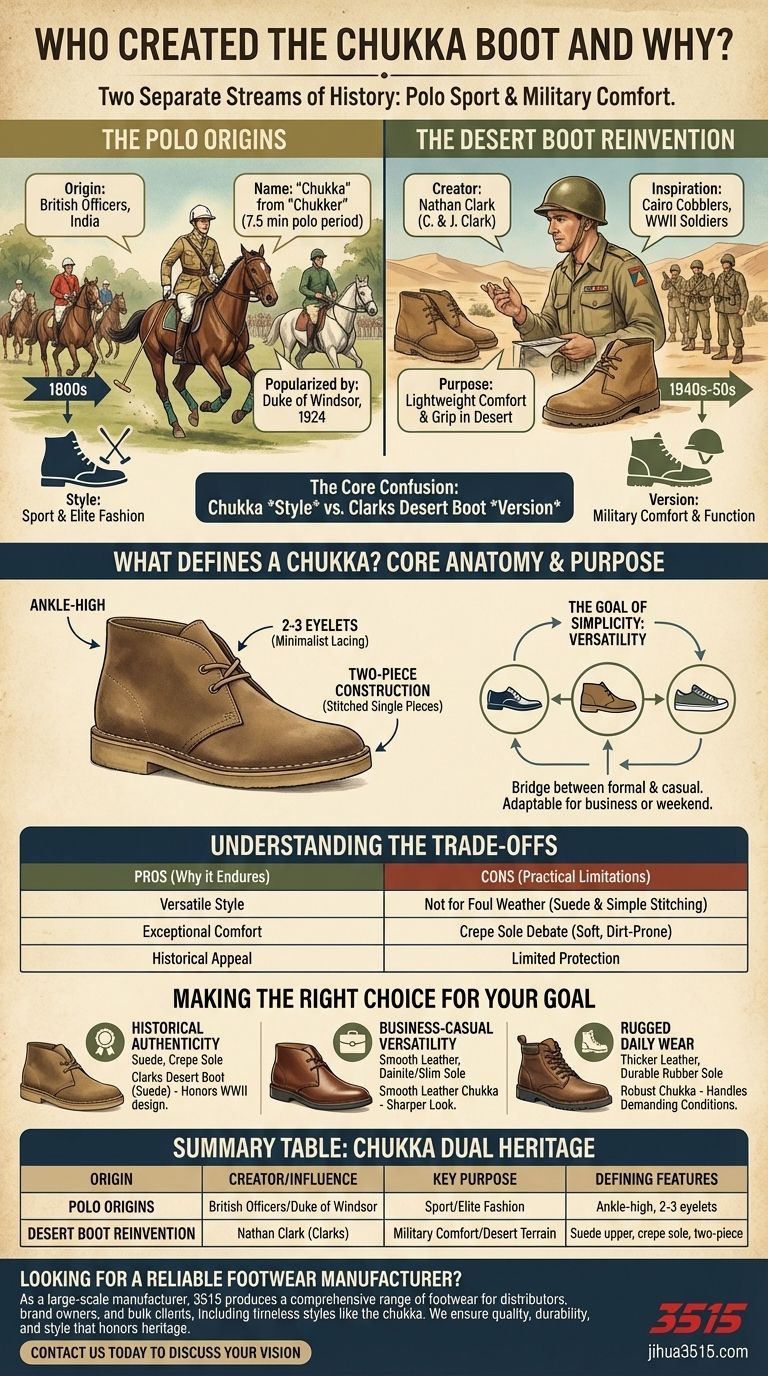
The Two Histories of the Chukka Boot
To truly understand the boot's lineage, we must separate the original concept from its most famous reinvention. One was designed for sport among the elite, the other for comfort among soldiers.
The Polo Origins
The chukka boot’s name and style trace back to British Army officers stationed in India during the colonial period.
These officers adopted a lightweight, ankle-high boot for playing polo. The name "chukka" is derived from "chukker," the term for a seven-and-a-half-minute period of play in a polo match.
The style gained significant Western popularity in 1924, not through a designer, but through a style icon: the Duke of Windsor. After a visit to India, he brought pairs of chukkas back and wore them frequently, introducing the comfortable, versatile boot to high society.
The Desert Boot Reinvention
The version most people recognize today was created by Nathan Clark of the British shoe company C. & J. Clark.
While serving as an officer in World War II, Clark noticed soldiers in North Africa wearing simple, sand-colored suede boots with crepe rubber soles. These shoes were commissioned from Cairo cobblers and prized for their lightweight comfort and grip in desert conditions.
Inspired, Nathan Clark designed his own version: the Clarks Desert Boot. His design used just two pieces of leather and a natural crepe sole, focusing on maximum comfort and durability for the exact purpose of navigating desert terrain. This specific model became a global phenomenon and is now synonymous with the chukka style.
What Truly Defines a Chukka?
Despite the two origin stories, the core design principles of the chukka have remained remarkably consistent. This simplicity is the key to its enduring appeal.
The Core Anatomy
A boot is generally considered a chukka if it has three key features.
First, it is ankle-high. Second, it features a minimalist lacing system with only two or three eyelets. Finally, it is traditionally constructed from two single pieces of leather stitched together.
The Goal of Simplicity
The chukka's purpose is versatility. Its unadorned design allows it to function as a bridge between formal dress shoes and casual sneakers.
Whether made of suede or smooth leather, it can be dressed up for a business-casual environment or dressed down for a weekend. This adaptability is the primary reason for its century-long relevance.
Understanding the Trade-offs
The chukka's minimalist design comes with practical limitations that are important to recognize.
Not a True Foul-Weather Boot
The traditional unlined construction and simple stitching offer limited protection from heavy rain or snow. Suede versions, in particular, are susceptible to water damage if not properly treated.
The Crepe Sole Debate
The crepe rubber sole of the iconic Clarks Desert Boot provides exceptional cushioning and comfort.
However, crepe is softer and less durable than hard rubber or leather soles. It also tends to darken and collect dirt easily, which can detract from a clean, formal look.
Making the Right Choice for Your Goal
Your reason for wanting a chukka should guide your selection.
- If your primary focus is historical authenticity: The classic Clarks Desert Boot in suede is the definitive choice that honors the WWII-inspired design.
- If your primary focus is business-casual versatility: Opt for a chukka in smooth leather with a more durable Dainite or slim leather sole for a sharper look.
- If your primary focus is rugged daily wear: Look for chukkas made from thicker leathers or with sturdy, hard-wearing rubber soles that can handle more demanding conditions.
Understanding its dual heritage of sport and service allows you to choose a chukka that perfectly aligns with both history and your personal style.
Summary Table:
| Origin Story | Creator/Influence | Key Purpose | Defining Features |
|---|---|---|---|
| Polo Origins | British Army Officers / Duke of Windsor | Sport (Polo), Elite Fashion | Ankle-high, 2-3 eyelets, minimalist design |
| Desert Boot Reinvention | Nathan Clark (Clarks) | Military Comfort, Desert Terrain | Suede upper, crepe rubber sole, two-piece construction |
Looking for a reliable manufacturer for your next footwear line?
As a large-scale manufacturer, 3515 produces a comprehensive range of footwear for distributors, brand owners, and bulk clients. Our production capabilities encompass all types of shoes and boots, including timeless styles like the chukka. We ensure quality, durability, and style that honors heritage while meeting modern demands.
Contact us today to discuss how we can bring your footwear vision to life with precision and scale.
Visual Guide
Related Products
- Durable Leather Tactical Boots Wholesale & Custom Manufacturing for Brands
- Premium Wholesale Tactical Style Safety Shoes Boots with Quick Lacing
- Wholesale High-Traction Camo Boots - Custom Manufacturer for Brands
- Durable Leather High-Ankle Tactical Boots for Wholesale & Custom Manufacturing
- Durable Leather Work Boots Wholesale Manufacturer & Custom Factory
People Also Ask
- What specialized protections do tactical boots offer? Maximize Endurance with High-Performance Footwear
- What features should law enforcement officers look for in tactical boots? Essential Guide for Safety & Performance
- Importance of Professional Tactical Boots in Loess Gully Regions: Ensure Safety and Precision for Field Monitoring
- What is rucking, and why are tactical boots suitable for it? Discover the Ultimate Footwear for Heavy Loads
- What makes the traction of tactical boots superior? Unlock the Science of Unbeatable Grip



















