
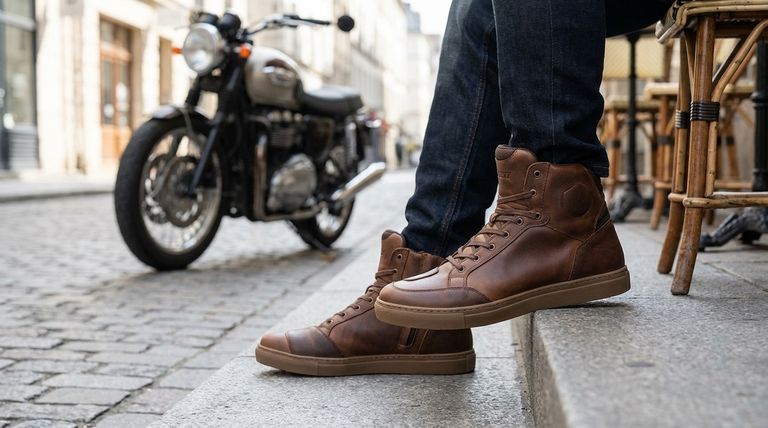
At their core, street or casual motorcycle boots are a hybrid form of footwear designed to bridge the gap between everyday sneakers and highly specialized riding boots. They integrate crucial safety features like abrasion-resistant materials and subtle armor into a design that is comfortable and stylish enough for off-the-bike wear. While they offer significantly more protection than standard shoes, they prioritize walkability and aesthetics over the absolute protection found in taller, more rigid boots.
The central takeaway is this: Casual motorcycle boots are a purpose-built compromise. They sacrifice the maximum protection of dedicated racing or touring boots in exchange for all-day comfort and versatility, making them an ideal choice for urban commuters and short-distance riders.
The Anatomy of a Casual Riding Boot
To understand their value, you must first recognize the protective features hidden within their conventional appearance. These boots are engineered with specific motorcycle-related risks in mind.
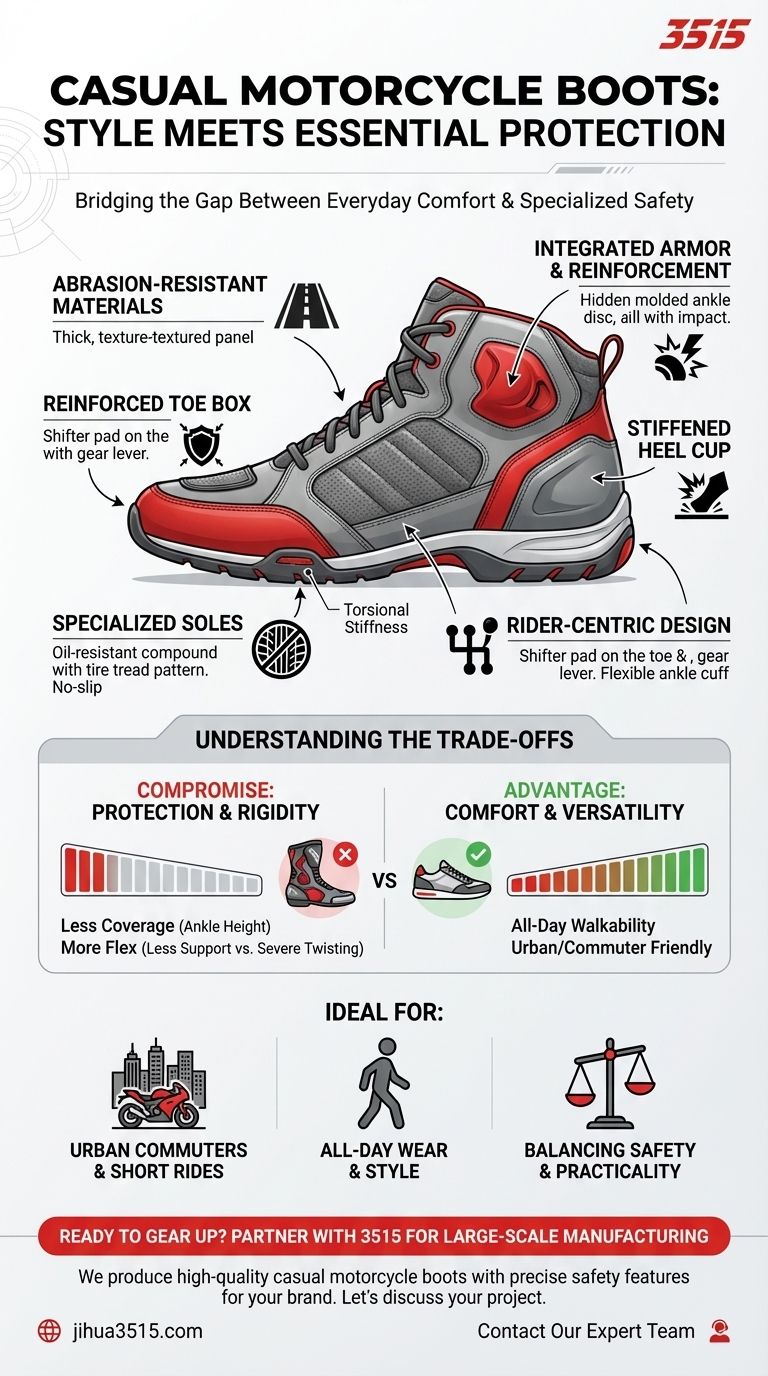
Abrasion-Resistant Materials
Unlike regular shoes made of canvas or thin leather, street riding boots are constructed from durable materials. This often includes thick, heavy leather or specialized textiles designed to withstand sliding on pavement in the event of a fall.
Integrated Armor and Reinforcement
Critical areas of the foot are protected by built-in armor. Look for a reinforced toe box (sometimes with steel) and a stiffened heel cup. Many models also include molded ankle protection, which are small, hardened discs or plates sewn into the boot to shield the vulnerable ankle bones from impact.
Specialized Soles
The sole of a riding boot is a key safety component. It should be made from an oil-resistant compound to ensure a firm grip on various surfaces. More importantly, it must have torsional stiffness, which prevents the boot from twisting and protects your foot from dangerous flexing injuries during a crash.
Rider-Centric Design
These boots include features tailored to the act of riding. A built-in shifter pad, an extra layer of material on top of the toe area, prevents wear from the motorcycle's gear lever. The construction is typically low-cut, ending at or just above the ankle for flexibility.
Understanding the Trade-offs
Choosing a casual riding boot is an intentional decision that involves balancing safety with practicality. It is critical to understand what you are giving up compared to more protective options.
Protection Level vs. Coverage
The most obvious trade-off is height. Because casual boots typically stop at the ankle, they offer no protection for the shin or calf against impacts or abrasion. Furthermore, many use laces, which can pose a snagging hazard on foot controls or other moving parts if not properly secured.
Structural Rigidity vs. Flexibility
A dedicated race boot is extremely rigid and features heavy bracing to prevent hyper-extension of the ankle. A casual boot is far more flexible to allow for comfortable walking. This flexibility, while a benefit for comfort, means it offers less support against severe twisting forces in a high-energy crash.
All-Day Comfort vs. Absolute Security
This is the primary advantage of the casual boot. You can ride to your destination, get off the bike, and walk around comfortably for hours. Taller, more heavily armored boots are often stiff and cumbersome, making them impractical for anything other than riding.
Making the Right Choice for Your Riding Style
The right boot is the one that best matches the risks of your typical ride.
- If your primary focus is daily commuting and short urban rides: Casual boots provide an excellent blend of essential protection, comfort, and style for lower-speed environments.
- If your primary focus is spirited canyon carving or track days: You must invest in dedicated touring or racing boots that offer superior ankle support, coverage, and structural rigidity.
- If your primary focus is balancing safety with off-bike style: Street boots are specifically designed to look like regular footwear while hiding the crucial safety features you need for casual riding.
Ultimately, choosing the right footwear is about making an informed decision to protect yourself appropriately for the way you ride.
Summary Table:
| Feature | Purpose | Benefit |
|---|---|---|
| Abrasion-Resistant Materials | Withstand sliding on pavement during a fall. | Superior durability compared to regular shoes. |
| Integrated Armor (Ankle, Toe, Heel) | Protect vulnerable areas from impact. | Reduces risk of serious foot and ankle injuries. |
| Specialized, Oil-Resistant Soles | Provide grip and prevent twisting injuries. | Ensures stable footing on bike pegs and the ground. |
| Rider-Centric Design (Shifter Pad) | Prevents wear from gear lever; low-cut for flexibility. | Enhanced comfort and longevity for daily riding. |
Ready to Gear Up with Confidence? Partner with 3515 for Your Motorcycle Boot Production.
As a large-scale manufacturer, 3515 produces a comprehensive range of footwear for distributors, brand owners, and bulk clients. Our production capabilities encompass all types of shoes and boots, including high-quality casual motorcycle boots built with the precise safety features and stylish designs your customers demand.
We can help you bring durable, comfortable, and protective riding footwear to market efficiently. Let's discuss your project and how we can add value to your supply chain.
Contact our expert team today to request a quote
Visual Guide
Related Products
- Wholesale Comfortable Business Casual Shoes Custom Manufacturing
- Wholesale Lightweight Tactical Boots with Dial Closure OEM & Bulk Orders
- Durable Goodyear Welt Leather Work Boots for Wholesale & Private Label
- Wholesale Durable Mid-Cut Tactical Boots for Custom & Private Label Brands
- Wholesale Tactical Boots High-Traction & Reflective for Bulk & Brand Orders
People Also Ask
- What are the key characteristics of business casual shoes? Achieve Polished Versatility for Your Wardrobe
- Which types of shoes should be avoided with business casual attire? Maintain a Polished Professional Image
- What should be considered when selecting shoes for a casual business setting? Achieve the Perfect Balance of Style and Comfort
- What is the recommended approach to trying on business casual shoes? Ensure a Perfect Fit for Your Workday
- What are some types of business casual shoes? Build a Versatile & Professional Footwear Wardrobe



















