
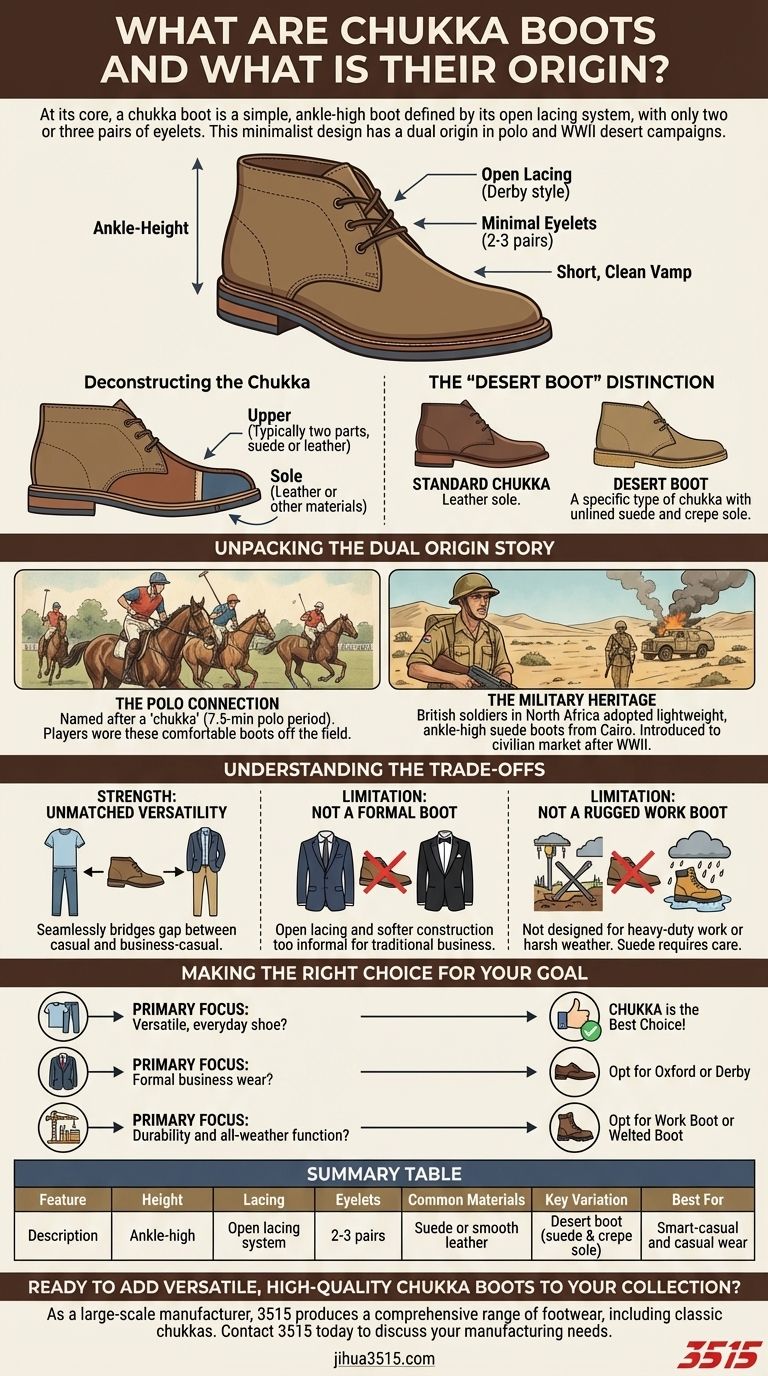
At its core, a chukka boot is a simple, ankle-high boot defined by its open lacing system, which features only two or three pairs of eyelets. This minimalist design, typically crafted from suede or smooth leather, has a dual origin story rooted in both the sport of polo and the desert campaigns of British soldiers during World War II.
The key to understanding the chukka is recognizing its minimalist construction. Its defining characteristic is not the material or the sole, but its simple two-to-three eyelet lacing, which gives it a clean profile and remarkable versatility.

Deconstructing the Chukka Boot
To truly understand what makes a chukka, you must look past the general shape and focus on its specific anatomical details. These features are what separate it from other ankle boots.
The Defining Features
A true chukka is identified by a few non-negotiable characteristics. It is always ankle-height and features open lacing, similar to a Derby shoe.
The most critical identifier is its minimal number of eyelets—almost always just two or three pairs. This creates a short, clean vamp (the front part of the shoe) and an uncluttered silhouette.
Finally, the upper part of the boot is traditionally constructed from two parts, each cut from a single piece of leather, giving it a simple and durable structure.
The "Desert Boot" Distinction
The terms "chukka boot" and "desert boot" are often used interchangeably, but there is a crucial distinction. A desert boot is a specific type of chukka boot.
Desert boots were developed for British soldiers in North Africa and are characterized by their unlined suede uppers and a soft, flexible crepe rubber sole.
Therefore, all desert boots are chukkas, but not all chukkas are desert boots. A chukka can have a leather sole and a more structured design, making it slightly more formal.
Unpacking the Dual Origin Story
The history of the chukka is what solidifies its identity as a bridge between sportswear and functional military attire.
The Polo Connection
The name "chukka" is borrowed directly from the game of polo, where a "chukka" or "chukker" refers to a seven-and-a-half-minute period of play.
It is believed that players wore a version of these comfortable, flexible boots off the field, and the name became associated with the style.
The Military Heritage
The boot's global popularity is a direct result of its use by British soldiers during the Western Desert Campaign of World War II.
Soldiers found the lightweight, ankle-high suede boots sold in Cairo's bazaars to be far more comfortable and practical in the heat than their standard-issue military boots.
After the war, this "desert boot" style was introduced to the civilian market, where it quickly became a staple of casual and smart-casual menswear from the 1940s onward.
Understanding the Trade-offs
The chukka's simplicity is both its greatest strength and the source of its limitations. Understanding these trade-offs is key to wearing it effectively.
Strength: Unmatched Versatility
The chukka's clean lines allow it to seamlessly bridge the gap between casual and business-casual attire. It pairs as easily with jeans and a t-shirt as it does with chinos and a sport coat.
Limitation: Not a Formal Boot
Despite its elegance, a chukka is not a substitute for a true dress shoe like an Oxford. Its open lacing and often softer construction make it too informal for a traditional business suit or black-tie event.
Limitation: Not a Rugged Work Boot
While its military origins speak to its practicality, the modern chukka is not designed for heavy-duty work or harsh weather. Suede versions, in particular, require care and are not suited for wet or muddy conditions.
Making the Right Choice for Your Goal
To decide if a chukka boot fits your needs, consider its intended purpose in your wardrobe.
- If your primary focus is a versatile, everyday shoe: The chukka is one of the best investments you can make, effortlessly handling most casual and smart-casual situations.
- If your primary focus is formal business wear: You should opt for a more traditional dress shoe like a leather Oxford or Derby.
- If your primary focus is durability and all-weather function: A purpose-built work boot or a more robust leather boot with a welted sole would be a better choice.
Ultimately, the chukka boot's enduring appeal comes from its elegant simplicity and rich heritage.
Summary Table:
| Feature | Description |
|---|---|
| Height | Ankle-high |
| Lacing | Open lacing system (Derby style) |
| Eyelets | 2-3 pairs |
| Common Materials | Suede or smooth leather |
| Key Variation | Desert boot (a type of chukka with suede & crepe sole) |
| Best For | Smart-casual and casual wear; not for formal suits or rugged work |
Ready to add versatile, high-quality chukka boots to your collection?
As a large-scale manufacturer, 3515 produces a comprehensive range of footwear for distributors, brand owners, and bulk clients. Our production capabilities encompass all types of shoes and boots, including classic chukkas built with the heritage and quality your customers expect.
Contact 3515 today to discuss your manufacturing needs and discover how we can be your trusted partner in footwear.
Visual Guide
Related Products
- Wholesale Safety Boots Manufacturer for Custom & Private Label Orders
- Premium Wholesale Tactical Style Safety Shoes Boots with Quick Lacing
- Factory Direct Wholesale Rain Boots Durable Waterproof & Fully Customizable
- Wholesale High-Traction Camo Boots - Custom Manufacturer for Brands
- Durable Leather High-Ankle Tactical Boots for Wholesale & Custom Manufacturing
People Also Ask
- Why is proper storage important for safety boots? Preserve Protection and Extend Lifespan
- How should safety boots be cleaned to avoid damage? A Gentle Guide to Preserve Your Boots
- What are the risks of using ordinary rubber boots in forest clearing? Why professional safety boots are essential
- What are the key features of safety boots? Essential Protection for Hazardous Workplaces
- What are the consequences of not wearing safety boots? Protect Your Finances and Career



















