
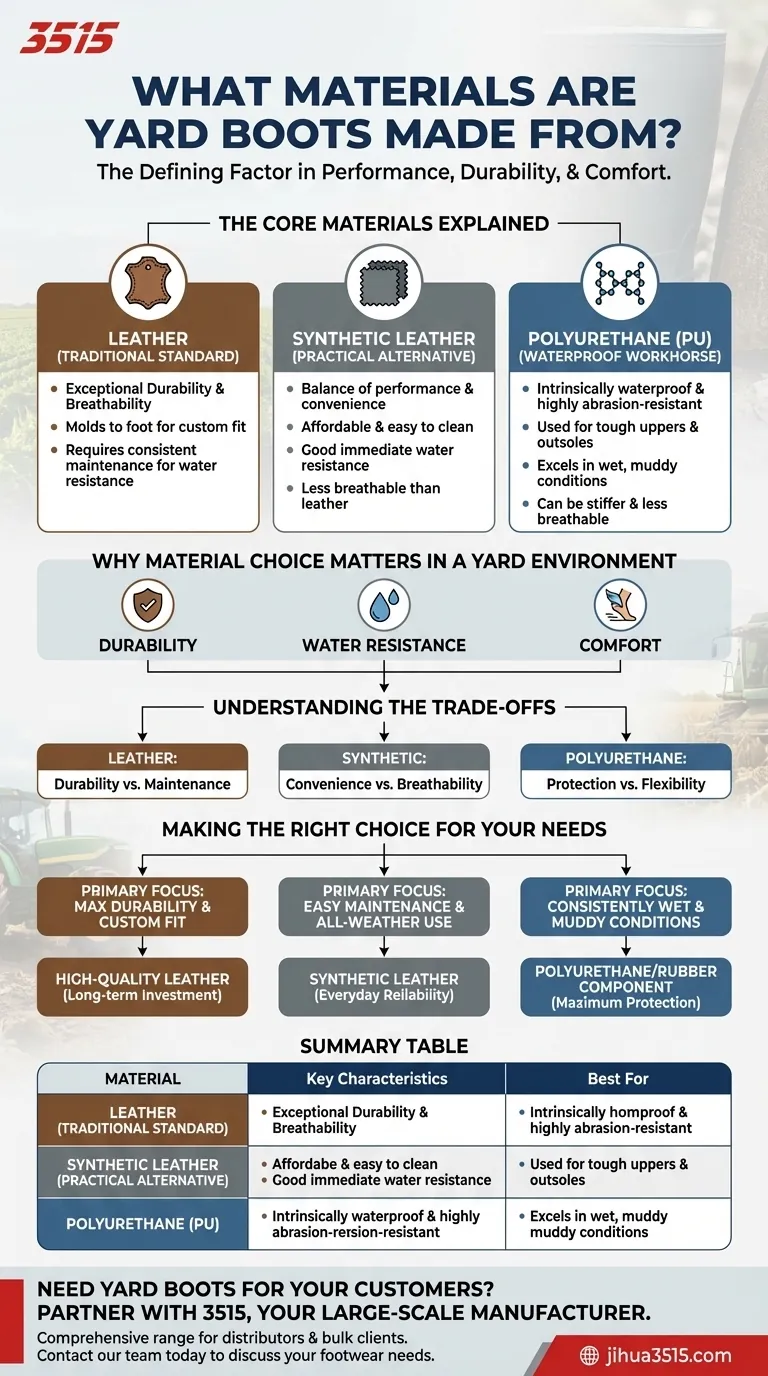
At their core, yard boots are most commonly constructed from three primary materials: genuine leather, synthetic leather, and polyurethane. Each material is chosen to provide a specific balance of durability, water resistance, and comfort required for the demanding environment of a stable, farm, or yard.
The specific material used in a yard boot is not just a detail; it is the defining factor that determines its performance. Your choice between leather, synthetic leather, or polyurethane directly impacts the boot's durability, weather protection, and maintenance requirements.
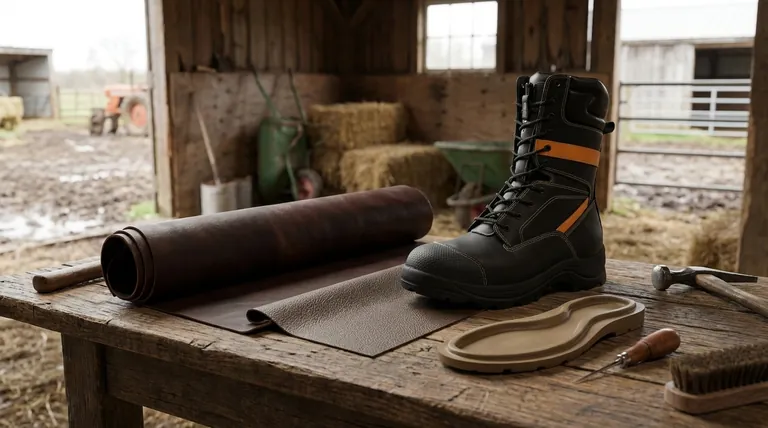
The Core Materials of Yard Boots Explained
Understanding the properties of each material is key to selecting a boot that will stand up to the rigors of daily use. While other boots like Wellingtons or hiking boots use a wider array of materials, yard boots focus on a specific blend of toughness and practicality.
Leather (The Traditional Standard)
Leather is the classic choice for high-quality work and riding footwear. Its primary advantage is its exceptional durability and natural breathability.
When properly cared for, a leather boot will mold to the wearer's foot, providing a custom fit and superior comfort for long hours.
Synthetic Leather (The Practical Alternative)
Synthetic leather offers a balance of performance and convenience. It is often more affordable and easier to clean than genuine leather.
This material provides good water resistance from the start and requires less maintenance, making it a popular choice for everyday, all-weather yard work.
Polyurethane (The Waterproof Workhorse)
Polyurethane (PU) is a type of polymer often used for the uppers and, crucially, the tough outsoles of yard boots. It is intrinsically waterproof and highly resistant to abrasion.
Boots with significant polyurethane components excel in wet, muddy conditions, offering protection similar to that of rubber or PVC boots but often in a more structured, supportive design.
Why Material Choice Matters in a Yard Environment
The unique challenges of a yard—from wet ground to abrasive surfaces—place specific demands on your footwear. The material must be suited to the task.
The Need for Durability
Yard work involves constant contact with dirt, gravel, and equipment. Leather's natural toughness and the abrasion resistance of polyurethane are essential for a long service life.
The Importance of Water Resistance
Working in a yard almost always means encountering water, mud, or muck. Polyurethane and synthetic leather offer immediate, low-maintenance waterproof performance. Leather can be highly water-resistant but requires consistent treatment and conditioning to maintain its barrier.
The Requirement for All-Day Comfort
Long hours on your feet demand a boot that is supportive and comfortable. Leather's ability to breathe and conform to your foot is a major benefit, while modern synthetic boots often use specialized linings like fleece or wool for added comfort and insulation.
Understanding the Trade-offs
No single material is perfect for every situation. Choosing the right boot involves balancing competing benefits.
Leather: Durability vs. Maintenance
High-quality leather offers unparalleled durability and comfort once broken in. However, it requires regular cleaning and conditioning to prevent it from drying out, cracking, and losing its water resistance.
Synthetic Leather: Convenience vs. Breathability
Synthetic materials provide excellent value and are easy to maintain. The trade-off can be reduced breathability compared to genuine leather, which might be a factor during hard work in warm weather.
Polyurethane: Protection vs. Flexibility
Boots made primarily of polyurethane offer maximum protection from water and chemicals. However, they can be stiffer and less breathable than leather or synthetic leather options.
Making the Right Choice for Your Needs
Your ideal boot depends entirely on your daily tasks and priorities.
- If your primary focus is maximum durability and a custom fit: A high-quality leather boot is the best long-term investment.
- If your primary focus is easy maintenance and reliable, all-weather use: Look for a boot made from synthetic leather.
- If your primary focus is working in consistently wet, muddy conditions: A boot with a significant polyurethane or rubber component will provide the best protection.
Ultimately, selecting the right material ensures your boots will work as hard as you do.
Summary Table:
| Material | Key Characteristics | Best For |
|---|---|---|
| Leather | Exceptional durability, breathable, molds to foot | Long-term investment, maximum comfort |
| Synthetic Leather | Affordable, easy to clean, good water resistance | Everyday use, easy maintenance |
| Polyurethane (PU) | Intrinsically waterproof, abrasion-resistant | Wet, muddy conditions, maximum protection |
Need Yard Boots for Your Customers? Partner with 3515, Your Large-Scale Manufacturer.
As a leading manufacturer, 3515 produces a comprehensive range of durable footwear for distributors, brand owners, and bulk clients. Our production capabilities encompass all types of yard boots, ensuring the perfect balance of material performance, comfort, and value for your market.
Contact our team today to discuss your footwear needs and leverage our manufacturing expertise.
Visual Guide
Related Products
- High-Traction Suede Tactical Boots Wholesale & Custom Manufacturing
- Durable Leather Work Boots for Wholesale & Custom Manufacturing
- Durable Leather Tactical Boots Wholesale & Custom Manufacturing for Brands
- Durable Leather Work Boots for Wholesale & Custom OEM Manufacturing
- Wholesale Leather Work Boots with Customizable Wedge Sole for Brands
People Also Ask
- Why is sequential analysis utilized to evaluate tactical boots? Master Dynamic Boot Development and Ergonomic Performance
- How does the material of tactical boots affect their performance? Choose the Right Material for Your Mission
- How do tactical boots differ from regular boots? Performance, Durability & Design Explained
- How do military uniforms and tactical boots impact the prediction of thermal risk? Essential Safety Insights
- What are the benefits of integrating FES and sEMG into tactical boots? Safety, Reliability & Field-Ready Performance


















