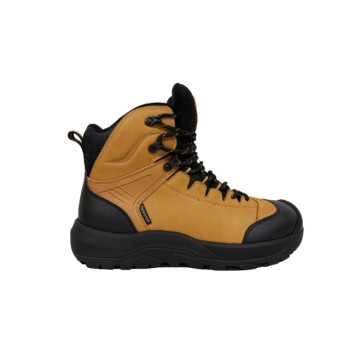
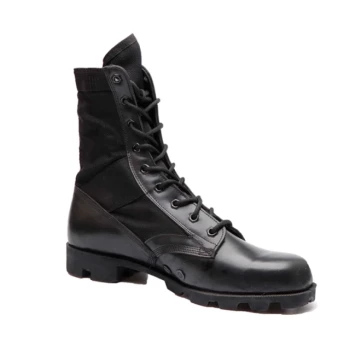
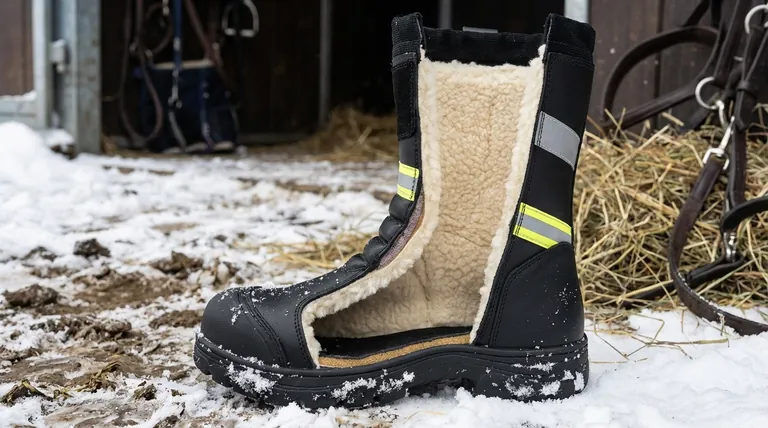
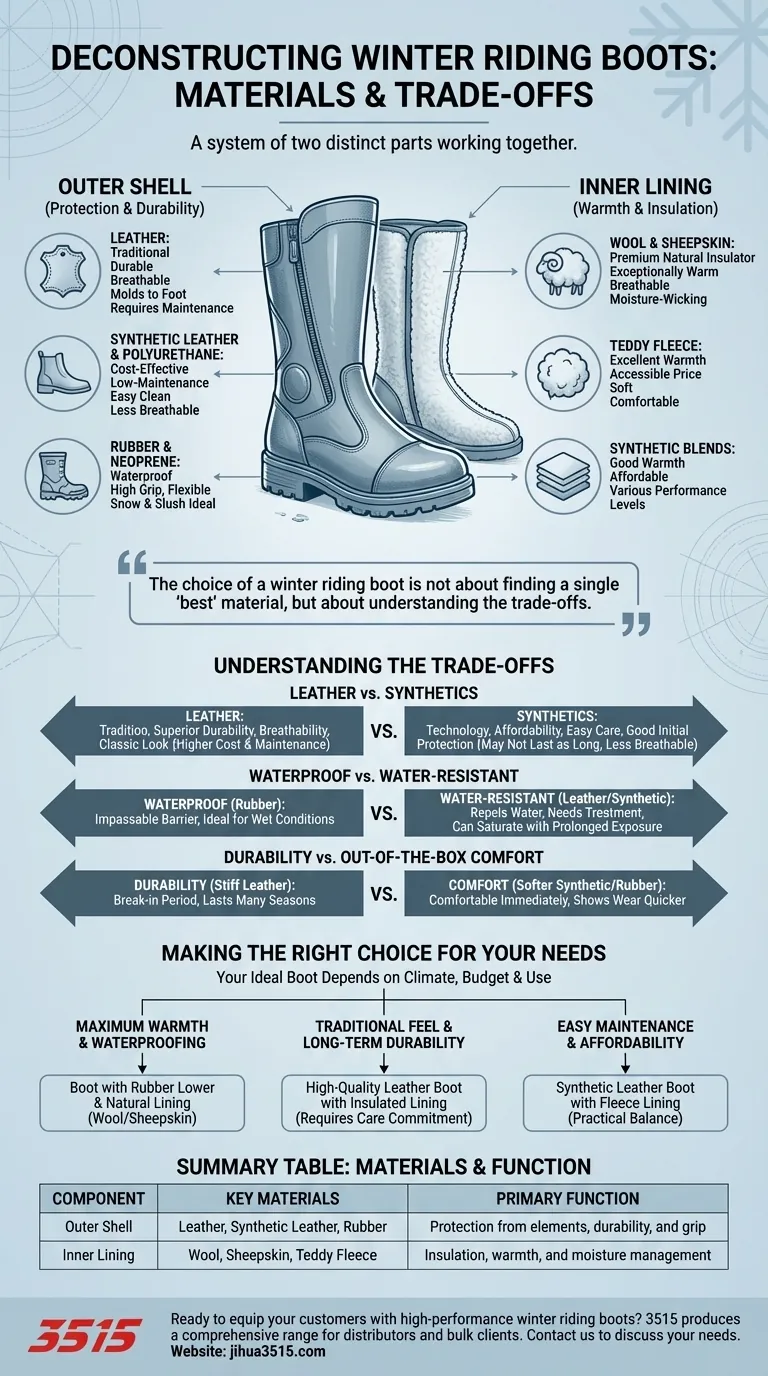
At their core, winter riding boots are a system of two distinct parts working together. The outer shell, your defense against the elements, is typically constructed from materials like leather, synthetic leather, or rubber. The inner lining, which provides crucial warmth, is most often made from insulating materials such as teddy fleece, wool, or sheepskin.
The choice of a winter riding boot is not about finding a single "best" material, but about understanding the trade-offs. You are essentially deciding between the traditional durability of leather and the low-maintenance, waterproof performance of modern synthetics like rubber and polyurethane.
Deconstructing the Winter Riding Boot: Shell vs. Lining
A proper winter boot is more than just a single piece of material. It's an engineered combination of an outer shell for protection and an inner lining for thermal insulation. Each plays a critical role in keeping you safe and comfortable.
The Outer Shell: Your First Line of Defense
The outer material must withstand moisture, mud, and the general wear of stable work and riding.
Leather is the traditional choice, valued for its durability and ability to mold to your foot over time. It is naturally breathable but requires regular care and conditioning to maintain its water resistance and prevent cracking.
Synthetic Leather & Polyurethane offer a cost-effective and low-maintenance alternative. These materials are easy to wipe clean and provide good initial protection from wet conditions, though they are generally less breathable than real leather.
Rubber & Neoprene are the champions of waterproofing and grip. Boots with rubber lowers are ideal for snow, slush, and mud, while neoprene uppers add flexibility and an extra layer of insulation.
The Inner Lining: The Key to Warmth
The lining's job is to trap body heat and manage moisture to keep your feet warm and dry.
Wool & Sheepskin are premium natural insulators. They are exceptionally warm, breathable, and naturally moisture-wicking, pulling sweat away from your skin to prevent the chilling effect of damp socks.
Teddy Fleece is a common synthetic lining that provides excellent warmth at a more accessible price point. It is soft and comfortable, making it a popular choice for a wide range of winter boots.
Understanding the Trade-offs
Choosing the right material means balancing competing priorities. There is no single perfect boot for every rider or condition.
Leather vs. Synthetics
The primary trade-off is between tradition and technology. Leather offers a classic look, superior durability, and breathability but demands a higher price and consistent maintenance. Synthetics offer affordability and easy care but may not last as long or breathe as well.
Waterproof vs. Water-Resistant
Rubber is genuinely waterproof, creating an impassable barrier to moisture. Leather and many synthetic uppers are water-resistant, meaning they repel water but can become saturated with prolonged exposure unless they are properly treated and feature designs like stitched boot tongues.
Durability vs. Out-of-the-Box Comfort
Stiff leather boots often require a "break-in" period but can last for many seasons. Softer synthetic or rubber boots are typically comfortable immediately but may show wear more quickly under heavy use.
Making the Right Choice for Your Needs
Your ideal boot depends entirely on your climate, budget, and how you use it.
- If your primary focus is maximum warmth and waterproofing: Look for a boot with a rubber lower section and a natural lining like wool or sheepskin.
- If your primary focus is a traditional feel and long-term durability: A high-quality leather boot with an insulated lining is an excellent investment, provided you commit to its care.
- If your primary focus is easy maintenance and affordability: A synthetic leather boot with a fleece lining provides a practical and effective balance for general winter riding.
Ultimately, understanding these material properties allows you to select a boot that delivers the right combination of safety, warmth, and performance for your specific winter needs.
Summary Table:
| Component | Key Materials | Primary Function |
|---|---|---|
| Outer Shell | Leather, Synthetic Leather, Rubber | Protection from elements, durability, and grip |
| Inner Lining | Wool, Sheepskin, Teddy Fleece | Insulation, warmth, and moisture management |
Ready to equip your customers with high-performance winter riding boots?
As a large-scale manufacturer, 3515 produces a comprehensive range of footwear for distributors, brand owners, and bulk clients. Our production capabilities encompass all types of shoes and boots, including durable leather, advanced synthetic, and fully waterproof rubber designs with premium insulating linings.
We can help you source or develop the perfect winter riding boot to meet your market's specific demands for warmth, durability, and value.
Contact us today to discuss your needs and get a quote!
Visual Guide
Related Products
- Premium Insulated Safety Boots and Shoes for Wholesale & Bulk Orders
- Factory Direct Wholesale Rain Boots Durable Waterproof & Fully Customizable
- Durable Waterproof Rain Boots | Custom Manufacturer for Wholesale & Brands
- Heavy-Duty Waterproof Nubuck Safety Boots Safety Shoes for Bulk Supply
- Wholesale Waterproof Tactical Boots Custom Suede & High-Traction Soles
People Also Ask
- What are the recommended insulation ratings for mild winter conditions? A Guide for Active & Stationary Workers
- How does insulation thickness correlate with temperature ranges? A Guide to Choosing the Right Warmth
- What insulation level is needed for severe cold and stationary work? 1200g or Higher is Essential
- What safety advantages do insulated boots offer beyond warmth? Dielectric Protection & Superior Grip
- How does fleece lining contribute to the warmth of insulated boots? Trapping Air for Superior Cold Protection