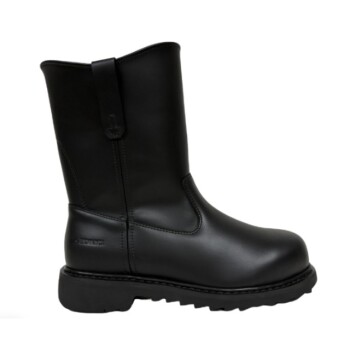
At its core, a hiking boot's upper is constructed from one of four main material categories: full-grain leather, nubuck leather, split-grain leather combined with synthetics, or fully synthetic fabrics. Each material represents a distinct balance of durability, water resistance, breathability, and weight, directly influencing the boot's performance on the trail.
The fundamental choice in hiking boot uppers is a trade-off. You are primarily deciding between the exceptional durability and water resistance of traditional leather and the lighter weight, increased breathability, and faster break-in time of modern synthetics.

The Spectrum of Hiking Boot Uppers
Understanding the material of your boot's upper is the first step in predicting how it will perform in different environments. These materials exist on a continuum from heavy and robust to light and agile.
Full-Grain Leather: The Traditional Workhorse
Full-grain leather is the gold standard for durability and abrasion resistance. It's made from the strongest, outermost part of the hide.
This material offers excellent water resistance, making it ideal for rugged, multi-day backpacking trips in harsh conditions. The trade-off is significant: full-grain leather is heavy, less breathable, and requires a substantial break-in period.
Nubuck Leather: The Balanced Performer
Nubuck is also a type of full-grain leather, but its surface has been buffed to create a soft, suede-like finish.
This process makes it more flexible and quicker to break in than traditional full-grain leather while retaining excellent durability and water resistance. It represents a a great middle-ground for serious hikers who want durability without extreme stiffness.
Split-Grain Leather & Suede: The Hybrid Approach
This material is created when the tough outer layer of the hide is "split" away, leaving the softer inner part. To improve durability, it's almost always paired with panels of synthetic mesh or nylon.
This combination provides good breathability and a lighter overall weight. However, it offers less durability and water resistance than full-grain or nubuck leather options.
Synthetics (Nylon & Polyester): The Modern Athlete
Uppers made entirely of synthetic materials like nylon and polyester are the lightest, most breathable, and often least expensive options available.
They break in very quickly and dry much faster than any leather. The primary drawback is durability; they show wear more quickly, especially at the seams and flex points, making them better suited for day hikes or light backpacking.
The Role of Waterproof-Breathable Membranes
Many modern boots, regardless of the primary upper material, incorporate a waterproof-breathable membrane like Gore-Tex (GTX). This is a critical component that sits between the upper material and your foot.
How They Work
These membranes are engineered with pores small enough to block liquid water molecules from entering but large enough to allow water vapor (sweat) to escape.
This technology is what makes a boot truly "waterproof" rather than just "water-resistant."
The Breathability Compromise
While these membranes are designed to be breathable, they inherently reduce the overall airflow of the boot.
In hot, dry conditions, a waterproof boot will always feel warmer and clammier than a non-waterproof counterpart. Furthermore, if water does get inside the boot (e.g., by overtopping the cuff in a river), the membrane will significantly slow down the drying process.
Understanding the Key Trade-offs
Choosing an upper material is never about finding the "best" one, but the right one for your specific needs. This involves balancing four key performance metrics.
Durability vs. Weight
This is the most direct trade-off. Full-grain leather is the heaviest but will withstand the most abuse from rocks, roots, and off-trail scrambling. Synthetics are exceptionally light but will degrade much faster under similar conditions.
Water Resistance vs. Breathability
A thick leather upper is naturally highly water-resistant but offers poor breathability. A lightweight synthetic mesh upper provides maximum breathability but will let water in almost immediately without a waterproof liner.
Break-in Time vs. Out-of-the-Box Comfort
Stiff, durable leather boots often require many miles to mold to your feet and become comfortable. Lighter synthetic boots, by contrast, typically feel comfortable right out of the box with little to no break-in period required.
Choosing the Right Upper for Your Hike
Your intended use should be the ultimate guide for your decision. Match the material's strengths to the demands of your typical adventure.
- If your primary focus is rugged, off-trail backpacking: Choose a full-grain or nubuck leather upper for maximum durability and protection.
- If your primary focus is fast-and-light day hiking: Opt for a synthetic upper for its low weight, high breathability, and immediate comfort.
- If your primary focus is all-around versatility for varied conditions: A split-grain leather/synthetic hybrid or a flexible nubuck boot offers the best balance of features.
- If your primary focus is hiking in consistently wet or cold environments: Select any upper material that includes a waterproof-breathable membrane to keep your feet dry from external moisture.
By understanding the inherent properties of each material, you can confidently select a boot that will perform as an asset, not a liability, on your next hike.
Summary Table:
| Material Type | Durability | Water Resistance | Breathability | Weight | Best For |
|---|---|---|---|---|---|
| Full-Grain Leather | Excellent | Excellent (High) | Low | Heavy | Rugged, off-trail backpacking |
| Nubuck Leather | Excellent | Excellent | Moderate | Heavy-Moderate | All-around versatility, harsh conditions |
| Split-Grain & Synthetic Hybrid | Good | Moderate (with membrane) | Good | Moderate | Varied conditions, balanced performance |
| Full Synthetics (Nylon/Polyester) | Fair | Low (requires membrane) | Excellent | Light | Fast-and-light day hiking, dry climates |
Ready to Source High-Performance Hiking Boots?
As a large-scale manufacturer, 3515 produces a comprehensive range of footwear for distributors, brand owners, and bulk clients. Our production capabilities encompass all types of shoes and boots, including high-quality hiking boots built with the right materials for your target market.
We help you:
- Develop Custom Boots: Tailor uppers (leather or synthetic) and features to match your brand's performance needs.
- Ensure Quality & Durability: Leverage our manufacturing expertise to deliver reliable products that build customer trust.
- Scale Production Efficiently: Meet demand for bulk orders with consistent quality and competitive pricing.
Let's discuss your next hiking boot line. Contact our team today to get started.
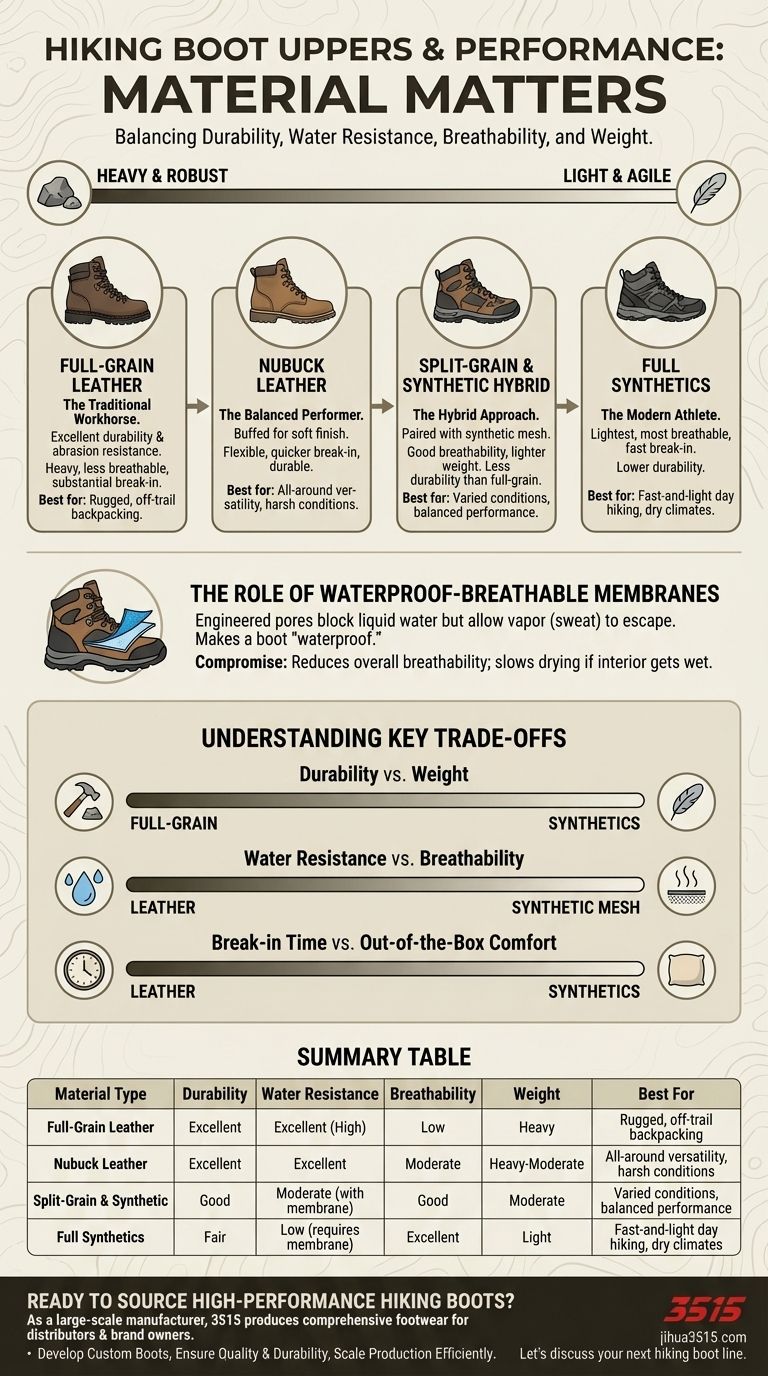
Visual Guide
Related Products
- Factory-Direct Wholesale Canvas Boots with High-Traction Rubber Soles
- Durable Rubber Sole Outdoor Shoes Wholesale & Custom Manufacturing
- Wholesale Waterproof Tactical Boots Custom Suede & High-Traction Soles
- Durable Leather High-Ankle Tactical Boots for Wholesale & Custom Manufacturing
- Wholesale High-Traction Camo Boots - Custom Manufacturer for Brands
People Also Ask
- What types of jobs are canvas work boots suitable for? Ideal for Light-Duty, High-Mobility Roles
- What are the functional advantages of choosing rubber soles over leather soles for work boots? Superior Safety & Durability
- What are the advantages of rubber soles for work boots? Unbeatable Grip & Durability
- Why are slip-resistant soles important in work boots? Prevent Slips & Boost Safety
- What are the benefits and limitations of using canvas as a primary material for footwear? Key B2B Manufacturing Insights