
For truly durable motorcycle boots, the most recommended material is high-quality, heavy-duty leather, specifically full-grain or top-grain leather. These materials offer an unparalleled combination of abrasion resistance, impact protection, and long-term structural integrity, making them the benchmark for rider safety.
The most durable material is only part of the equation. True durability and protection come from a combination of high-quality leather as the primary chassis, reinforced with modern armor in critical impact zones like the ankles, heel, and shin.
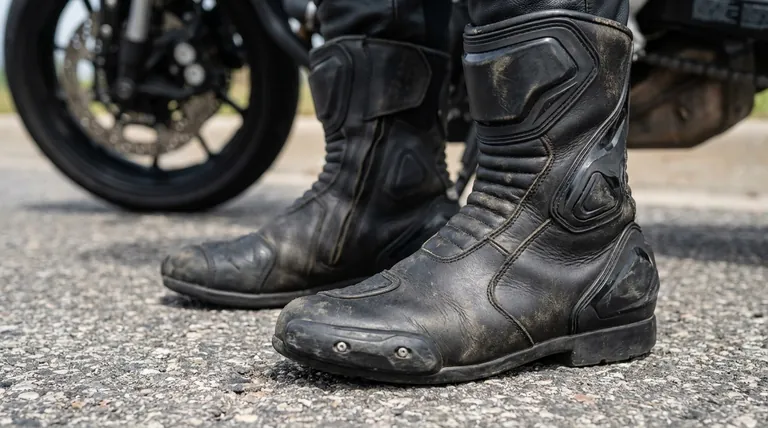
Why Material Choice is Critical for Rider Safety
A motorcycle boot isn't just footwear; it's a critical piece of safety equipment. It must protect you from two primary forces during a fall: abrasion from sliding on pavement and impact from hitting the ground or other objects.
The Gold Standard: Full-Grain Leather
Full-grain leather is made from the strongest, outermost layer of the animal hide. Its fibers are dense and have not been sanded or buffed, preserving the hide's natural strength.
This makes it exceptionally resistant to tearing and abrasion. In a slide, this is the material that will hold up the longest, protecting your skin.
A Practical Alternative: Top-Grain Leather
Top-grain leather is the second-highest quality. The very top layer is lightly sanded to remove imperfections, making it slightly more pliable and thinner than full-grain.
While it has marginally less abrasion resistance than full-grain, it is still an excellent and highly durable choice for motorcycle boots, offering a great balance of protection and comfort.
The Role of Armor and Reinforcement
The boot's leather shell provides abrasion resistance, but dedicated armor handles impacts. Modern boots integrate rigid materials to protect vulnerable areas.
Look for TPU (Thermoplastic Polyurethane) or carbon fiber reinforcements in the ankle, shin, heel counter, and toe box. This internal or external armor is designed to absorb and distribute the force of a direct impact, preventing fractures and crushing injuries.
Understanding the Trade-offs
No single material is perfect for every rider or every condition. Understanding the inherent compromises is key to making an informed decision.
Leather: Unmatched Protection, Requires Care
The primary benefit of leather is its proven, superior resistance to abrasion. It molds to your foot over time for a custom fit.
However, leather requires a break-in period, can be heavy, and may not be inherently waterproof without a dedicated membrane. It also requires occasional cleaning and conditioning to maintain its integrity.
Advanced Textiles: Comfort and Versatility
Some modern boots use advanced synthetic textiles like Cordura® or microfiber materials. These materials often offer excellent day-one comfort, are lightweight, and can be highly water-resistant.
The main trade-off is that even the best textiles generally do not offer the same level of abrasion resistance as a thick, high-quality piece of leather in a prolonged slide. They are often better suited for touring or adventure riding where weather protection and comfort are priorities.
Making the Right Choice for Your Riding Style
Your final choice should align directly with your primary use case and safety priorities.
- If your primary focus is maximum protection for track or aggressive street riding: Choose a full-grain leather boot with extensive external TPU armor and rigid ankle-bracing systems.
- If your primary focus is all-weather commuting or long-distance touring: Look for top-grain leather or advanced textile boots that incorporate a waterproof, breathable membrane like Gore-Tex.
- If your primary focus is casual urban riding: A top-grain leather boot with more discreet, reinforced ankle, heel, and toe protection offers a great balance of safety and style.
Ultimately, investing in a boot made from the right materials is a direct investment in your safety and confidence on the road.
Summary Table:
| Material / Feature | Key Benefit | Best For |
|---|---|---|
| Full-Grain Leather | Maximum abrasion resistance | Track & aggressive street riding |
| Top-Grain Leather | Excellent protection & comfort | All-around street & commuting |
| TPU / Carbon Armor | Impact absorption on ankles/heels | All riding styles for critical safety |
| Advanced Textiles (e.g., Cordura) | Lightweight & weather-resistant | Touring & adventure riding |
Need high-quality, durable motorcycle boots for your customers?
As a large-scale manufacturer, 3515 produces a comprehensive range of safety footwear for distributors, brand owners, and bulk clients. Our production capabilities encompass all types of motorcycle boots, from rugged full-grain leather models with integrated armor to versatile touring boots.
We can help you source or customize boots that perfectly balance protection, comfort, and style for your target market.
Contact our expert team today to discuss your production needs and get a quote.
Visual Guide
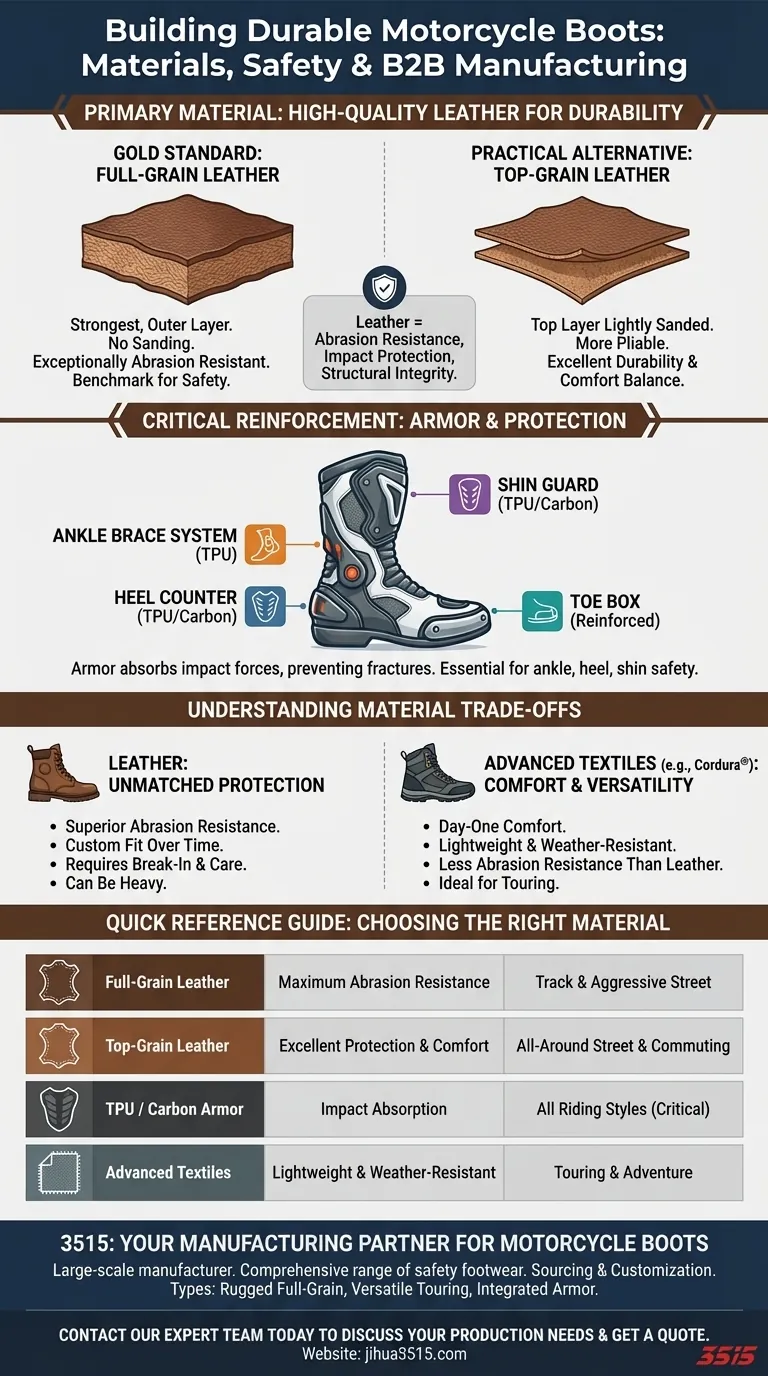
Related Products
- Wholesale Tactical Boots High-Traction & Reflective for Bulk & Brand Orders
- High Performance Fire-Retardant Waterproof Safety Boots
- Durable Goodyear Welt Leather Work Boots for Wholesale & Private Label
- Wholesale High-Traction Camo Boots - Custom Manufacturer for Brands
- Wholesale Waterproof Tactical Boots Custom Suede & High-Traction Soles
People Also Ask
- How do tactical boots protect against injuries? Discover the Integrated Safety System
- What are the different types of tactical boots available? Find the Right Boot for Your Mission
- What are the weight and breathability characteristics of the boots? Find the Perfect Fit for Your Mission
- Are tactical boots suitable for hiking? Discover the Ultimate Footwear for Rugged Trails
- Why is the footwear standardization essential in ambient temperature studies? Ensure Scientific Data Accuracy



















