
At their core, the best tactical boots are defined by four critical features: comprehensive support, rugged durability, reliable traction, and effective environmental resistance. These elements work together to ensure safety, comfort, and peak performance in demanding situations, from urban patrols to operations in harsh, unforgiving terrain.
The search for the "best" tactical boot is not about finding the single boot with the most features. It's about understanding your specific operational environment and choosing the boot with the right balance of features to meet those demands.
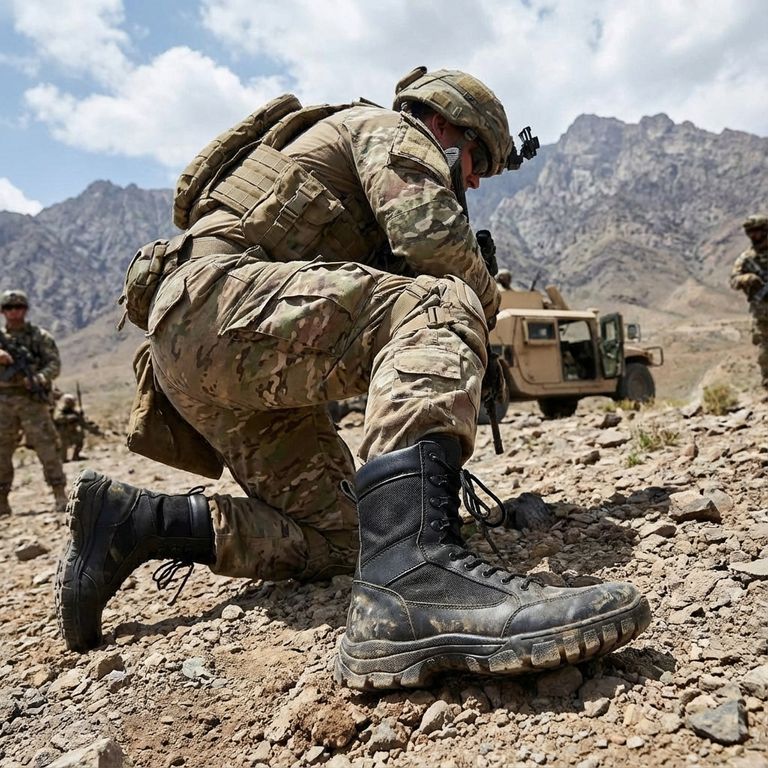
The Foundation: Support and Stability
A boot’s primary job is to protect your feet and ankles from the stress of dynamic movement and heavy loads. Without a solid foundation of support, fatigue and injury become significant risks.
Ankle Support and Structure
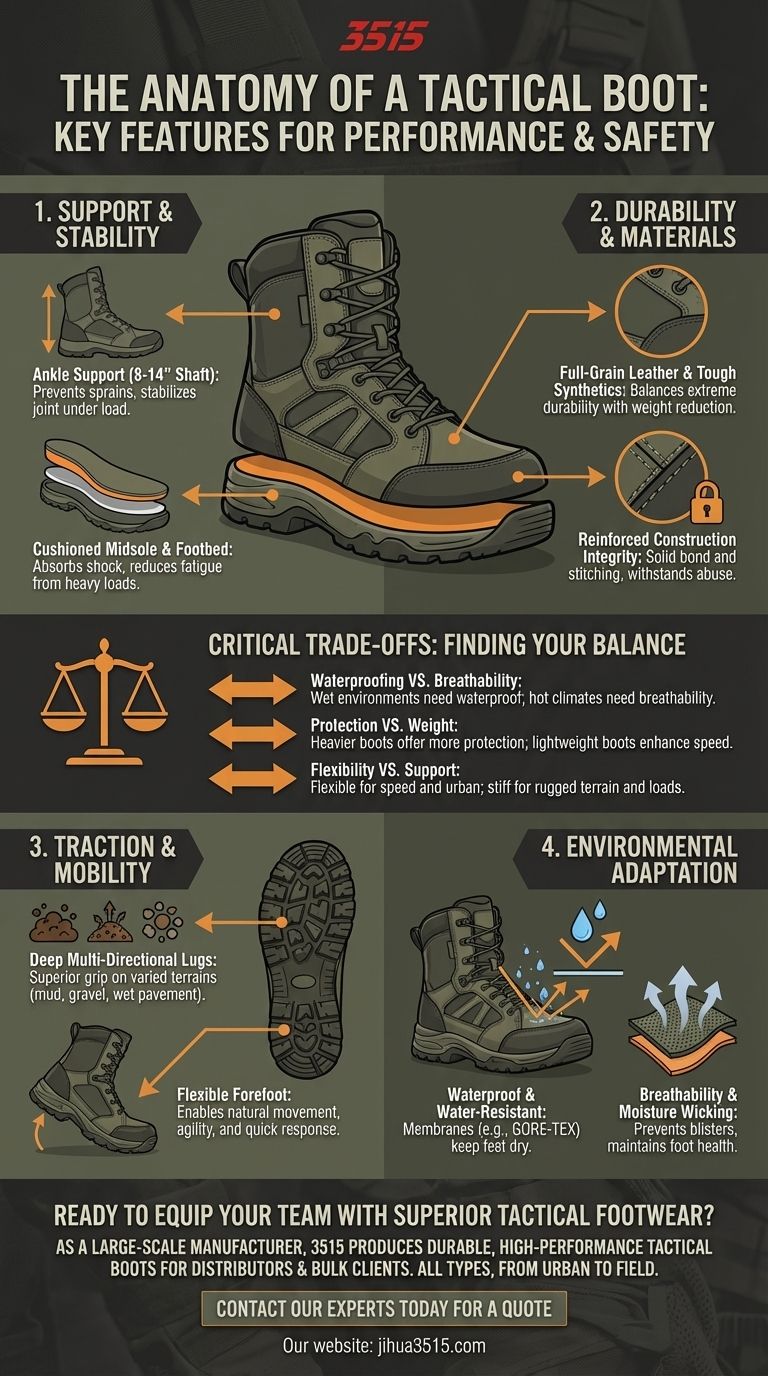
A key differentiator for tactical boots is their taller shaft, typically ranging from 8 to 14 inches. This height is not for style; it provides critical reinforcement to stabilize the ankle joint, helping to prevent sprains and twists on uneven ground.
This structural support is essential when carrying gear, as the extra weight alters your center of gravity and increases stress on your lower body.
Footbed and Midsole Cushioning
The components inside the boot manage impact and provide comfort over long hours. The insole (or footbed) provides immediate cushioning, while the midsole is the primary layer responsible for shock absorption.
High-quality midsoles absorb the force from walking or running on hard surfaces, reducing fatigue in your feet, knees, and back.
The Framework: Durability and Materials
Tactical boots are built to withstand abuse that would destroy standard footwear. The choice of materials and construction methods is paramount to their longevity and protective capabilities.
Upper Materials
Most tactical boots use a combination of materials to balance durability, weight, and breathability. Common materials include full-grain leather, known for its extreme durability, and tough synthetics like nylon panels, which reduce weight and improve flexibility.
Construction Integrity
The durability of a boot goes beyond its materials to how it's assembled. Look for reinforced stitching and a solid bond between the boot's upper and its outsole, ensuring it won’t delaminate or fall apart under stress.
The Interface: Traction and Mobility
Your only connection to the ground is the bottom of your boot. Its design dictates your ability to move confidently and safely across any surface.
Outsole Design
The outsole is the rubber layer that makes contact with the ground. An effective tactical outsole features a deep, multi-directional lug pattern. This design provides superior grip and traction on varied terrains like mud, gravel, and wet pavement.
Flexibility and Responsiveness
While support is crucial, a boot must also allow for a natural range of motion. A good tactical boot offers flexibility through the forefoot, enabling you to run, kneel, and climb without restriction. This flexibility ensures you can move quickly and quietly when needed.
Environmental Adaptation
Your feet must remain protected from external elements while also managing internal moisture. This dual challenge is met through features designed for specific environmental conditions.
Water Resistance and Waterproofing
Water-resistant boots will shed light moisture, but a truly waterproof boot uses a membrane liner (like GORE-TEX) to create a barrier that keeps your feet dry even when submerged.
Breathability and Moisture Wicking
Just as important as keeping water out is letting sweat vapor escape. Breathability is achieved through mesh panels and moisture-wicking liners. This feature is critical for preventing blisters and maintaining foot health during strenuous activity.
Understanding the Critical Trade-offs
No single boot excels at everything. Selecting the right pair requires understanding the inherent compromises between different features.
Waterproofing vs. Breathability
A fully waterproof membrane is excellent for wet environments, but it will always be less breathable than a non-waterproof boot. In hot, dry climates, prioritizing maximum breathability over waterproofing is often the better choice to keep feet cool and dry from sweat.
Protection vs. Weight
Heavier, more robust boots offer superior protection and durability. However, that extra weight increases fatigue over long distances. Lightweight boots enhance speed and agility but may sacrifice some long-term durability or protective reinforcement.
Flexibility vs. Support
A highly flexible boot is ideal for running and urban environments. Conversely, a stiffer boot provides better support when navigating rough, unpredictable terrain or carrying a heavy pack, protecting your foot from sharp rocks and uneven ground.
Matching the Boot to Your Mission
Use your primary operational environment as the filter to make your final decision.
- If your primary focus is speed and agility (e.g., urban law enforcement): Prioritize a lightweight, flexible boot with excellent cushioning and breathability.
- If your primary focus is load-bearing on rugged terrain (e.g., military field use): Prioritize robust ankle support, a stiff sole for protection, and maximum durability.
- If your primary focus is all-weather performance (e.g., search and rescue): Prioritize a certified waterproof membrane but ensure it is paired with a quality moisture-wicking liner.
Ultimately, the right tactical boot becomes an extension of your body, enabling you to focus on the mission with confidence.
Summary Table:
| Key Feature | Why It Matters | Key Components |
|---|---|---|
| Support & Stability | Prevents fatigue and injury during dynamic movement and under load. | Ankle support (8-14" shaft), cushioned footbed/midsole. |
| Durability & Materials | Withstands extreme abuse for long-term use and protection. | Full-grain leather, nylon panels, reinforced stitching. |
| Traction & Mobility | Ensures confident, safe movement across varied terrains. | Deep, multi-directional lug pattern; flexible forefoot. |
| Environmental Adaptation | Protects from elements while managing internal moisture. | Waterproof/water-resistant membranes, breathable liners. |
Ready to Equip Your Team with Superior Tactical Footwear?
As a large-scale manufacturer, 3515 produces a comprehensive range of durable, high-performance tactical boots for distributors, brand owners, and bulk clients. Our production capabilities encompass all types of boots, from lightweight urban models to heavy-duty field boots, ensuring you get the perfect balance of features for your specific operational needs.
Let us help you enhance performance and safety. Contact our experts today to discuss your requirements and get a quote!
Visual Guide
Related Products
- Durable Leather Tactical Boots Wholesale & Custom Manufacturing for Brands
- High-Traction Suede Tactical Boots Wholesale & Custom Manufacturing
- Durable Leather High-Ankle Tactical Boots for Wholesale & Custom Manufacturing
- Durable Mid-Cut Tactical Boots for Wholesale & Private Label
- Wholesale Waterproof Tactical Boots Custom Suede & High-Traction Soles
People Also Ask
- What specialized protections do tactical boots offer? Maximize Endurance with High-Performance Footwear
- What features should law enforcement officers look for in tactical boots? Essential Guide for Safety & Performance
- Importance of Professional Tactical Boots in Loess Gully Regions: Ensure Safety and Precision for Field Monitoring
- What is rucking, and why are tactical boots suitable for it? Discover the Ultimate Footwear for Heavy Loads
- What makes the traction of tactical boots superior? Unlock the Science of Unbeatable Grip















