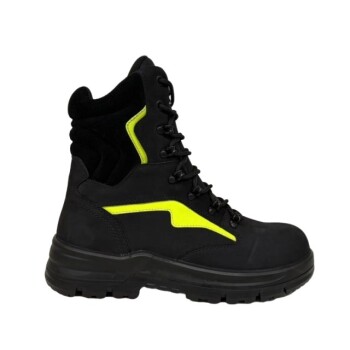
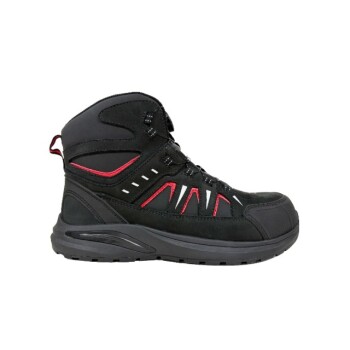
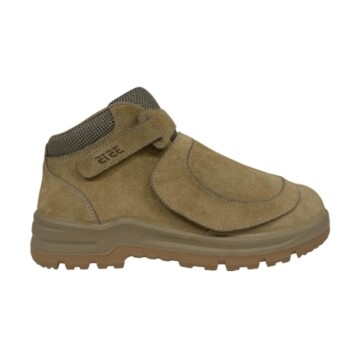
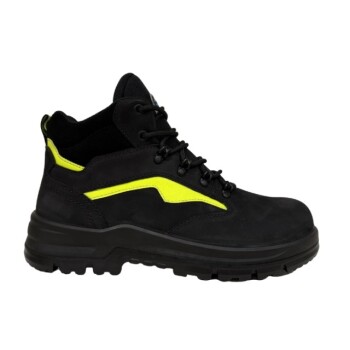
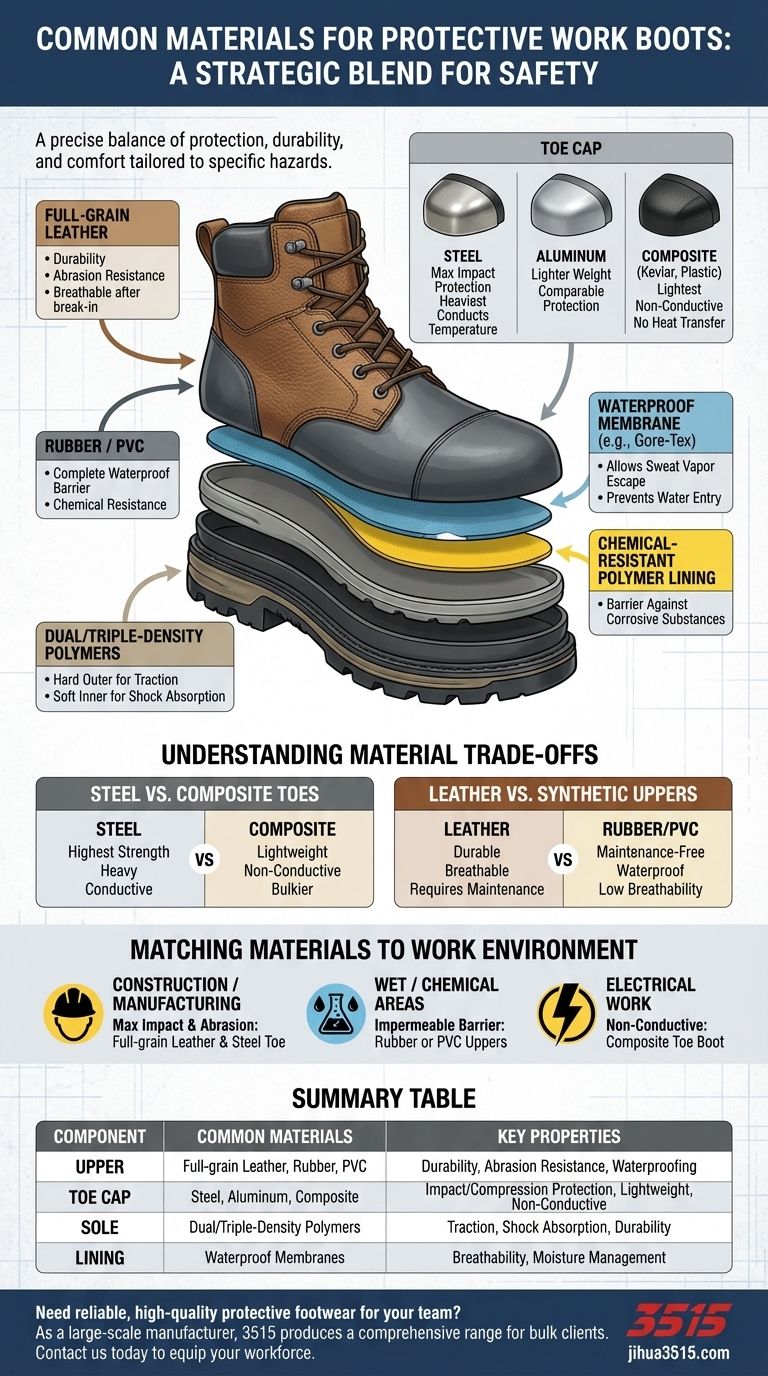
The most common materials for protective work boots are a strategic blend of traditional and advanced components, primarily full-grain leather, rubber, and PVC for the boot's body. These are supplemented with specialized materials like steel, aluminum, or composites for protective toe caps and advanced polymers for soles and linings.
The specific materials used in a work boot are not arbitrary; they are purposefully selected to provide a precise balance of protection, durability, and comfort tailored to the specific hazards of a given work environment.
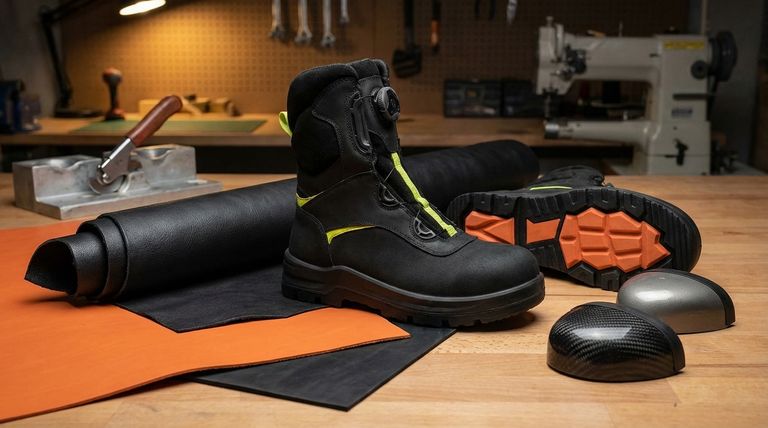
Deconstructing the Modern Work Boot
A work boot is a system of specialized components, each made from materials chosen for a specific function. Understanding these parts reveals why material selection is so critical.
The Upper: The First Line of Defense
The upper is the main body of the boot that covers the foot. Its material dictates the boot's primary resistance to environmental factors.
Full-grain leather is a classic choice, prized for its exceptional durability and resistance to abrasion. It offers a high degree of comfort and breathability once broken in.
Rubber and Polyvinyl Chloride (PVC) are the materials of choice for environments with significant exposure to water, mud, or chemicals. These synthetic materials create a completely waterproof barrier.
The Protective Toe Cap: Guarding Against Impact
The safety toe is the boot's most recognized safety feature, designed to protect against compression and impact injuries.
Steel is the traditional standard, offering the maximum level of protection against impact. It is the heaviest and most robust option available.
Aluminum offers a lighter-weight alternative to steel while still meeting safety standards. It provides comparable protection with less bulk.
Composite materials, such as Kevlar, carbon fiber, or specialized plastics, are the lightest options. A key advantage is that they do not conduct electricity or heat, making them ideal for certain environments.
The Sole: Foundation of Safety and Comfort
The outsole provides traction and protects you from what's underfoot, while the midsole provides cushioning and support.
Modern boots often feature dual or triple-density soles. These combine different polymers to create a sole that is hard and durable on the outside for grip but softer on the inside for shock absorption.
Linings and Membranes: Managing the Environment
Interior materials are crucial for comfort and protection from moisture or specific hazards.
Waterproof membranes, like Gore-Tex, are often laminated to the boot's lining. These allow sweat vapor to escape while preventing water from getting in, keeping feet dry and comfortable.
Specialized chemical-resistant polymers are used in boots designed for environments with hazardous materials, providing a necessary barrier against corrosive substances.
Understanding the Material Trade-offs
Choosing the right work boot involves balancing competing factors. No single material is perfect for every situation.
Steel vs. Composite Toes
The primary trade-off is between maximum protection and functionality. Steel toes offer the highest strength but are heavy and conduct temperature. Composite toes are lighter, don't conduct electricity or temperature, but can be slightly bulkier to achieve the same safety rating.
Leather vs. Synthetic Uppers
The choice here balances breathability against impermeability. Leather is highly durable and breathable but requires maintenance to remain water-resistant. Rubber and PVC offer superior, maintenance-free waterproofing but provide very little breathability.
The Importance of Purpose-Built Design
Materials are selected based on the needs of specific industries. A boot for a construction worker facing abrasion and impact hazards will be built differently than one for a food processing worker who needs chemical resistance and slip-proof soles.
Matching Materials to Your Work Environment
Your choice of boot should be dictated entirely by the demands and potential hazards of your job.
- If your primary focus is construction or manufacturing: You need maximum impact protection and abrasion resistance, making full-grain leather uppers with a steel toe the standard choice.
- If your primary focus is working in wet or chemical-heavy areas: You need an impermeable barrier, making boots with rubber or PVC uppers essential.
- If your primary focus is electrical work or requires passing through metal detectors: You need non-conductive, non-metallic protection, making a composite toe boot the only logical option.
Ultimately, the right materials ensure your footwear is not just a uniform requirement but an active tool for your safety.
Summary Table:
| Component | Common Materials | Key Properties |
|---|---|---|
| Upper | Full-grain Leather, Rubber, PVC | Durability, Abrasion Resistance, Waterproofing |
| Toe Cap | Steel, Aluminum, Composite (Kevlar, Plastic) | Impact/Compression Protection, Lightweight, Non-Conductive |
| Sole | Dual/Triple-Density Polymers | Traction, Shock Absorption, Durability |
| Lining | Waterproof Membranes (e.g., Gore-Tex) | Breathability, Moisture Management |
Need reliable, high-quality protective footwear for your team?
As a large-scale manufacturer, 3515 produces a comprehensive range of safety boots and work footwear for distributors, brand owners, and bulk clients. Our expertise ensures the perfect blend of materials—from durable leather uppers to advanced composite toes—is used to meet the specific safety and comfort demands of your industry.
Contact us today for a consultation and discover how we can equip your workforce with boots built for protection and performance.
Visual Guide
Related Products
- Customizable Anti-Smash Safety Boots for Wholesale & Private Label Manufacturing
- Wholesale Customizable Safety Boots Durable & Protective Footwear Manufacturing
- Premium Grain Leather Safety Boots for Bulk Supply
- Wholesale Durable Safety Boots | Custom Steel Toe & Puncture-Resistant Manufacturing
- Premium Waterproof Nubuck Safety Boots for Wholesale
People Also Ask
- What are the requirements of BS EN345 safety regulations for security guard safety boots? | EN ISO 20345 Guide
- What are the key performance benchmarks set by the EN ISO 20345 standard for safety boots? A Guide to Selecting the Right Protection
- What additional protections are defined by the EN ISO 20345 norm? Match Footwear to Specific Hazards
- How is compliance with the EN ISO 20345 standard certified? The Path to Independent Verification
- Why are industrial safety boots with steel toes necessary for machine operators? Essential Foot Protection for Safety