
As a general rule, you should perform a routine cleaning and conditioning of your cowboy boots every 3 to 6 months. This simple maintenance schedule is the single most effective way to protect your investment, preventing the leather from drying out and cracking while preserving its natural finish and extending its lifespan significantly.
The 3-to-6-month rule is a reliable starting point, but the true answer depends on your environment and how you wear your boots. Learning to recognize the visual signs of dry leather is more important than strictly adhering to a calendar.
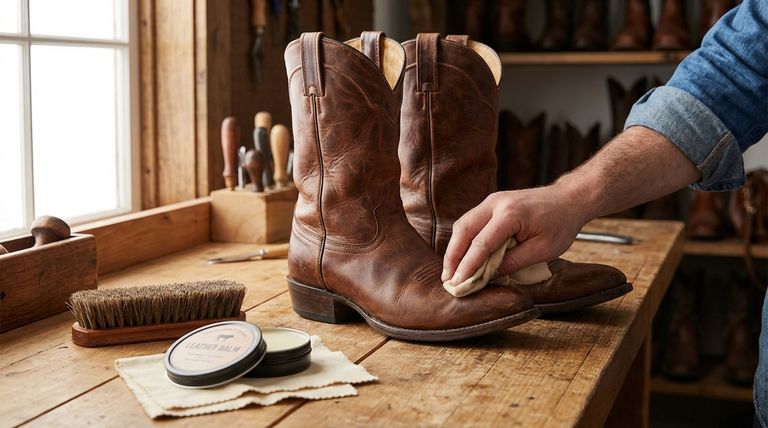
Why Regular Maintenance is Non-Negotiable
Leather is a natural material. Like skin, it requires moisture to remain flexible and durable. Neglecting this fundamental need is the fastest way to ruin a good pair of boots.
Restoring Essential Oils
The tanning process infuses leather with oils and fats that keep it supple. Over time, exposure to the environment causes these essential oils to evaporate, leaving the leather dry and vulnerable.
Conditioning is the process of reintroducing these oils. It's not just about appearance; it's about restoring the core integrity of the material.
Preventing Cracks and Damage
Dry leather becomes brittle. As it flexes with your foot's movement, microscopic cracks begin to form. These eventually grow into visible, irreversible damage that compromises the boot's structure and appearance.
Shielding Against the Elements
A well-conditioned boot has a greater resistance to the elements. The oils create a natural barrier that helps repel water and prevent stains from setting in after exposure to mud or dirt.
Adjusting the Schedule: Key Factors to Consider
A rigid, one-size-fits-all schedule is impractical. Your boot care frequency must adapt to three primary factors: how you wear them, where you wear them, and what they're made of.
Frequency of Wear
A pair of boots worn daily for work will require far more frequent attention than a pair reserved for special occasions. More use means more flexing, more exposure, and a faster depletion of oils.
Environmental Exposure
This is the most critical factor. If your boots are frequently exposed to harsh conditions like intense heat, direct sun, rain, or mud, you must shorten your maintenance cycle dramatically. After a significant soaking or a day in the mud, cleaning and conditioning are mandatory once they are fully dry.
Type of Leather
Different leathers have different needs. Standard cowhide is robust, but exotic leathers like snakeskin or ostrich can be more delicate and may require more frequent, specialized care.
Reading the Signs: When Your Boots Need Attention
Your boots will tell you when they need conditioning. Learning to recognize these cues will allow you to provide care precisely when it's needed, regardless of the calendar.
Visual Cues
Look for areas where the leather appears lighter in color, blotchy, or faded. This is a clear indicator that the oils have evaporated from that section.
Physical Feel
If the leather feels stiff, dry, or brittle to the touch, it is overdue for conditioning. Well-maintained leather should feel soft and supple.
Minor Cracks
Small surface-level cracks, especially in the areas where the boot flexes, are an urgent warning sign. Condition them immediately to prevent these from deepening and becoming permanent damage.
A Practical Schedule Based on Your Usage
Instead of focusing on a single number, tailor your routine to your specific situation.
- If your boots are for occasional wear in mild conditions: A simple conditioning every 6 months is likely sufficient to keep them in top shape.
- If your boots are for regular, daily use: Plan for a full cleaning and conditioning every 3 months, and be prepared to act sooner if they are exposed to bad weather.
- If your boots face harsh conditions (ranch work, frequent rain): Condition them as often as once a month, paying close attention to the visual signs of dryness after each exposure.
Consistent care is what transforms your boots from a simple purchase into a durable, long-term investment.
Summary Table:
| Usage Scenario | Recommended Frequency | Key Considerations |
|---|---|---|
| Occasional Wear (Mild Conditions) | Every 6 Months | Ideal for boots worn infrequently in dry, indoor settings. |
| Regular, Daily Use | Every 3 Months | Essential for boots worn often; check for dryness after exposure to elements. |
| Harsh Conditions (Work, Rain, Mud) | Monthly or After Exposure | Mandatory after getting wet or dirty to prevent permanent damage. |
Ready to build a durable boot collection that lasts?
As a large-scale manufacturer, 3515 produces a comprehensive range of high-quality footwear for distributors, brand owners, and bulk clients. Our production capabilities encompass all types of durable shoes and boots, built to withstand the demands of any environment.
Let's discuss your needs: Contact our experts today to explore how our boots can become a long-term investment for your business or brand.
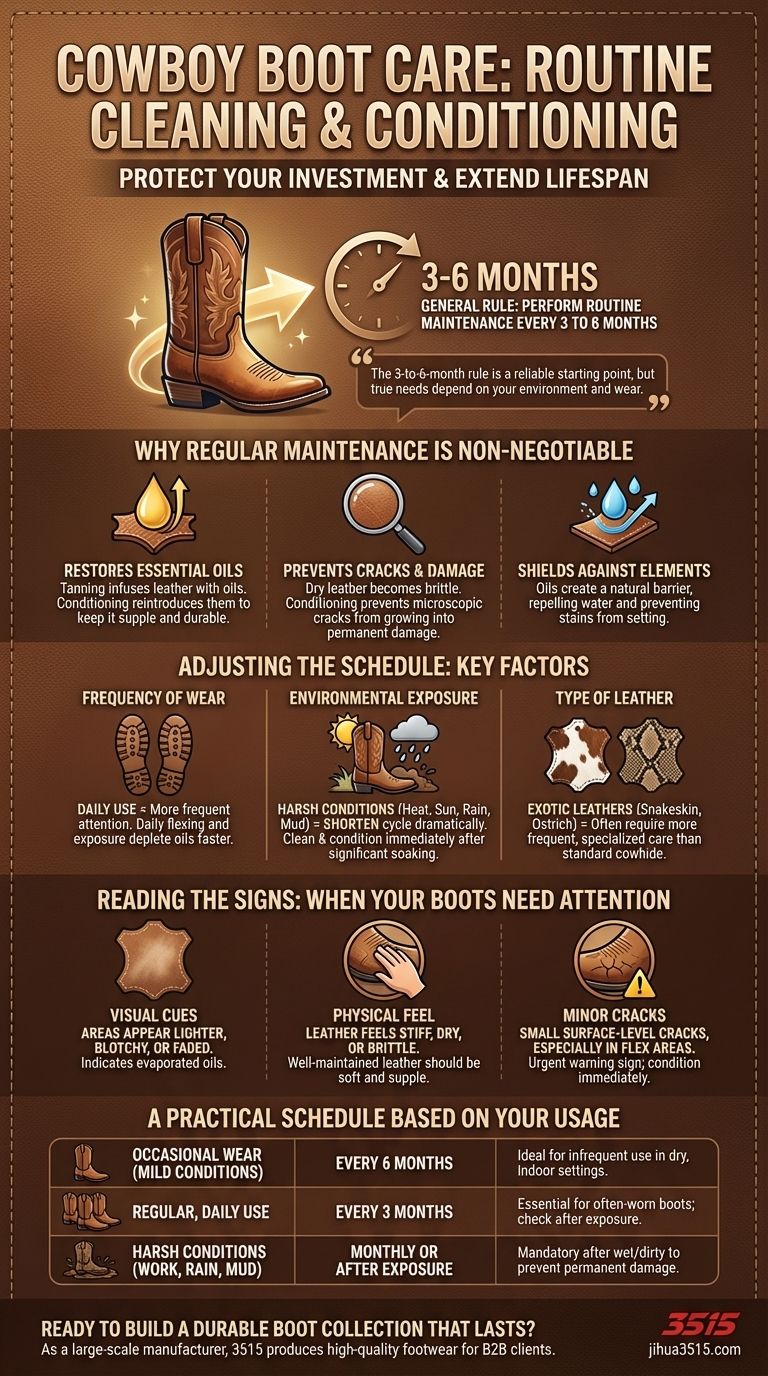
Visual Guide
Related Products
- Wholesale High-Traction Camo Boots - Custom Manufacturer for Brands
- High-Traction Suede Tactical Boots Wholesale & Custom Manufacturing
- Wholesale Lightweight Tactical Boots Custom Manufacturer for Desert & Combat Use
- Durable Leather Tactical Boots Wholesale & Custom Manufacturing for Brands
- Wholesale Durable Mid-Cut Tactical Boots for Custom & Private Label Brands
People Also Ask
- What are the key features of the new line of camo boots? Built for Extreme Cold & Rugged Terrain
- Are camo boots necessary for hunting success? Prioritize Performance Over Pattern
- How does the Rank Score Test identify the primary causes of premature failure in tactical and work boots? Key Insights
- What is the technical logic behind using closed-eye testing for tactical boots? Unlocking Peak Footwear Stability
- What shoes to wear for a security job? Durable, Protective Footwear for Long Shifts


















