
Western riding boots are primarily crafted from a range of materials chosen for specific benefits in durability, performance, and style. The most common and traditional material is genuine leather, but options also include exotic skins, synthetic leather, rubber, and various textiles, each serving a distinct purpose.
The choice of material in a Western boot is not just about looks; it dictates the boot's performance, lifespan, and maintenance requirements. While traditional leather offers a benchmark for durability and breathability, modern synthetics and rubbers provide specialized benefits like waterproofing and ease of care.
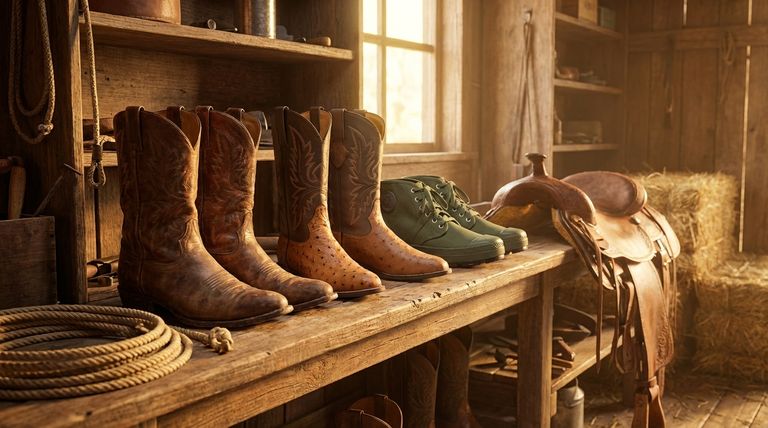
The Foundation: Leather and Its Variations
Leather is the quintessential material for Western boots, prized for its classic appeal and functional properties. However, not all leathers are created equal.
Full-Grain Leather: The Gold Standard
This is the highest quality leather, known for its exceptional durability, flexibility, and breathability. Because it hasn't been sanded or buffed, it retains its natural strength and character. Over time, full-grain leather conforms to the shape of your foot, providing a custom fit.
Exotic Skins: The Aesthetic Choice
Materials like snakeskin, alligator, or ostrich provide a sharp, distinct look that makes a statement. While still durable, these boots are often chosen more for their unique aesthetic appeal and are typically more expensive.
Simulated Leather: The Practical Alternative
Also known as synthetic leather, this material offers a cost-effective and low-maintenance option. It's easier to clean than genuine leather and doesn't require conditioning, making it a practical choice for casual wear or those on a budget.
Modern Materials for Specialized Performance
While leather dominates tradition, modern materials are often integrated to enhance specific functions, particularly in work or high-performance boots.
Rubber: The Workhorse for Grip and Protection
Rubber is almost universally used for the outsole of Western boots due to its excellent grip, slip resistance, and durability. In work boots, specialized rubber compounds can also resist oil and chemicals, providing crucial protection in hazardous environments. Some boots designed for wet conditions feature full rubber construction.
Textiles and Synthetics: For Breathability and Comfort
Modern boots often incorporate panels of canvas or other synthetic textiles into their design. These materials are lightweight and significantly increase breathability and moisture-wicking, keeping your feet cooler and drier during long periods of wear.
Neoprene: For Insulation and Flexibility
Primarily found in boots designed for wet and cold conditions, neoprene offers warmth even when wet. It is often combined with a natural rubber outer shell to provide a waterproof yet flexible boot.
Understanding the Trade-offs
Choosing the right material requires balancing competing benefits. No single material is perfect for every situation.
The Commitment of Genuine Leather
High-quality leather offers unmatched durability and a custom fit, but it requires regular care. Cleaning and conditioning are necessary to prevent it from drying out and cracking, ensuring its longevity.
The Convenience of Synthetics
Synthetic leather is easy to clean and requires virtually no maintenance. However, it typically lacks the breathability of real leather and may not last as long under heavy use.
The Specificity of Rubber
Rubber provides outstanding waterproofing and traction. Its primary drawback is a near-total lack of breathability, making it unsuitable for hot, dry conditions or all-day casual wear.
Making the Right Choice for Your Needs
Your ideal boot material depends entirely on your primary use case.
- If your primary focus is traditional riding and longevity: Choose high-quality full-grain leather for its durability and ability to mold perfectly to your foot.
- If your primary focus is demanding work or wet conditions: Look for boots with robust rubber outsoles and consider waterproofed leather or synthetic uppers.
- If your primary focus is budget and low maintenance: Synthetic leather provides the classic Western look without the cost or upkeep of genuine hide.
- If your primary focus is breathability and comfort: Consider a hybrid boot that integrates textile panels for enhanced airflow and moisture-wicking.
By aligning the material's inherent benefits with your intended use, you ensure your boots will perform reliably and serve you well for years to come.
Summary Table:
| Material Type | Key Benefits | Ideal For |
|---|---|---|
| Full-Grain Leather | Durability, breathability, custom fit | Traditional riding, longevity |
| Exotic Skins | Unique aesthetic appeal, statement look | Fashion, special occasions |
| Synthetic Leather | Cost-effective, easy to clean, low maintenance | Casual wear, budget-conscious buyers |
| Rubber | Excellent grip, slip resistance, waterproof | Work boots, wet conditions |
| Textiles/Synthetics | Lightweight, breathable, moisture-wicking | Comfort, long wear, hot climates |
| Neoprene | Warmth when wet, flexibility | Cold, wet conditions |
Ready to find the perfect Western boot for your needs?
As a large-scale manufacturer, 3515 produces a comprehensive range of high-quality footwear for distributors, brand owners, and bulk clients. Our production capabilities encompass all types of shoes and boots, including durable leather riding boots, specialized work boots, and stylish fashion options.
We can help you source or create the ideal boot, balancing material benefits with your specific market demands.
Contact us today to discuss your project and discover how we can bring value to your business!
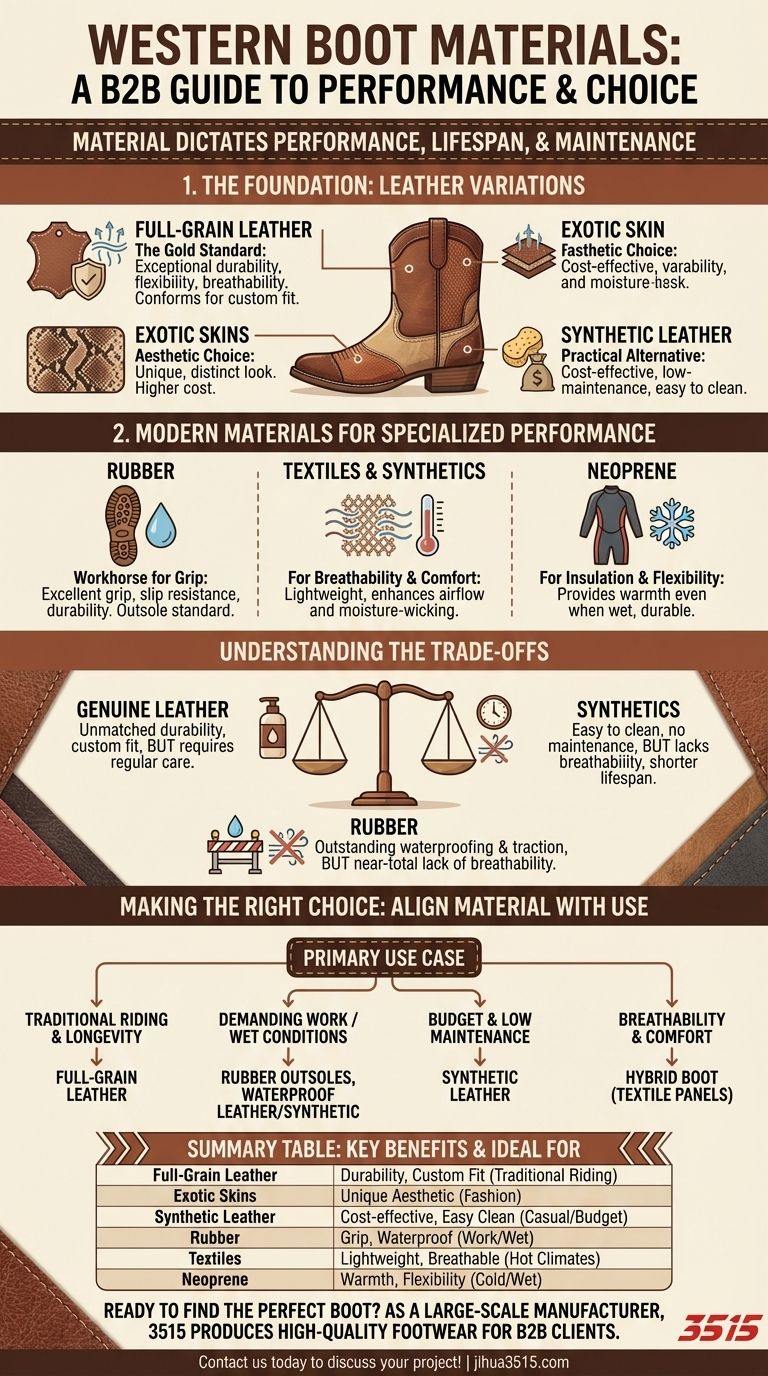
Visual Guide
Related Products
- Durable Goodyear Welt Leather Work Boots for Wholesale & Private Label
- Wholesale High-Traction Camo Boots - Custom Manufacturer for Brands
- High-Traction Suede Tactical Boots Wholesale & Custom Manufacturing
- Wholesale Waterproof Tactical Boots Custom Suede & High-Traction Soles
- Durable Military Combat Boots with Water Drainage for Wholesale & OEM
People Also Ask
- What is the difference between full-grain and top-grain leather? Premium Material Guide for Boot Manufacturers
- What are the advantages of leather as an upper material for work boots? Unmatched Durability & Custom Comfort
- Why is it important to waterproof leather work boots? Protect Your Investment and Performance
- How should new leather work boots be broken in? A Guide to Comfort and Durability
- What are the advantages of leather uppers in work boots? Unmatched Durability & Protection



















