
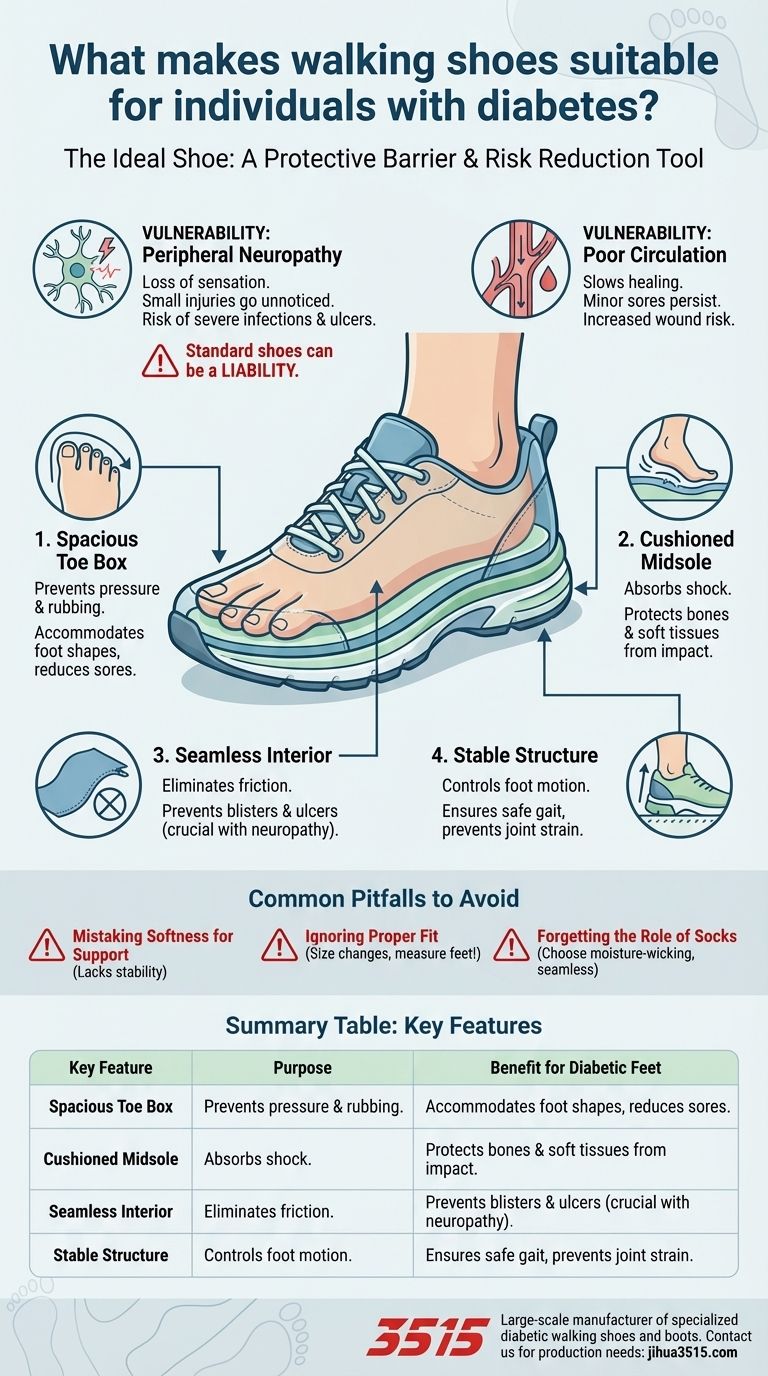
The ideal walking shoe for an individual with diabetes is defined by four critical features: a spacious toe box, a moderately cushioned and supportive midsole, a seamless interior, and a stable structure. These elements work in concert not just for comfort, but as a crucial preventative tool to protect against friction, pressure, and instability—the primary triggers for serious foot complications.
The core principle behind diabetic footwear is risk reduction. Since diabetes can impair sensation and circulation in the feet, the right shoe serves as a protective barrier, minimizing the potential for unnoticed injuries that could lead to severe health issues.
Why Standard Shoes Can Be a Liability
For individuals with diabetes, the feet are uniquely vulnerable. Two common complications, peripheral neuropathy and poor circulation, fundamentally change the requirements for safe and effective footwear.
The Risk of Nerve Damage (Neuropathy)
Diabetic neuropathy can cause a loss of sensation in the feet. This means a small blister, cut, or area of high pressure from a poorly fitting shoe might go completely unnoticed.
An undetected injury can quickly worsen, creating a risk for infections and ulcers. The shoe's job is to prevent these initial points of friction and pressure from ever occurring.
The Challenge of Poor Circulation
Diabetes can also reduce blood flow to the lower extremities. This impaired circulation slows down the body's natural healing process.
A minor sore that would heal quickly on a healthy individual can persist and become a serious wound for someone with diabetes. Proper footwear is the first line of defense in preventing these initial wounds.
Anatomy of a Diabetes-Friendly Walking Shoe
Each feature of a specialized walking shoe is designed to counteract a specific risk associated with diabetes. Understanding their purpose is key to making an informed choice.
The Spacious Toe Box: Preventing Pressure
A wide and deep toe box provides ample room for your toes to lie flat and spread out naturally. This is essential for preventing rubbing and pressure.
It also accommodates common foot changes like bunions or hammertoes without creating dangerous pressure points that could lead to sores.
The Cushioned Midsole: Absorbing Shock
A midsole made of moderately soft, shock-absorbing material cushions the foot with every step. This reduces the overall pressure on the bottom of the foot.
This feature is critical for protecting the bones and soft tissues from the repetitive impact of walking, which is especially important if sensation is diminished.
The Seamless Interior: Eliminating Friction
The inside of the shoe should be smooth and free of stitches, seams, or tags. These seemingly minor details can rub against the skin and create hot spots or blisters.
Given that neuropathy can mask the warning signs of irritation, a seamless interior is a non-negotiable feature for preventing friction-based injuries.
The Supportive Structure: Ensuring Stability
While cushioning is important, so is stability. A firm heel counter and supportive elements in the midsole prevent the foot from rolling too far inward or outward (overpronation or supination).
This controlled motion reduces stress on the joints of the foot and ankle, promoting a safe and stable gait and preventing strain-related injuries.
Common Pitfalls to Avoid When Choosing a Shoe
Selecting the right shoe involves more than just looking for a "diabetic" label. Certain common mistakes can undermine the shoe's protective qualities.
Mistaking Softness for Support
Extremely soft, "pillowy" shoes can feel comfortable initially but often lack the necessary stability. An overly soft midsole can fail to control foot motion, leading to instability and joint strain.
Look for a balance: cushioning to absorb impact and support to guide the foot properly. The ideal midsole is moderately soft but resilient.
Ignoring Proper Fit and Sizing
A shoe's features are useless if the fit is wrong. Foot size can change over time, so it's crucial to measure your feet before buying new shoes, preferably at the end of the day when they are most swollen.
Ensure there is about half an inch of space between your longest toe and the end of the shoe. The width should be snug but not tight.
Forgetting the Role of Socks
The benefits of a good shoe can be negated by the wrong socks. Choose socks that are non-elastic, moisture-wicking, and seamless.
Cotton socks can retain moisture, which can soften the skin and increase the risk of blisters and fungal infections. Specialized diabetic socks are a worthwhile investment.
Making the Right Choice for Your Health
Your specific needs should guide your final decision. The goal is to match the shoe's features to your personal health profile.
- If you have neuropathy or loss of sensation: Your top priority is a seamless interior and a perfect fit to eliminate all sources of potential friction.
- If you have existing foot deformities (like bunions): Focus on finding a shoe with an extra-wide and deep toe box to accommodate your foot shape without any pressure.
- If your primary goal is prevention and staying active: Seek a balanced shoe that offers moderate cushioning, excellent structural support, and a roomy toe box.
Ultimately, choosing the right walking shoe is a proactive step in managing your health and maintaining your mobility safely.
Summary Table:
| Key Feature | Purpose | Benefit for Diabetic Feet |
|---|---|---|
| Spacious Toe Box | Prevents pressure and rubbing | Accommodates foot shape, reduces risk of sores |
| Cushioned Midsole | Absorbs shock from walking | Protects bones and soft tissues from impact |
| Seamless Interior | Eliminates friction points | Prevents blisters and ulcers, crucial with neuropathy |
| Stable Structure | Controls foot motion | Ensures a safe, stable gait and prevents joint strain |
Need a reliable source for diabetic footwear? As a large-scale manufacturer, 3515 produces a comprehensive range of specialized walking shoes and boots designed with these protective features in mind. We help distributors, brand owners, and bulk clients provide safe, high-quality footwear for individuals managing diabetes. Contact us today to discuss your production needs and how we can support your business with our extensive manufacturing capabilities.
Visual Guide
Related Products
- Lightweight Breathable Training Shoes for Wholesale & Custom OEM Manufacturing
- Wholesale Durable & Breathable Training Shoes for Custom Brands
- Wholesale Durable Camouflage Canvas Shoes with High-Traction Cleated Rubber Sole
- Custom OEM Training Shoes Wholesale Manufacturer Durable & Breathable
- Durable Rubber Sole Outdoor Shoes Wholesale & Custom Manufacturing
People Also Ask
- Why are lightweight training shoes often preferred over professional hiking boots in urban walking? Maximize City Comfort
- What is the primary role of specialized training or orthopedic shoes? Enhance Safety in Elderly Balance Training
- Why are professional-grade training shoes essential for physical therapy? Ensure Patient Safety and Gait Stability
- Why are the slip-resistance and stability performance of training shoes critical in gait analysis? Ensure Data Accuracy
- Why is the use of flat-soled or professional training shoes essential for WBV? Maximize Vibration Energy Transfer










