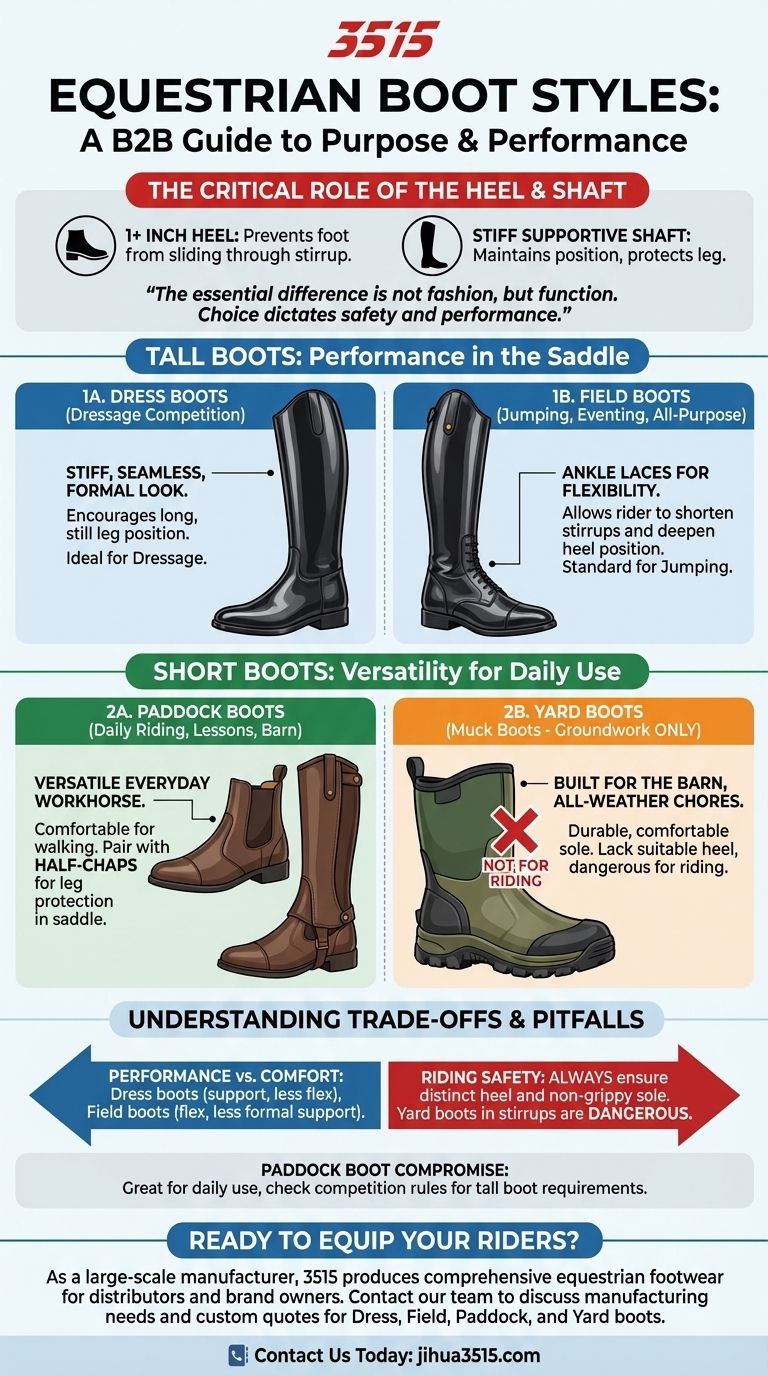
The primary styles of equestrian boots are Dress, Field, Paddock, and Yard boots, each engineered as a specialized tool for a specific task. Dress and Field boots are tall boots designed for performance in the saddle, while Paddock and Yard boots are shorter, ankle-high boots built for everyday versatility and groundwork.
The essential difference between equestrian boot styles is not fashion, but function. Your choice should be dictated entirely by your primary activity—whether it's formal competition, jumping, daily training, or barn maintenance—to ensure both safety and performance.
The Purpose of a Specialized Riding Boot
Before comparing styles, it's crucial to understand why specific equestrian footwear is necessary. Unlike standard fashion boots, riding boots have distinct safety and functional features.
The Critical Role of the Heel
Every proper riding boot has a heel of at least one inch. This is a non-negotiable safety feature designed to prevent the rider's foot from sliding all the way through the stirrup, which could be catastrophic in a fall.
The Supportive Shaft
Tall boots feature a stiff, high shaft. This serves two main purposes: it supports the rider's leg to help maintain a correct position, and it protects the leg from chafing and pinching by the saddle's leather.
Tall Boots: For Performance in the Saddle
Tall boots, which extend to just below the knee, are the standard for competition and formal riding. They offer maximum support and create a traditional, clean silhouette.
Dress Boots: The Epitome of Formality
Dress boots are characterized by their stiff construction and highly polished, seamless appearance. They lack laces at the ankle, reinforcing a rigid and formal look.
This stiffness is intentional, as it encourages a long, still leg position, which is the ideal in the discipline of dressage. They are almost exclusively used for this purpose.
Field Boots: Designed for Flexibility
Field boots are easily identified by the laces over the ankle. This feature provides "give" and flexibility, allowing the rider to shorten their stirrups and deepen their heel position comfortably.
This flexibility makes them the standard for disciplines that require more ankle movement, such as show jumping, eventing, and general all-purpose riding.
Short Boots: Versatility for Daily Use
Ankle-high boots offer a practical solution for daily training, lessons, and work around the stable.
Paddock Boots: The Everyday Workhorse
Paddock boots are the most versatile style. They are comfortable for walking around the barn but still feature the necessary heel and design for safe riding.
For the leg protection of a tall boot, riders frequently pair paddock boots with half-chaps—leather or synthetic gaiters that wrap around the lower leg. This combination effectively mimics the function of a field boot for daily use.
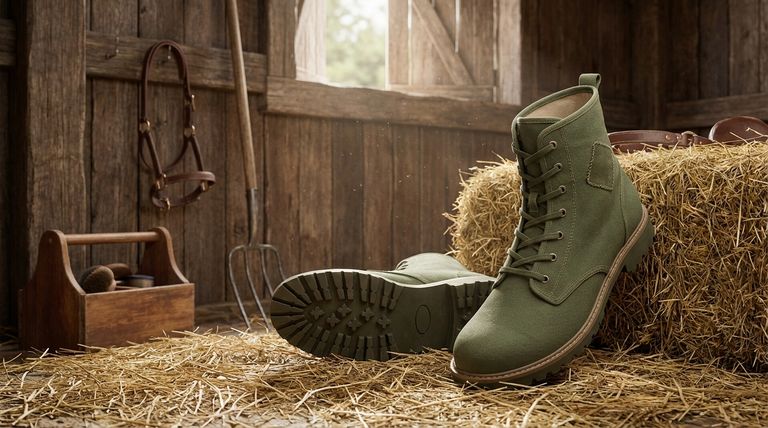
Yard Boots: Built for the Barn, Not the Saddle
Yard boots (or muck boots) are designed for groundwork, not riding. Their primary focus is on durability, all-weather protection, and sole comfort for long hours of walking and standing.
While excellent for barn chores, they are often not safe for riding as they may lack a suitable heel or have a thick, treaded sole that can get stuck in a stirrup.
Understanding the Trade-offs and Pitfalls
Choosing the wrong boot for the job can hinder performance and compromise safety. It's crucial to understand the limitations of each style.
Performance vs. Comfort
The stiffness of a dress boot that provides excellent support in dressage makes it highly uncomfortable and restrictive for jumping. Conversely, the flexibility of a field boot is ideal for jumping but offers less rigidity for the formal dressage rider.
Riding Safety
Never assume any boot is safe for riding. A boot intended for riding must have a distinct heel and a sole that is not overly thick or grippy. Using a yard boot in the stirrup is a common but dangerous mistake.
The Paddock Boot Compromise
While a paddock boot and half-chap combination is excellent for daily training, it may not be permitted in certain levels of competition, which often require traditional tall boots. Always check the specific rules for your event.
Making the Right Choice for Your Discipline
Your decision should be a direct reflection of your primary equestrian activity.
- If your primary focus is formal dressage competition: A pair of stiff, traditional dress boots is the required standard.
- If your primary focus is jumping, eventing, or varied all-purpose riding: The ankle flexibility of field boots makes them the superior choice.
- If your primary focus is daily lessons, casual riding, and general barn work: Paddock boots, paired with half-chaps for riding, offer the best balance of versatility and function.
- If your primary focus is groundwork, stable maintenance, and all-weather chores: Durable and comfortable yard boots are specifically designed for this purpose.
Selecting the right equestrian boot is the foundational step toward safe, comfortable, and effective riding.
Summary Table:
| Boot Style | Height | Primary Use | Key Features |
|---|---|---|---|
| Dress Boot | Tall | Dressage Competition | Stiff, seamless, formal look |
| Field Boot | Tall | Jumping, Eventing | Ankle laces for flexibility |
| Paddock Boot | Short | Daily Riding, Lessons | Versatile, often paired with half-chaps |
| Yard Boot | Short | Barn Chores, Groundwork | Durable, all-weather, not for riding |
Ready to Equip Your Riders with the Perfect Boot?
As a large-scale manufacturer, 3515 produces a comprehensive range of equestrian footwear for distributors, brand owners, and bulk clients. Whether you need competition-ready dress boots, flexible field boots, versatile paddock boots, or durable yard boots, our production capabilities cover all styles to meet your exact specifications and ensure rider safety and performance.
Contact our team today to discuss your manufacturing needs and get a custom quote!
Visual Guide
Related Products
- Classic Leather Derby Dress Shoes Wholesale & Custom Manufacturing
- Wholesale Women's Leather Derby Shoes Custom Factory Production
- Wholesale Breathable Perforated Leather Derby Dress Shoes for Custom Brands
- Wholesale Perforated Comfort Dress Shoes | Custom Derby Shoe Manufacturer
- Wholesale Leather Derby Shoes Manufacturer | Customizable Business & Dress Footwear
People Also Ask
- How often should leather dress shoes be cleaned and polished? A 3-Tier Care Guide for Longevity
- How can you remove salt stains from leather dress shoes? Save Your Shoes with a Simple Vinegar Solution
- What are the basic steps to clean leather dress shoes? A Guide to Preserving Your Investment
- How should you dry wet leather dress shoes? A Step-by-Step Guide to Save Your Investment
- What historical figure is associated with the Derby shoe? The Earl of Derby's Comfort Revolution