
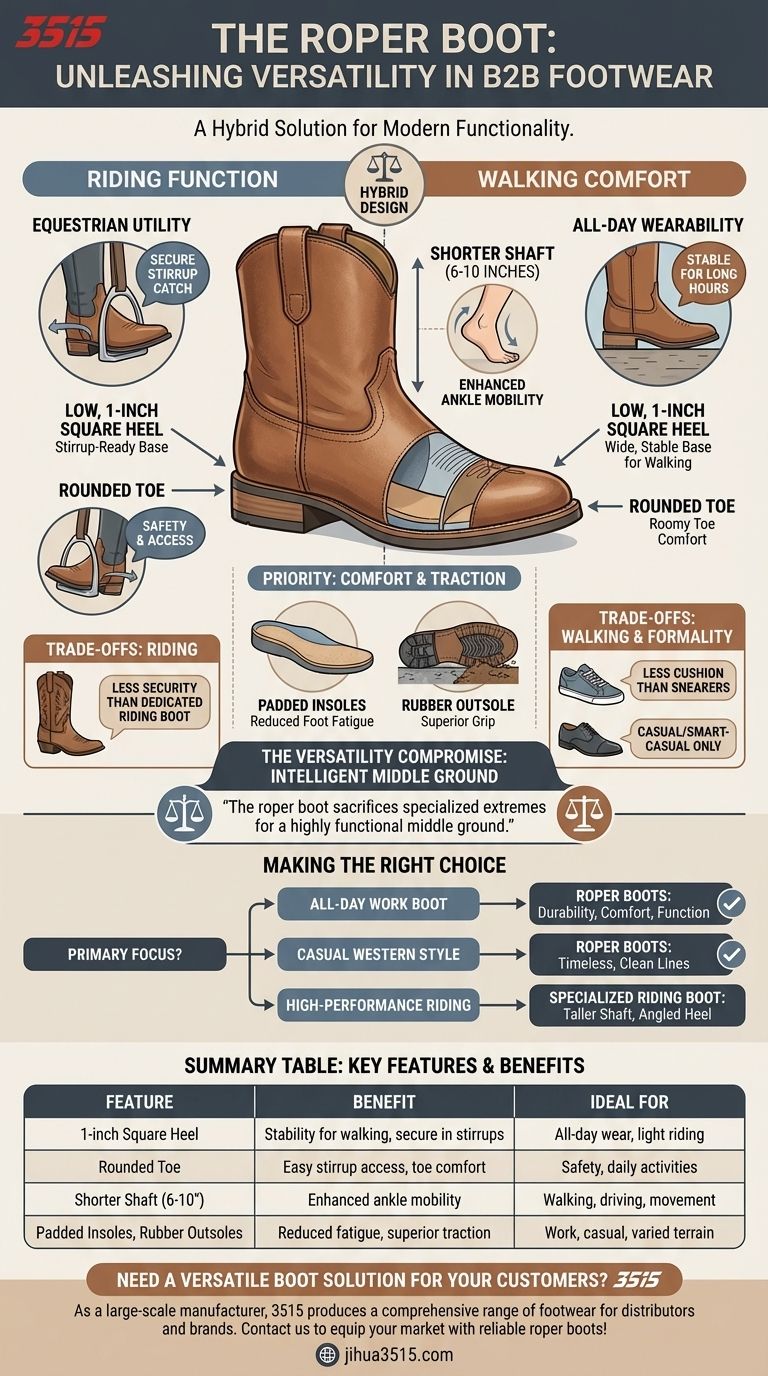
At its core, a roper boot is versatile because it was designed as a hybrid. It expertly balances the features needed for equestrian work with the practical comfort required for spending long hours on your feet. Unlike more specialized cowboy boots, ropers have a shorter, 1-inch square heel that provides stability for walking, while their rounded toe and shorter shaft offer mobility and all-day wearability.
The true versatility of the roper boot stems from its intentional design compromise: it sacrifices the specialized extremes of a dedicated riding boot or a walking shoe to create a highly functional and comfortable middle ground.
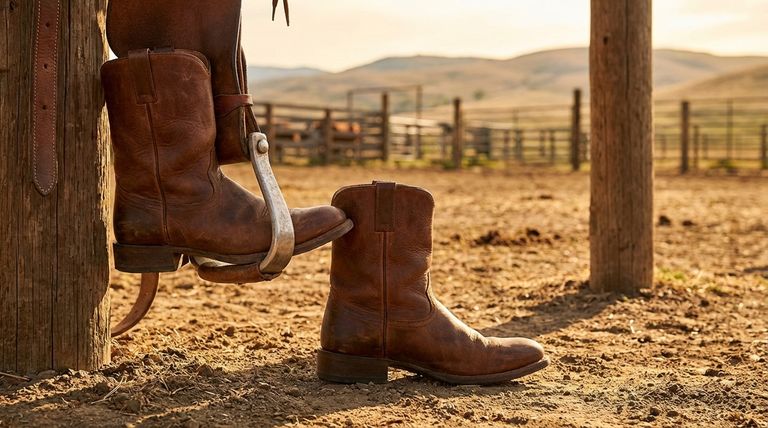
The Anatomy of a Versatile Boot
The roper boot's blend of features is what allows it to move seamlessly between different environments and tasks. Each element of its design serves a dual purpose of function and comfort.
The Hybrid Heel: Stability for Walking, Function for Riding
The most defining feature is the low, 1-inch square heel. This design provides a wide, stable base that is comfortable for walking or standing for extended periods, unlike the high, angled heel of a traditional cowboy boot.
However, the heel is still prominent enough to securely catch a stirrup, making it safe and effective for riding.
The Practical Toe Box: Safety and Comfort
Roper boots feature a rounded toe. This shape is not just for looks; it allows a rider's foot to easily slide in and out of a stirrup, which is a critical safety feature when dismounting or in case of a fall.
This less aggressive shape is also more comfortable for daily wear, providing more room for your toes than a sharply pointed boot.
Shorter Shaft for Increased Mobility
With a shaft height typically between 6 and 10 inches, the roper is significantly shorter than most cowboy boots. This lower profile provides greater ankle flexibility, making it more comfortable for walking, driving, and general movement.
Prioritizing All-Day Comfort
Modern ropers often include padded insoles to reduce foot fatigue and rubber outsoles for superior traction on various surfaces. This focus on underfoot comfort and grip makes them a practical choice for work far beyond the ranch.
Understanding the Trade-offs
While highly versatile, the roper boot's "jack-of-all-trades" design comes with inherent compromises. Understanding these limitations is key to knowing if it's the right boot for your specific needs.
Not a Specialized Riding Boot
For serious or demanding equestrian disciplines, the roper's low heel offers less security in the stirrup than the tall, angled heel of a dedicated riding boot. That traditional design is superior for preventing a foot from slipping forward.
Not a Dedicated Walking Shoe
Although far more comfortable for walking than a classic cowboy boot, a roper is still a structured leather boot. It will not offer the lightweight flexibility or advanced cushioning of a modern sneaker or a purpose-built hiking boot.
Limited Formality
The roper's rugged origins and understated design place it firmly in the casual to smart-casual category. It pairs excellently with denim and chinos but is not appropriate for business suits or any formal attire.
Making the Right Choice for Your Goal
To decide if a roper boot fits your needs, consider what you will be asking it to do most often.
- If your primary focus is a practical, all-day work boot: Ropers are an excellent choice, offering a superb blend of durability, walking comfort, and functional design for various tasks.
- If your primary focus is casual style with a western influence: The roper's clean lines and minimal stitching provide a timeless look that is much easier to integrate into a modern wardrobe than more ornate boots.
- If your primary focus is frequent or high-performance riding: You should consider a more specialized boot with a taller shaft and a higher, angled heel for maximum in-stirrup safety and support.
Ultimately, the roper boot's strength lies in its intelligent design, making it a reliable and stylish choice for those who need one boot to do many things well.
Summary Table:
| Feature | Benefit | Ideal For |
|---|---|---|
| 1-inch Square Heel | Stability for walking, secure in stirrups | All-day wear, light riding |
| Rounded Toe | Easy stirrup access, toe comfort | Safety, daily activities |
| Shorter Shaft (6-10 inches) | Enhanced ankle mobility | Walking, driving, general movement |
| Padded Insoles & Rubber Outsoles | Reduced foot fatigue, superior traction | Work, casual use, varied terrain |
Need a versatile boot solution for your customers? As a large-scale manufacturer, 3515 produces a comprehensive range of footwear for distributors, brand owners, and bulk clients. Our production capabilities encompass all types of shoes and boots, including durable, comfortable roper boots designed for real-world versatility. Let us help you equip your market with reliable footwear—contact us today to discuss your needs!
Visual Guide
Related Products
- Durable Goodyear Welt Leather Work Boots for Wholesale & Private Label
- Factory Direct Wholesale Rain Boots Durable Waterproof & Fully Customizable
- Durable High-Ankle Tactical Boots for Wholesale & Custom Manufacturing
- Premium Wholesale Tactical Style Safety Shoes Boots with Quick Lacing
- Durable Leather Work Boots Wholesale Manufacturer & Custom Factory
People Also Ask
- What is the difference between full-grain and top-grain leather? Premium Material Guide for Boot Manufacturers
- What are the advantages of leather as an upper material for work boots? Unmatched Durability & Custom Comfort
- Why is it important to waterproof leather work boots? Protect Your Investment and Performance
- How should new leather work boots be broken in? A Guide to Comfort and Durability
- What are the advantages of leather uppers in work boots? Unmatched Durability & Protection

















