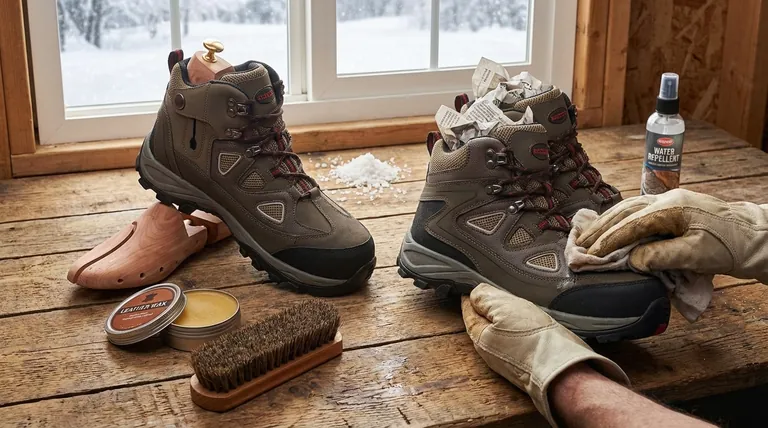
To significantly extend the life of your winter boots, you must adopt a consistent routine of cleaning them after use, drying them thoroughly and gently, reapplying waterproofing treatments, and storing them correctly during the off-season. These four practices work together to combat the primary causes of premature wear: damage from salt, moisture saturation, and loss of structural shape.
The central principle of winter boot care is proactive defense, not reactive repair. A consistent maintenance routine is the single most important factor in preserving a boot's materials, structural integrity, and weather resistance for years to come.
The Core Principles of Boot Longevity
Winter boots face two primary enemies: salt and moisture. Salt is corrosive; it stains materials and leaches moisture from leather, causing it to become brittle and crack. Moisture, when not properly managed, can degrade adhesives, promote mildew, and compromise the boot's insulating and waterproof properties.
Effective maintenance is a system designed to consistently counteract these two forces.
The Impact of Salt and Grime
Salt and chemical de-icers left on your boots will actively break down the materials. For leather, this process is particularly damaging, leading to permanent stains and a loss of natural oils that keep it supple.
The Danger of Improper Drying
Allowing boots to remain damp or, conversely, drying them too quickly with intense heat, causes significant harm. Lingering moisture weakens materials, while direct heat can crack leather, shrink synthetics, and destroy the glues holding the boot together.
A Step-by-Step Maintenance Routine
To maximize your boots' lifespan, integrate these steps into your regular habits. The frequency depends on use, but the principles remain the same.
Step 1: Clean After Use
The most critical habit is to clean your boots after wearing them in snow or slush. This prevents salt and dirt from setting in.
For leather boots, use a brush to remove loose debris, then wipe them down with a damp cloth. For synthetic boots, a simple wipe with a damp cloth is usually sufficient.
Step 2: Dry Thoroughly, But Gently
Never place your winter boots directly next to a radiator, vent, or open flame. This type of intense, direct heat is destructive.
Instead, remove the insoles and stuff the boots with newspaper. The paper will absorb moisture from the inside out. Place them in a dry, well-ventilated area at room temperature and allow them to air dry completely, which may take overnight.
Step 3: Condition and Waterproof Periodically
Conditioning and waterproofing serve two different but essential functions.
Conditioning is for leather boots only. A good leather conditioner replenishes the oils that salt and moisture strip away, keeping the leather flexible and preventing cracks. This should be done a few times per season.
Waterproofing creates a protective barrier on the exterior of the boot. Whether your boots are leather or synthetic, the factory-applied water-repellent coating wears off over time. Reapply a suitable waterproofing spray or wax at the beginning of the season and again if you notice water is no longer beading on the surface.
Common Pitfalls to Avoid
Even with good intentions, common mistakes can shorten the life of your boots. Understanding these trade-offs is key to effective care.
The Mistake of Using Direct Heat
The desire for a quick dry is understandable, but the trade-off is severe, irreversible damage. The high heat from a radiator or vent can permanently warp the boot's shape, crack the upper material, and delaminate the sole from the rest of the boot.
Neglecting Off-Season Storage
Tossing your boots in a damp basement or a hot attic at the end of winter is a recipe for disaster. Extreme temperatures and humidity can degrade materials, while improper positioning can cause them to lose their shape permanently.
Forgetting the Insoles
Moisture often gets trapped under the insoles. Failing to remove them during the drying process can lead to persistent dampness, fostering bacteria, odor, and the breakdown of the footbed.
The Final Element: Proper Off-Season Storage
How you store your boots for the spring and summer is just as important as how you care for them in the winter.
Maintain the Boot's Shape
Before storing, ensure the boots are completely clean and dry. Then, insert boot trees or stuff them tightly with newspaper. This prevents the ankle and toe box from collapsing and creasing over the long term.
Choose the Right Environment
Store your boots in a cool, dry place away from direct sunlight. A closet is ideal. Avoid basements, garages, or attics where temperature and humidity can fluctuate dramatically, which accelerates material aging.
Making the Right Choice for Your Boots
Your maintenance strategy should align with how you use your footwear.
- If your boots see daily use in harsh, salty conditions: Your primary focus must be the daily routine of cleaning and gentle, thorough drying.
- If you wear your boots for occasional winter recreation: Focus on proper pre-season waterproofing and meticulous end-of-season cleaning and storage.
- If you own high-quality leather boots: The most critical practice for longevity is periodic conditioning to prevent the leather from drying out and cracking.
Consistent, mindful care is the best way to protect your investment and ensure your boots perform when you need them most.
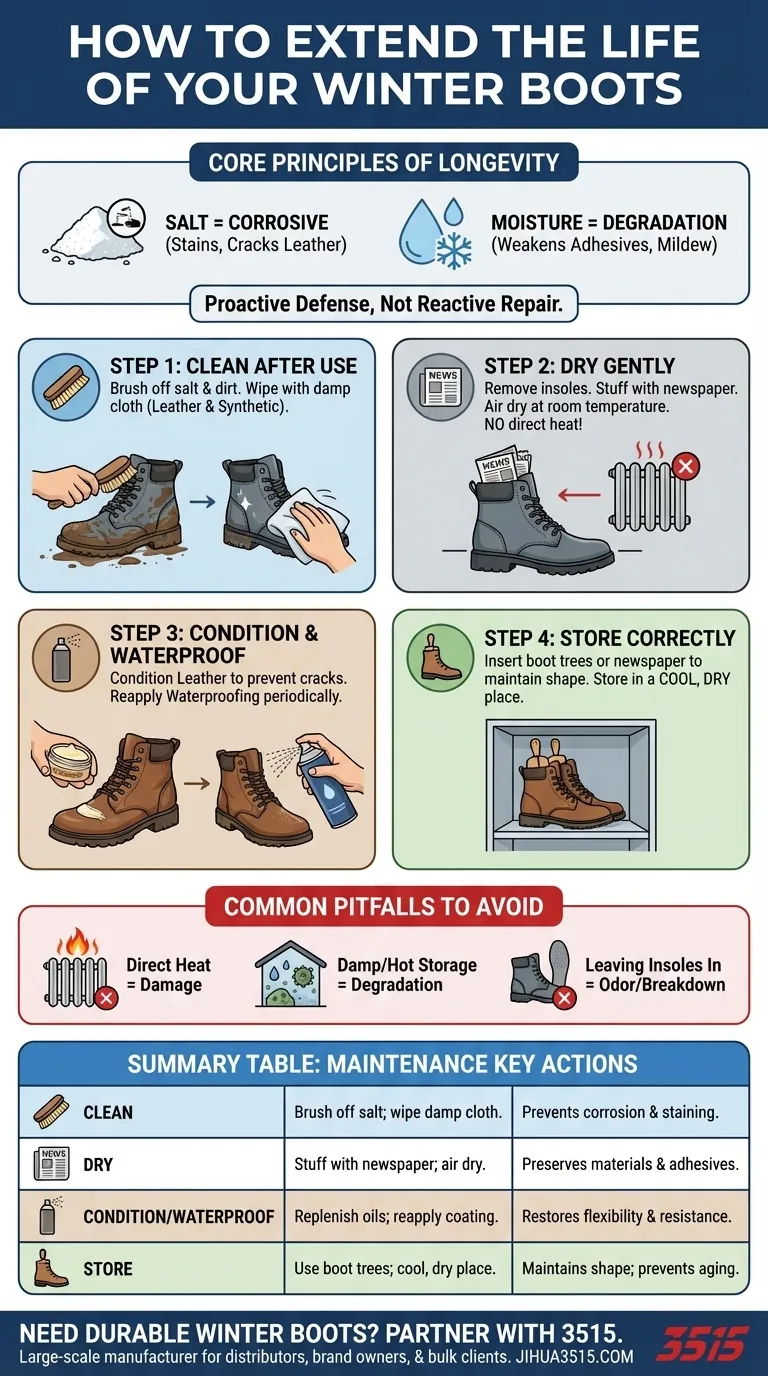
Summary Table:
| Maintenance Step | Key Action | Primary Benefit |
|---|---|---|
| Clean After Use | Brush off salt/grime; wipe with damp cloth. | Prevents material corrosion and staining. |
| Dry Thoroughly | Stuff with newspaper; air dry at room temperature. | Preserves material integrity and adhesives. |
| Condition/Waterproof | Replenish leather oils; reapply protective coating. | Restores flexibility and weather resistance. |
| Store Correctly | Use boot trees; store in a cool, dry place. | Maintains shape and prevents material aging. |
Need Durable Winter Boots Built to Last? Partner with 3515.
As a large-scale manufacturer, we produce a comprehensive range of high-quality winter boots for distributors, brand owners, and bulk clients. Our expertise ensures every pair is crafted with longevity in mind, using materials and construction methods that stand up to harsh conditions.
Let us help you provide your customers with reliable footwear. Contact our team today to discuss your production needs and explore our catalog.
Visual Guide
Related Products
- Premium Insulated Safety Boots and Shoes for Wholesale & Bulk Orders
- Factory Direct Wholesale Rain Boots Durable Waterproof & Fully Customizable
- Durable Waterproof Rain Boots | Custom Manufacturer for Wholesale & Brands
- Wholesale Waterproof Tactical Boots Custom Suede & High-Traction Soles
- Premium Waterproof High-Cut Industrial Safety Boots for Wholesale and Bulk Orders
People Also Ask
- What are the recommended insulation ratings for mild winter conditions? A Guide for Active & Stationary Workers
- How does insulation thickness correlate with temperature ranges? A Guide to Choosing the Right Warmth
- What insulation level is needed for severe cold and stationary work? 1200g or Higher is Essential
- What safety advantages do insulated boots offer beyond warmth? Dielectric Protection & Superior Grip
- How does fleece lining contribute to the warmth of insulated boots? Trapping Air for Superior Cold Protection