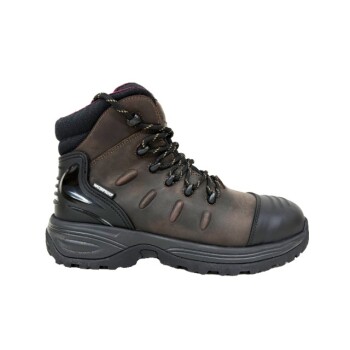
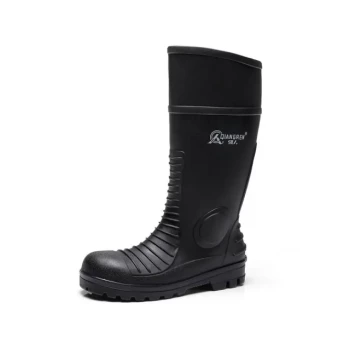
To maintain water-resistant boots, you must follow a consistent cycle of care. The essential practices are regular cleaning to remove abrasive dirt, monthly conditioning to keep leather supple and prevent cracks, reapplying waterproofing treatments like sprays or waxes to renew the protective barrier, and conducting routine inspections for any wear and tear that could compromise their integrity.
The core principle to understand is that "water-resistant" is a temporary state, not a permanent feature. Effective maintenance is a proactive cycle of cleaning, nourishing, and re-protecting the materials to preserve their performance and significantly extend the life of your boots.
The Foundation of Care: Cleaning and Preparation
Before you can protect your boots, you must properly prepare them. Skipping this step is like painting over rust; it traps damaging materials and makes subsequent treatments far less effective.
Why Regular Cleaning is Non-Negotiable
Dirt, mud, and salt are more than just cosmetic issues. Caked-on grime actively draws moisture out of leather, leading to cracking, while fine grit abrades the boot's fibers and can clog the pores of breathable membranes.
Regular cleaning removes these harmful agents, preserving the material's integrity and breathability.
The Correct Cleaning Method
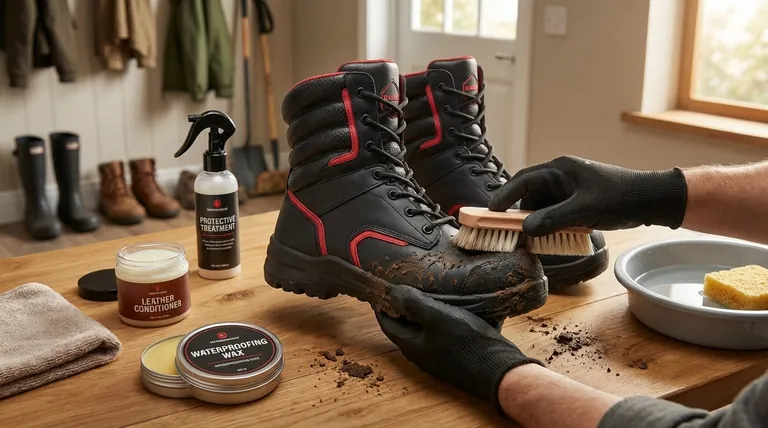
Start by removing the laces to access the tongue and eyelets. Use a stiff brush to knock off any loose dirt and debris.
For a deeper clean, use a damp cloth to wipe down the entire boot. If stains persist, a specialized footwear cleaner is recommended over harsh household soaps, which can strip essential oils from leather.
The Critical Importance of Proper Drying
Never dry your boots with direct heat from a radiator, campfire, or hair dryer. This intense heat can cause leather to crack, shrink, and become brittle, permanently damaging its structure and water resistance.
Always let your boots air dry at room temperature. Stuffing them with newspaper can help absorb excess moisture and speed up the process safely.
Restoring and Protecting Your Boots
Once clean and dry, the next phase is to restore the materials' natural defenses and re-establish the barrier against water.
Conditioning: Feeding the Leather
This step applies specifically to leather boots. Leather is a skin, and it needs moisture to stay flexible and strong. Conditioning with a dedicated leather oil, cream, or conditioner replenishes these oils.
This process prevents the leather from drying out and forming cracks, which are primary entry points for water.
Re-Waterproofing: Renewing the Barrier
Conditioning and waterproofing are not the same. While conditioning nourishes the material from within, a waterproofing treatment adds a protective layer to the exterior surface.
This treatment, often a Durable Water Repellent (DWR) finish, causes water to bead up and roll off. This finish wears away with use and must be reapplied to maintain performance.
Applying the Right Treatment
For most boots, including those with synthetic materials, a silicone-based waterproofing spray is a simple and effective option.
For full-grain leather boots, a wax-based sealant can offer a more durable and robust barrier. Apply a thin, even layer and pay special attention to the seams, which are the most vulnerable areas.
Understanding the Common Pitfalls
Proper maintenance requires a balanced approach. Certain common mistakes can be just as damaging as neglect.
Over-Conditioning Can Be Harmful
While essential, using too much oil or cream can over-saturate leather. This can make the material too soft, reducing its structural support, and can also clog the pores, hindering breathability.
Apply conditioner sparingly—only when the leather looks or feels dry. A little goes a long way.
Not All Products Work on All Materials
Using the wrong product can damage your boots. A heavy wax designed for full-grain leather will ruin the nap on suede or nubuck.
Always check the product label to ensure it is compatible with your boot's specific materials, whether they are leather, synthetic fabric, or a hybrid.
Forgetting to Inspect for Damage
Maintenance isn't just about cleaning and applying products. It's also an opportunity to inspect your boots for deeper issues.
Check for separation between the sole and the upper, look for deep cracks in the leather, and examine the stitching around the seams. Catching these problems early can prevent a catastrophic failure in the field.
A Practical Maintenance Schedule
Your maintenance routine should adapt to how you use your boots. Use these guidelines to create a consistent schedule.
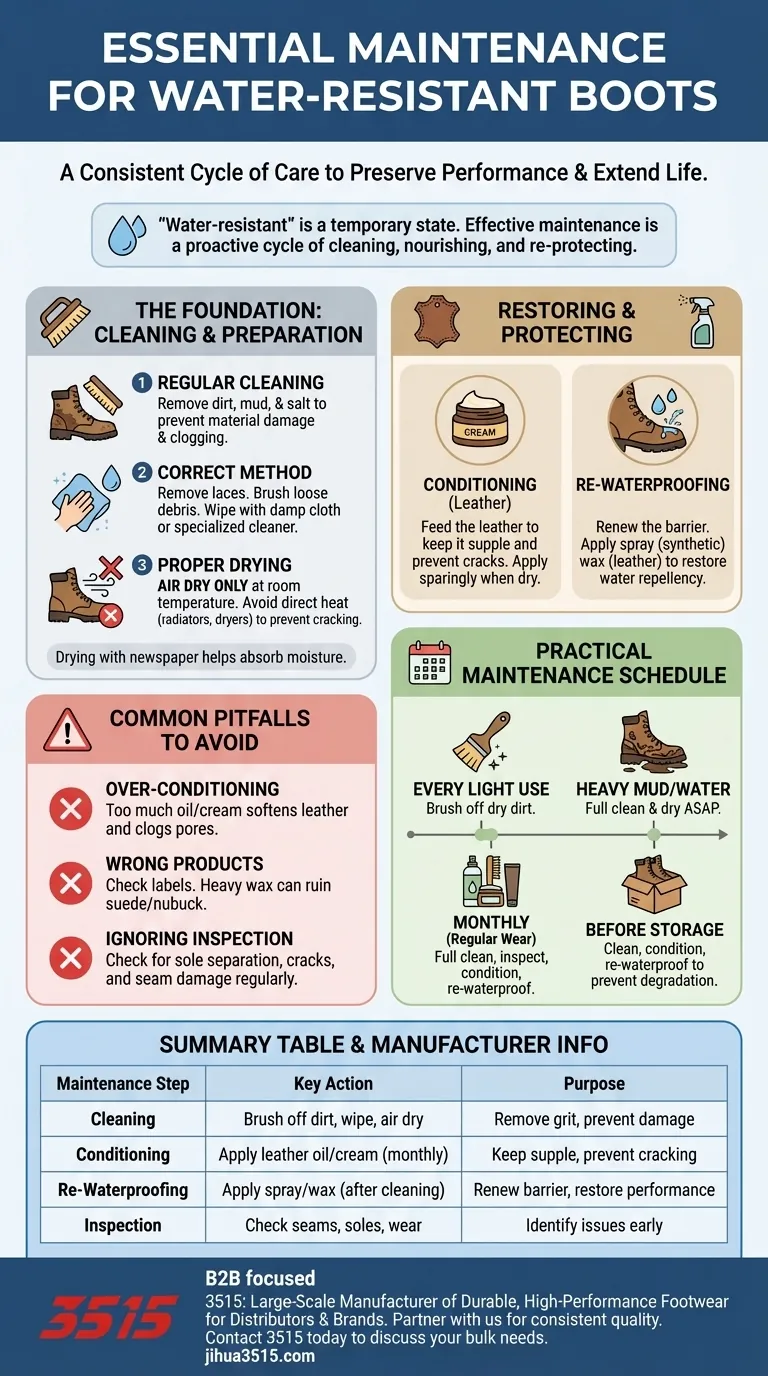
- After every light use: Take a minute to brush off any dry dirt and debris.
- After heavy exposure to mud or water: Perform a full cleaning and drying cycle as soon as possible.
- On a monthly basis (for regular wear): Conduct a full clean, inspect for damage, and re-apply conditioner or waterproofing treatment as needed.
- Before long-term storage: Always clean, condition, and re-waterproof your boots to prevent material degradation while they sit unused.
Ultimately, consistent care is the single most important factor in ensuring your boots perform as intended for years to come.
Summary Table:
| Maintenance Step | Key Action | Purpose |
|---|---|---|
| Cleaning | Brush off dirt, wipe with damp cloth, air dry | Remove abrasive grit, prevent material damage |
| Conditioning | Apply leather oil/cream (monthly or as needed) | Keep leather supple, prevent cracking |
| Re-Waterproofing | Apply spray or wax treatment (after cleaning) | Renew water-repellent barrier, restore performance |
| Inspection | Check seams, soles, and for wear (during each clean) | Identify issues early, prevent failure |
Need Durable, High-Performance Footwear for Your Customers?
As a large-scale manufacturer, 3515 produces a comprehensive range of water-resistant and waterproof boots for distributors, brand owners, and bulk clients. Our production capabilities ensure consistent quality, durability, and performance across all types of footwear.
Partner with us to:
- Access a wide variety of styles built to last
- Ensure your products meet the highest standards of water resistance
- Provide your customers with reliable footwear backed by expert manufacturing
Contact 3515 today to discuss your bulk footwear needs and discover how we can enhance your product line.
Visual Guide
Related Products
- Premium Flame-Retardant Waterproof Safety Boots and Shoes
- Heavy-Duty Waterproof Nubuck Safety Boots Safety Shoes for Bulk Supply
- Premium High-Cut Waterproof Safety Boots Manufacturing & Wholesale Solutions
- Durable Waterproof Rain Boots | Custom Manufacturer for Wholesale & Brands
- Premium Wholesale Waterproof Safety Boots High Performance Protection for Industrial Markets
People Also Ask
- Why are waterproof safety boots recommended for certain work environments? Essential Protection for Wet & Hazardous Jobs
- What materials are commonly used in waterproof boots? The Complete Guide to Durable, Breathable Protection
- How does boot construction affect waterproofing? The Science Behind Truly Dry Feet
- What should you look for to ensure boots are fully waterproof? The Essential 2-Part System
- What is the advantage of one-piece construction in waterproof boots? Unbeatable Seamless Protection