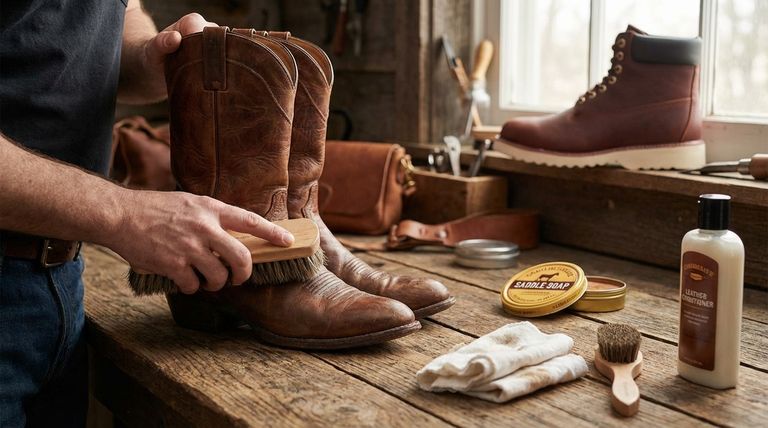
To properly clean your cowboy boots, you must first remove all loose dirt and dust with a soft brush or a slightly damp cloth. For more significant grime, use a dedicated leather cleaner or a small amount of saddle soap on a damp cloth, working in small circles. Always allow the boots to air dry naturally, away from any direct heat source, to prevent the leather from cracking.
The goal of cleaning is not just to remove dirt, but to preserve the leather's integrity. An effective routine is built on gentle, consistent cleaning and avoids harsh chemicals or high heat, which can cause irreversible damage.
The Essential Cleaning and Care Process
Proper boot care is a systematic process. Each step is designed to clean the leather effectively while protecting it from damage, ensuring your boots last for years.
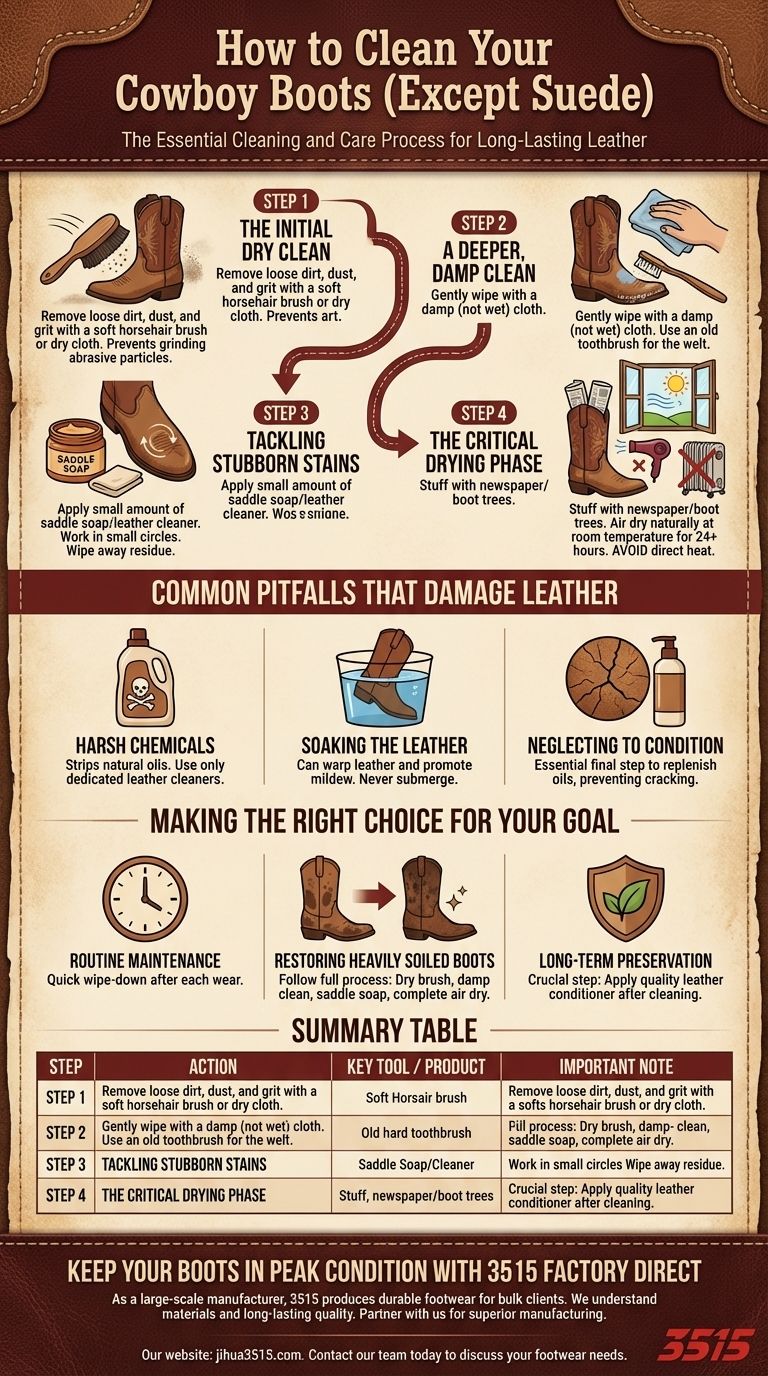
Step 1: The Initial Dry Clean
Before introducing any moisture, you must remove all surface-level debris. Use a soft horsehair brush or a dry cloth to wipe away loose dust, dirt, and grit from the entire boot. This prevents you from grinding abrasive particles into the leather in the next step.
Step 2: A Deeper, Damp Clean
For dirt that remains, slightly dampen a clean, soft cloth with water. Gently wipe down the leather. The key is to use a damp cloth, not a wet one, to avoid oversaturating the material.
For the seam where the boot upper meets the sole (the welt), an old toothbrush is an excellent tool for dislodging packed-in mud and dirt.
Step 3: Tackling Stubborn Stains
If water alone isn't sufficient, it's time to use a dedicated cleaner. Apply a small amount of saddle soap or a reputable leather cleaner to your damp cloth.
Work the cleaner into the leather using small, circular motions. Don't scrub aggressively. Once the area is clean, use a separate, clean damp cloth to wipe away any soap residue.
Step 4: The Critical Drying Phase
Never use a hairdryer, heater, or direct sunlight to speed up drying. Artificial heat forces moisture out too quickly, causing the leather's natural oils to evaporate. This leads to the material shrinking, hardening, and cracking.
Instead, stuff your boots with newspaper or boot trees to help them maintain their shape and absorb internal moisture. Let them air dry naturally at room temperature for at least 24 hours.
Common Pitfalls That Damage Leather
Understanding what not to do is as important as knowing the correct procedure. Avoiding these common mistakes is critical for preserving your boots.
Using Harsh Chemicals or Detergents
Standard household soaps and detergents are far too harsh for leather. They are designed to strip away oils, which is precisely what you want to avoid. These products will dry out and damage your boots.
Soaking the Leather
Never submerge your boots in water. Prolonged soaking can warp the leather, damage the internal structure, and significantly extend the drying time, creating an opportunity for mildew to form.
Neglecting to Condition
Cleaning, especially with any kind of soap, removes some of the leather's natural oils. The final, non-negotiable step after your boots are completely dry is to apply a leather conditioner. This replenishes the oils, keeping the leather soft, supple, and resistant to cracking.
Making the Right Choice for Your Goal
Your approach can be tailored to the condition of your boots and your long-term objective.
- If your primary focus is routine maintenance: A quick wipe-down with a dry brush or damp cloth after each wear is the most effective habit.
- If your primary focus is restoring heavily soiled boots: Follow the full process of dry brushing, cleaning with saddle soap, and allowing for a complete air-dry cycle.
- If your primary focus is long-term preservation: The most crucial step is regularly applying a quality leather conditioner after cleaning to keep the material nourished.
Ultimately, treating your boots with a consistent and gentle care routine is the best way to protect your investment for the long haul.
Summary Table:
| Step | Action | Key Tool / Product | Important Note |
|---|---|---|---|
| 1 | Dry Clean | Soft Horsehair Brush | Remove all loose dirt before using any moisture. |
| 2 | Damp Wipe | Clean, Damp Cloth | Use a damp cloth, not a wet one, to avoid oversaturation. |
| 3 | Clean Stains | Saddle Soap / Leather Cleaner | Use gentle, circular motions; wipe away residue. |
| 4 | Air Dry | Newspaper / Boot Trees | Air dry naturally for 24+ hours; avoid direct heat. |
| 5 | Condition | Leather Conditioner | Essential final step to replenish oils and prevent cracking. |
Keep Your Boots in Peak Condition with 3515 Factory Direct
As a large-scale manufacturer, 3515 produces a comprehensive range of durable footwear for distributors, brand owners, and bulk clients. Our expertise in crafting all types of shoes and boots means we understand the materials and care that ensure long-lasting quality.
Whether you're looking to stock reliable footwear or develop a custom line, partnering with us gives you access to superior manufacturing and industry knowledge. Contact our team today to discuss your footwear needs and discover how we can bring value to your business.
Visual Guide
Related Products
- Durable Leather Work Boots for Wholesale & Custom Manufacturing
- Durable Leather Work Boots for Wholesale & Custom OEM Manufacturing
- Durable Leather Tactical Boots Wholesale & Custom Manufacturing for Brands
- Durable Leather Work Boots Wholesale Manufacturer & Custom Factory
- Wholesale Leather Work Boots with Customizable Wedge Sole for Brands
People Also Ask
- What is the difference between full-grain and top-grain leather? Premium Material Guide for Boot Manufacturers
- What are the common workplace hazards that can be mitigated with the right work boots? Protect Your Workforce
- What are the common foot issues workers face due to uncomfortable work boots? Prevent Pain & Deformities
- What are the advantages of leather versus synthetic work boots? A Guide to Choosing the Right Material
- What are the key components of modern work boots? Engineered for Ultimate Durability and Comfort