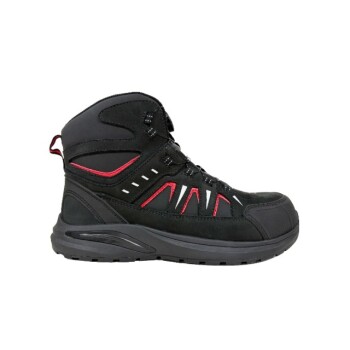
A rigid heel counter serves as a fundamental structural stabilizer designed to compensate for the physiological changes associated with aging. By providing firm, unyielding support to the rear of the foot, this component limits excessive ankle rolling and optimizes the walking path, offering essential protection for elderly users with weakened foot muscles or flat feet.
The rigid heel counter is not simply a shaping element; it is an external support system. It acts as a mechanical brace within the shoe to maintain heel alignment, preventing the lateral instability that frequently leads to sprains and falls in industrial environments.
The Biomechanics of Support
Compensating for Muscle Weakness
As foot muscles weaken with age, the foot loses some of its natural ability to maintain a neutral alignment.
A rigid heel counter acts as a surrogate for this lost muscle tone. It securely encases the heel, ensuring that the foot remains upright and stable rather than collapsing inward or outward during weight-bearing activities.
Controlling the Gait Cycle
For elderly users, maintaining a consistent and optimized walking path is critical for balance.
The rigidity of the counter restricts the ankle's ability to roll excessively. This forces the foot to follow a safer, more linear trajectory through the gait cycle, reducing the erratic movements that often precipitate a loss of balance.
Safety in Industrial Contexts
Prevention of Ankle Sprains
In industrial settings, uneven surfaces and debris pose significant risks.
The primary safety function of the rigid counter is to act as a barrier against ankle sprains. By physically preventing the heel from sliding off the footbed or twisting laterally, it drastically lowers the probability of soft tissue injury during sudden shifts in weight.
Support for Vertical Movement
Industrial work often involves climbing ladders or navigating stairs.
A counter made of hard materials (such as plastic) provides the necessary resistance to keep the foot stable on narrow rungs or steps. This stability is vital for users who need to trust that their footwear will not buckle under localized pressure.
Understanding the Trade-offs
The Importance of Holistic Design
A rigid heel counter cannot function effectively in isolation; it must be part of a balanced system.
While the counter provides rear stability, it must be paired with a low-to-medium heel height. High heels significantly increase the risk of falls, negating the stability benefits provided by the counter.
Balancing Rigidity with Comfort
While the rear of the shoe must be rigid, the front must remain accommodating.
Elderly users often experience natural widening of the foot. If a shoe combines a rigid heel with a narrow toe box, it can cause friction, blisters, and nail bruising. Therefore, the rigidity at the heel must be offset by sufficient lateral space and volume in the toe box to ensure overall foot health.
Making the Right Choice for Your Goal
When selecting industrial footwear for aging workforces, consider the specific environmental demands:
- If your primary focus is fall prevention: Prioritize footwear that combines a rigid plastic heel counter with a low heel profile to maximize mechanical stability and postural control.
- If your primary focus is climbing support: Ensure the heel counter is composed of hardened materials specifically designed to resist deformation when weight is concentrated on ladder rungs.
- If your primary focus is long-term foot health: Verify that the firm heel support is paired with a wide, voluminous toe box to prevent friction-related skin injuries.
A rigid heel counter is the cornerstone of safety for the aging foot, converting a standard shoe into a reliable tool for stability.
Summary Table:
| Feature | Function for Elderly Users | Industrial Benefit |
|---|---|---|
| Rigid Heel Counter | Stabilizes the calcaneus (heel bone) | Prevents lateral ankle rolling and sprains |
| Gait Control | Maintains linear walking trajectory | Reduces tripping risks on uneven surfaces |
| Mechanical Bracing | Compensates for weakened muscle tone | Provides vertical stability on ladders and stairs |
| Design Synergy | Pairs with low heel & wide toe box | Balances structural support with daily comfort |
Partner with 3515 for High-Performance Industrial Footwear
As a large-scale manufacturer serving distributors and brand owners, 3515 offers comprehensive production capabilities for all footwear types. Our flagship Safety Shoes series is engineered with advanced features like rigid heel counters to protect aging workforces and enhance workplace safety. Beyond safety, our extensive portfolio covers work and tactical boots, outdoor shoes, training shoes, sneakers, and Dress & Formal shoes to meet your diverse bulk requirements.
Let us help you deliver superior stability and protection to your customers. Contact us today to discuss your manufacturing needs!
References
- Qabas Ali Al-Jumaili, Mariam Elghobashi. Sole Solutions: Redefining Comfort and Safety for Elderly Women with Cutting-Edge Ergonomic Footwear. DOI: 10.46254/an14.20240622
This article is also based on technical information from 3515 Knowledge Base .
Related Products
- Durable Steel Toe Safety Boots Wholesale & Custom Manufacturing
- Wholesale Durable Safety Boots | Custom Steel Toe & Puncture-Resistant Manufacturing
- Heavy Duty Nubuck Safety Boots Safety Shoes for Global Distribution
- Athletic Safety Shoes with Dial Closure & Steel Toe for Wholesale & Custom Manufacturing
- Premium Safety Shoes with Rotating Buckle Safety Sneakers
People Also Ask
- Why are industrial safety boots with steel toes necessary for machine operators? Essential Foot Protection for Safety
- Why is it mandatory to wear safety shoes with steel toe protection during metal loading? Prevent Crushing Injuries
- What are the main materials used in steel toe safety shoes? A Guide to Protective Footwear Construction
- What are the characteristics of steel toe safety boots? Maximum Protection, Key Trade-offs
- Is it true that steel toes can cause toes to get cut off? Debunking the Dangerous Myth