Proper maintenance for quality hunting boots centers on a routine of cleaning, conditioning, drying, and inspection. This proactive care preserves the complex materials—like full-grain leather and waterproof membranes—ensuring your boots provide the support, protection, and waterproofing you depend on for multiple seasons.
The core principle of hunting boot maintenance is not just cleaning but preservation. You are actively maintaining a high-performance material system designed to protect your feet, and neglecting any part of that system compromises its integrity and shortens its lifespan.
The Foundation: Consistent Cleaning and Drying
Proper cleaning and drying after use are the most critical, high-frequency maintenance tasks. They prevent the premature breakdown of the boot's core materials.
Why Cleaning is Non-Negotiable
Dirt, mud, and especially salts can draw essential oils out of leather, causing it to dry, crack, and lose its water resistance. Caked-on debris can also abrade stitching and flex points over time.
Regular cleaning removes these corrosive elements and prepares the boot for any necessary conditioning or waterproofing treatments.
The Correct Cleaning Process
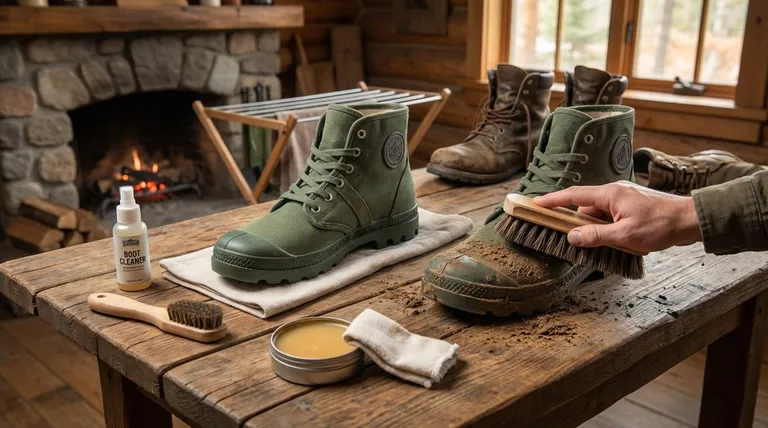
For most boots, start by removing the laces and insoles. Use a stiff brush to remove all loose dirt and debris.
If necessary, use lukewarm water and a mild soap specifically designed for footwear to wash away stubborn grime. Rinse thoroughly.
The Critical Role of Proper Drying
Never use direct heat—such as a campfire, radiator, or hairdryer—to dry your boots. This can cause leather to shrink and crack, and it can damage the adhesives and synthetic materials in the liner.
The best method is to let them air dry slowly at room temperature. Stuffing them with newspaper can help draw out moisture and speed up the process safely.
Preserving the Materials: Conditioning and Waterproofing
Beyond cleaning, you must actively replenish the materials to keep them functional, particularly the leather uppers that provide structure and the first line of defense against water.
Understanding Leather's Needs
Full-grain leather is a natural skin. To remain flexible and water-resistant, it needs its oils replenished periodically. This process is called conditioning.
Conditioning prevents the leather from drying out and cracking, which is a common point of failure for waterproof boots.
How to Condition Leather Components
After cleaning and completely drying your boots, apply a leather conditioner or waterproofing wax recommended by the manufacturer. Work it into the leather, paying special attention to seams and flex points.
This process nourishes the leather and reinforces its natural ability to repel water, which protects the waterproof membrane underneath.
Maintaining the Waterproof Membrane
Most quality boots have an internal waterproof membrane (like Gore-Tex). While the membrane itself is waterproof, it performs best when the outer material is also shedding water.
When the outer leather or fabric gets saturated, the boot's breathability is severely compromised. Regular conditioning ensures the outer "face fabric" does its job, allowing the membrane to breathe effectively.
Inspection and Proactive Repairs
A key part of maintenance is regularly inspecting your boots for minor issues before they become catastrophic failures in the field.
Regular Wear and Tear Checks
Periodically check all stitching for fraying or loose threads. Examine where the outsole meets the upper for any signs of separation.
Also, inspect the rubber rand—the protective strip around the lower part of the boot—for any deep cuts or peeling that could compromise waterproofing.
Assessing Outsole Longevity
A high-quality outsole can last for hundreds of miles, but it is a wear item. Regularly check the tread depth and look for uneven wear patterns.
If the tread is becoming shallow or chunks are missing, the boot's traction is compromised. Many premium boots can be resoled by a professional cobbler, extending their life significantly.
Addressing Minor Issues Promptly
Small problems should be addressed immediately. A loose stitch can be reinforced, and minor sole separation can often be fixed with a durable footwear adhesive. Ignoring these small issues allows them to worsen quickly.
Common Pitfalls to Avoid
Correct maintenance is crucial, but incorrect techniques can be just as damaging as neglect. Understanding what not to do is essential for preserving your investment.
The Danger of Over-Conditioning
While conditioning is vital, using too much or applying it too frequently can make the leather too soft. This can reduce the critical ankle support the boot was designed to provide, especially when carrying a heavy pack.
Follow the manufacturer's guidelines, which typically suggest conditioning only a few times per year, depending on use.
The Pitfall of Improper Storage
Between seasons, store your boots in a cool, dry place away from direct sunlight. Never store them while they are still damp, especially not in a sealed plastic bag or container.
While a sealed container is excellent for scent control, it will trap any residual moisture and create a perfect environment for mold and mildew to grow, which can destroy the boot's liner and leather.
Using Boots for Non-Hunting Tasks
Limit the use of your hunting boots to hunting. Wearing them for farm chores, construction, or daily tasks subjects them to unnecessary wear and exposure to chemicals or environments that can degrade the materials faster.
How to Apply This to Your Goal
Your maintenance routine should align with your primary objective for your footwear.
- If your primary focus is maximum lifespan: Prioritize consistent cleaning, proper drying, and proactive inspections to catch and repair small issues before they grow.
- If your primary focus is peak waterproof performance: Concentrate on periodic conditioning of the leather uppers to ensure they repel water and protect the inner membrane.
- If your primary focus is scent control: Use dedicated, sealed storage containers, but only after you have confirmed the boots are 100% dry inside and out.
Ultimately, treating your boots as a critical piece of technical equipment is the key to ensuring they serve you well for years to come.
Summary Table:
| Maintenance Task | Key Action | Why It's Important |
|---|---|---|
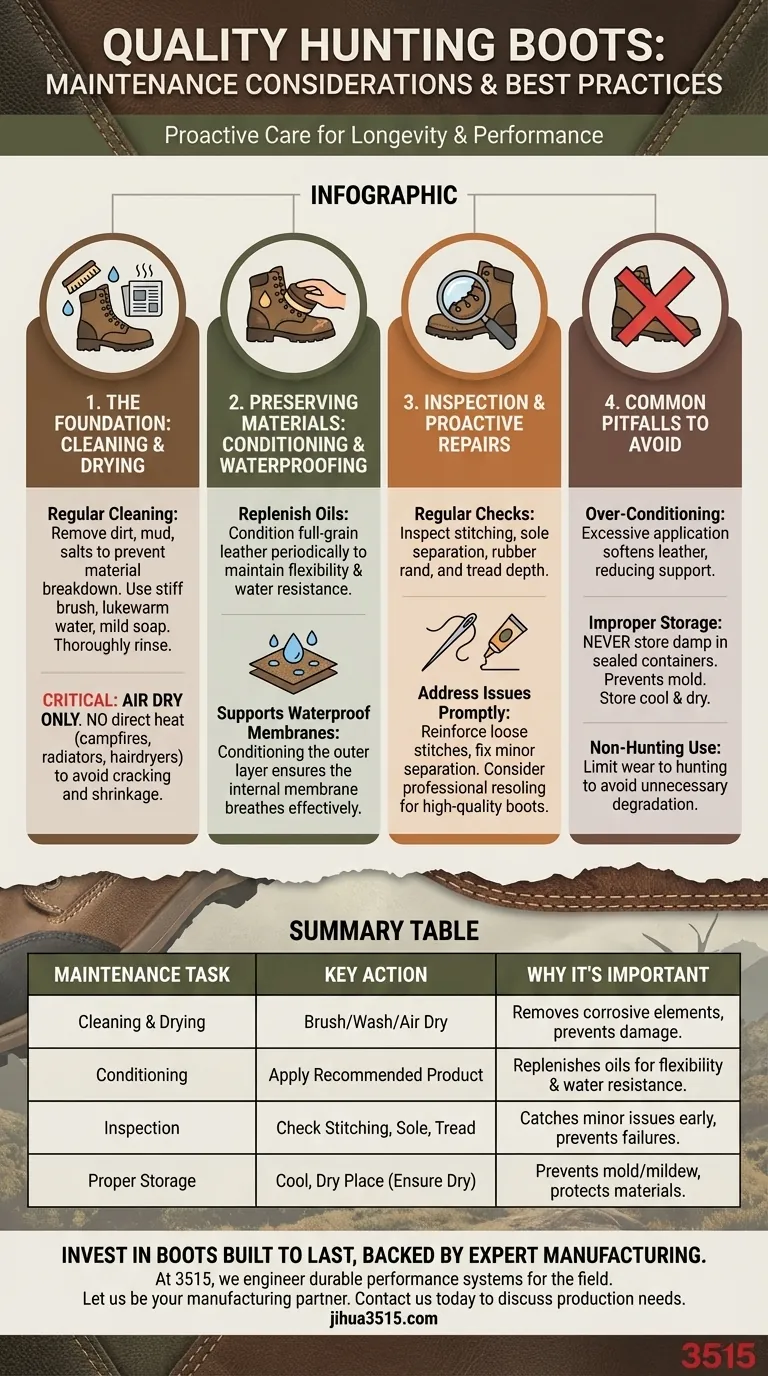
| Cleaning & Drying | Brush off debris, wash with mild soap, air dry away from heat. | Removes corrosive dirt/salts; prevents leather cracking and material damage. |
| Conditioning | Apply manufacturer-recommended conditioner to dry leather. | Replenishes oils to maintain flexibility and water resistance. |
| Inspection | Check stitching, sole separation, and tread wear regularly. | Catches minor issues early to prevent major failures in the field. |
| Proper Storage | Store in a cool, dry place; ensure boots are completely dry first. | Prevents mold and mildew growth that can destroy materials. |
Invest in Boots Built to Last, Backed by Expert Manufacturing
Your hunting boots are a critical investment. At 3515, we don't just manufacture footwear; we engineer durable performance systems. As a large-scale manufacturer, we produce a comprehensive range of hunting, tactical, and work boots for distributors, brand owners, and bulk clients. Our expertise ensures every pair is built for the field, but proper care is what makes them last.
Let us be your reliable manufacturing partner for high-quality footwear that meets your exact specifications. Contact our team today to discuss your production needs and discover how we can help you deliver superior, long-lasting boots to your customers.
Visual Guide
Related Products
- Wholesale Lightweight Tactical Boots Custom Manufacturer for Desert & Combat Use
- High-Traction Suede Tactical Boots Wholesale & Custom Manufacturing
- Durable Leather Tactical Boots Wholesale & Custom Manufacturing for Brands
- Durable Spiked Camouflage Boots Wholesale & Factory Production
- Wholesale High-Traction Camo Boots - Custom Manufacturer for Brands
People Also Ask
- What are the common types of combat boots? Find the Right Boot for Your Mission
- What specialized protections do tactical boots offer? Maximize Endurance with High-Performance Footwear
- How is the compatibility of polymer materials demonstrated in smart footwear? Enhancing Tactical & Training Performance
- What are the different types of tactical boots available? Find the Right Boot for Your Mission
- What is the role of high-frequency acquisition hardware in technical skill analysis for outdoor and tactical boots?