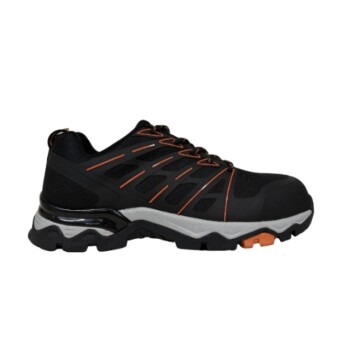
The technical value of a high-frequency force plate system lies in its ability to quantify the invisible. By sampling at frequencies up to 1kHz, these systems transform stability testing from a subjective observation into a rigorous, data-driven science. They capture the minute, rapid-fire adjustments the human body makes to maintain balance, providing the granular data necessary to evaluate heavy-duty footwear like safety shoes and tactical boots.
Core Takeaway High-frequency sampling is the only way to accurately calculate advanced stability metrics like Time-to-Boundary (TTB) and detailed Center of Pressure (COP) trajectories. These indicators allow you to detect subtle balance deficits that standard equipment misses, offering objective proof of how specific footwear designs affect postural control under dynamic loading.
Capturing Micro-Stability in Real-Time
The Necessity of 1kHz Sampling
Stability is not a static state; it is a continuous series of micro-corrections. A system capable of 1kHz sampling captures 1,000 data points per second.
This high resolution is critical for capturing high-velocity transient events. It ensures that the rapid neuromuscular responses required to stabilize heavy tactical boots are recorded, rather than smoothed out or lost by slower equipment.
Moving Beyond Subjective Feedback
User feedback ("this boot feels tippy") is unreliable and unrepeatable. High-frequency force plates measure ground reaction forces and moments with absolute precision.
This provides an objective baseline. It allows engineers to compare different outsole compounds or upper designs based on hard data rather than tester sentiment.
Critical Metrics for Footwear Evaluation
Center of Pressure (COP) Dynamics
The primary output of these systems is the Center of Pressure (COP) sway trajectory. This traces the precise path of the user's weight distribution over time.
By integrating balance analysis software, you can decompose this trajectory into actionable components:
- Sway Path Length: The total distance the COP travels.
- Sway Velocity: How fast the COP moves, specifically in the mediolateral (M-L) and anteroposterior (A-P) directions.
- Sway Area: The total surface area covered during the sway.
Higher sway velocities or larger sway areas typically indicate that the footwear is forcing the user to work harder to maintain balance.
Time-to-Boundary (TTB)
Perhaps the most valuable metric for safety footwear is Time-to-Boundary (TTB).
TTB estimates how much time remains before the center of pressure crosses the base of support (causing a fall) if the current velocity and trajectory continue. This is a predictive metric for "near-falls" and is essential for assessing stability under dynamic loading conditions, such as sudden stops or lifting heavy loads.
Understanding the Trade-offs
Signal vs. Noise
Sampling at high frequencies (1kHz) captures significantly more data, which can introduce "noise" from environmental vibrations or electrical interference.
To extract value, the raw data requires precise filtering and processing. You must ensure your analysis software is capable of distinguishing between actual postural sway and systemic noise.
The Human Variable
Force plates measure the interaction between the human and the shoe, not just the shoe itself.
Standardized protocols (e.g., specific stances, eyes-open vs. eyes-closed) are strictly necessary. Without them, fatigue or user variability can skew the data, making a stable boot appear unstable.
Making the Right Choice for Your Evaluation
Different stability goals require focusing on different metrics.
- If your primary focus is Static Stability (Standing): Analyze the Total Sway Area and COP Sway Velocity to determine how much energy the user expends just to stand still.
- If your primary focus is Dynamic Safety (Movement): Prioritize Time-to-Boundary (TTB) data to identify how quickly the footwear allows a user to recover from a potential loss of balance.
- If your primary focus is Directional Support: Examine the split between Mediolateral (M-L) and Anteroposterior (A-P) velocity to see if the boot lacks support in a specific direction (e.g., weak ankle support showing high M-L velocity).
Investing in high-frequency measurement provides the definitive, objective evidence required to validate the safety and performance of professional-grade footwear.
Summary Table:
| Key Metric | Technical Significance | Footwear Performance Insight |
|---|---|---|
| 1kHz Sampling | 1,000 data points/sec | Captures micro-corrections and rapid neuromuscular responses. |
| COP Sway Velocity | Speed of weight distribution | Measures how hard a user must work to maintain balance. |
| TTB (Time-to-Boundary) | Predictive fall-risk window | Identifies the footwear's ability to prevent "near-falls." |
| M-L/A-P Velocity | Directional sway analysis | Pinpoints specific support weaknesses (e.g., lack of ankle support). |
Elevate Your Footwear Standards with 3515
As a large-scale manufacturer serving distributors and brand owners worldwide, 3515 leverages advanced engineering to deliver footwear that exceeds stability and safety requirements. Our comprehensive production capabilities cover all footwear types, anchored by our flagship Safety Shoes and Tactical Boots series.
Whether you need high-performance training shoes, rugged outdoor boots, or professional dress and formal shoes, we provide the technical expertise and bulk production capacity to grow your brand. Partner with us for reliable quality and data-driven design.
Contact 3515 Today to Discuss Your Bulk Requirements
References
- Xiaohan Xu, Genevieve Williams. Kinematics of balance controls in people with chronic ankle instability during unilateral stance on a moving platform. DOI: 10.1038/s41598-025-85220-x
This article is also based on technical information from 3515 Knowledge Base .
Related Products
- Premium Suede Sport Safety Shoes for Wholesale & Bulk Orders
- Premium Lightweight Safety Shoes for Wholesale & Bulk Orders
- Wholesale Anti-Smash & Puncture-Proof Safety Shoes Custom Manufacturing for Brands
- Premium KPU Injection Athletic Style Safety Shoes
- Premium Safety Shoes with Rotating Buckle Safety Sneakers
People Also Ask
- What industries have specific OSHA footwear requirements? Ensure Compliance & Protect Your Workforce
- What are the primary functions of professional safety shoes? Maximize Safety in Water Supply Confined Spaces
- What role do specialized safety shoes play in preventing falls? Engineering Stability in Industrial Environments
- How do specialized safety shoes protect against battery maintenance injuries? Prevent Impact and Chemical Burns
- Why wear protective masks, gloves, and safety shoes in 5S Shine? Elevate Safety and Discipline