Leather processing drums serve as the primary delivery mechanism for distributing natural inhibitors that prevent toxic chemical formation in safety shoe leather. By operating at continuous speeds, typically around 20 rpm, these drums generate the mechanical force required to drive acidic solutions containing Aloe barbadensis miller and carrageenan deep into the leather's structure.
The mechanical energy generated by the drum is just as vital as the chemical agents used. Without the deep, uniform penetration facilitated by continuous rotation, the antioxidant barrier remains superficial, leaving the inner collagen matrix vulnerable to oxidation and the formation of hexavalent chromium.
The Mechanics of Penetration
Continuous Mechanical Force
The drum does not act merely as a container; it is an active kinetic tool. By rotating continuously at approximately 20 rpm, the drum creates a dynamic environment.
This constant motion ensures that the leather is physically manipulated, flexing the fibers to accept liquid treatment.
Driving the Solution Deep
Static soaking is insufficient for the thick hides used in safety footwear. The mechanical energy ensures that the specific acidic solution—fortified with Aloe barbadensis miller and carrageenan—does not just sit on the surface.
Instead, the force pushes these natural agents into the dense fiber structure. This is critical for reaching the internal layers where chemical changes can occur undetected.
Creating the Anti-Oxidation Barrier
Uniform Distribution
Preventing hexavalent chromium requires consistency across every square inch of the hide. The tumbling action of the drum ensures the antioxidant solution is spread evenly throughout the collagen matrix.
This eliminates "blind spots" where the leather might otherwise remain untreated and susceptible to oxidation.
Cross-Sectional Protection
The ultimate goal of the drum process is to treat the entire leather cross-section. The mechanical driving force ensures the antioxidants permeate from the grain to the flesh side.
This creates a comprehensive "anti-oxidation barrier," effectively locking out the conditions that allow safe trivalent chromium to oxidize into toxic hexavalent chromium.
Understanding the Process Constraints
Dependence on Specific Parameters
The effectiveness of this method relies heavily on maintaining the correct mechanical settings. If the drum speed deviates significantly from the optimal 20 rpm, the kinetic energy may be insufficient to force the solution into the center of the hide.
Chemical Synergy Required
The drum provides the force, but it cannot prevent hexavalent chromium formation on its own. It is merely the delivery system for the chemical agents (Aloe and carrageenan).
If the acidic solution is improperly balanced, the mechanical action will result in uniform penetration of an ineffective treatment.
Ensuring Process Reliability
To effectively prevent hexavalent chromium formation, you must view the mechanical and chemical aspects as inseparable.
- If your primary focus is Process Efficiency: maintain a consistent drum speed (e.g., 20 rpm) to guarantee the kinetic energy needed for deep saturation.
- If your primary focus is Chemical Safety: Ensure the acidic carrier solution contains the correct concentrations of Aloe barbadensis miller and carrageenan before the mechanical cycle begins.
The synergy between precise mechanical force and natural antioxidant distribution is the defining factor in producing safe, compliant leather.
Summary Table:
| Key Factor | Role in Leather Processing | Benefit for Safety Footwear |
|---|---|---|
| Drum Rotation | 20 RPM continuous mechanical force | Ensures deep penetration of fiber layers |
| Natural Agents | Aloe barbadensis & carrageenan | Creates a permanent anti-oxidation barrier |
| Kinetic Energy | Driving solution into collagen matrix | Eliminates untreated "blind spots" |
| Uniformity | Cross-sectional distribution | Prevents safe Cr(III) from oxidizing to Cr(VI) |
Partner with a Manufacturer Committed to Safety and Compliance
As a large-scale manufacturer serving global distributors and brand owners, 3515 leverages advanced tanning technology to ensure every pair of shoes meets the highest safety standards. Our footwear is engineered to be free from toxic hexavalent chromium, providing your customers with peace of mind and superior protection.
Why choose 3515?
- Comprehensive Production: From our flagship Safety Shoes series to tactical boots, sneakers, and formal footwear, we handle all bulk requirements.
- Technical Excellence: Our precise drum processing and natural antioxidant treatments guarantee compliant, high-quality leather.
- Scalable Solutions: We offer extensive production capabilities tailored to the needs of international brand owners.
Ready to elevate your product line with safe, high-performance footwear? Contact us today to discuss your bulk manufacturing needs!
References
- Kallen Mulilo Nalyanya, Paul Kamau. Mitigating the Formation of Hexavalent Chromium in Leather by Using Aloe Barbadensis Miller Mixed with Carrageenan. DOI: 10.31881/tlr.2021.20
This article is also based on technical information from 3515 Knowledge Base .
Related Products
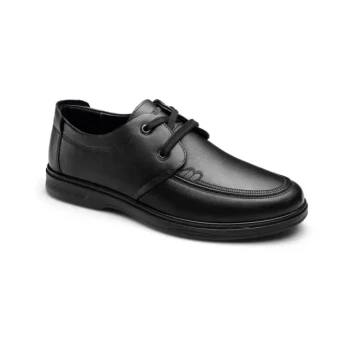
- Wholesale Leather Apron Toe Derby Shoes Custom Factory Production
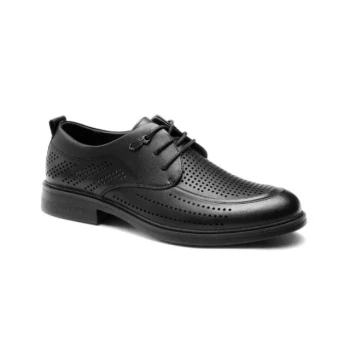
- Wholesale Modern Perforated Leather Derby Shoes with Chunky Sole for Custom Branding
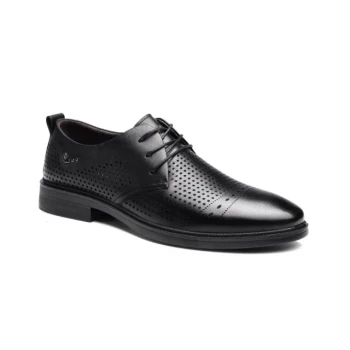
- Wholesale Breathable Perforated Leather Derby Shoes with Modern Comfort Sole
- Durable Leather High-Ankle Tactical Boots for Wholesale & Custom Manufacturing
- Dial Closure Leather Business Casual Shoes for Wholesale & Private Label
People Also Ask
- What historical figure is associated with the Derby shoe? The Earl of Derby's Comfort Revolution
- What are the features and appropriate occasions for wearing derby shoes? A Guide to Versatile Style
- What is the main difference between Derby Shoes and Oxford Shoes? It's All in the Lacing.
- How do Derby shoes fit into business casual attire? Master the Perfect Balance of Professional Style
- What are Derbies and how do they differ from Oxfords? A Guide to Lacing and Formality