The recommended routine is to condition your leather shoes every few months. The process involves applying a dedicated leather conditioner with a soft cloth, allowing it to absorb fully, and then buffing off any excess to restore the leather's natural suppleness and prevent cracking.
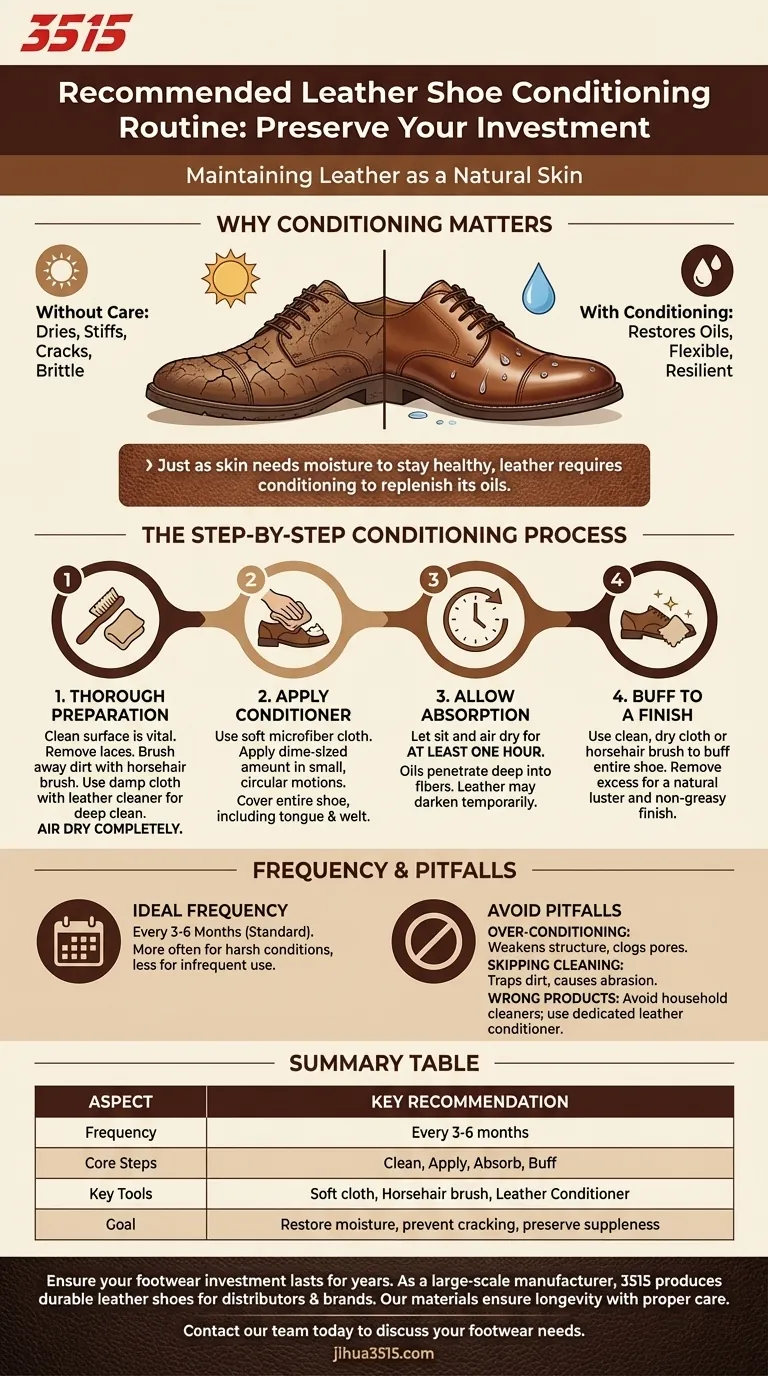
The core principle of leather care is simple: you are maintaining a natural skin. Just as skin needs moisture to stay healthy, leather requires conditioning to replenish its oils, preventing it from drying out, cracking, and deteriorating over time.
Why Conditioning is a Non-Negotiable Step
Proper care preserves the durability and appearance of your leather shoes, protecting your investment. Conditioning is the most critical part of this maintenance, sitting between cleaning and polishing.
Leather is a Skin That Dries Out
Leather is a porous, natural material. Over time, exposure to the elements strips it of its natural oils and fats, causing it to become dry, stiff, and brittle.
Conditioning acts like a moisturizer, penetrating the leather's pores to restore this essential moisture. This keeps the material flexible and resilient against daily wear.
The Ideal Conditioning Frequency
For most leather shoes, conditioning every three to six months is a reliable benchmark.
However, if your shoes are frequently exposed to harsh conditions like rain, snow, or intense sun, you may need to condition them more often. Conversely, shoes worn infrequently may only need conditioning once or twice a year.
The Step-by-Step Conditioning Process
Follow these steps precisely for the best results. Rushing the process, especially the cleaning and drying stages, can trap dirt and moisture, damaging the leather.
Step 1: Thorough Preparation
You must always work on a clean surface. Applying conditioner to dirty shoes grinds abrasive particles into the leather's pores.
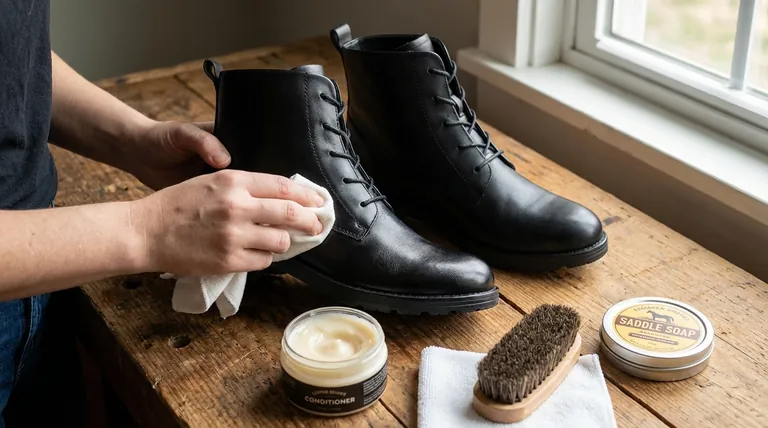
First, remove the laces and brush away any loose dirt and dust with a horsehair brush. For a deeper clean, use a damp cloth with a small amount of saddle soap or a dedicated leather cleaner, working in gentle, circular motions.
Allow the shoes to air dry completely before moving on. Do not use direct heat, as this can cause the leather to shrink and crack.
Step 2: Apply the Conditioner
Using a clean, soft cloth (a microfiber cloth is excellent for this), apply a small, dime-sized amount of conditioner.
Work the conditioner into the leather using small, circular motions. Apply a thin, even layer across the entire shoe, paying attention to the tongue and the welt where the upper meets the sole.
Step 3: Allow for Full Absorption
Let the shoes sit and air dry for at least an hour. This critical step allows the oils and emollients to penetrate deep into the leather's fibers.
The leather may look slightly darker or feel oily to the touch during this phase, which is completely normal.
Step 4: Buff to a Finish
Once the conditioner has been absorbed, take a clean, dry cloth or a horsehair brush and buff the entire shoe.
This removes any excess product from the surface and restores the leather's natural luster and sheen, leaving a clean, non-greasy finish.
Common Pitfalls to Avoid
Correct technique is just as important as the right products. Avoiding these common mistakes will ensure you are helping, not harming, your shoes.
Over-Conditioning the Leather
More is not always better. Applying too much conditioner or doing it too frequently can oversaturate the leather. This can weaken its structure, make it feel permanently greasy, and clog its pores, preventing it from breathing.
Skipping the Cleaning Step
Applying conditioner over a dirty shoe is a critical mistake. It seals dirt and grime into the leather, which can abrade the fibers and lead to premature wear and discoloration.
Using the Wrong Products
Never use household cleaners or chemicals like vinegar on leather, as they are too harsh and will strip the leather's essential oils. Always use a product specifically formulated as a leather conditioner.
Making the Right Choice for Your Goal
Your approach should match your objective, from simple upkeep to full restoration.
- If your primary focus is routine maintenance: A quick brush-down followed by conditioning every few months is perfect for keeping your shoes healthy and supple.
- If your primary focus is restoring dull or dry shoes: Perform a deep clean with saddle soap, then condition thoroughly, and follow up with a colored cream polish to restore color and add a protective layer.
- If your primary focus is achieving a high-gloss shine: After conditioning, apply multiple thin layers of wax polish, buffing vigorously between each application to build up a mirror-like finish.
Ultimately, a consistent care routine is the key to ensuring your leather shoes last for years.
Summary Table:
| Aspect | Key Recommendation |
|---|---|
| Frequency | Every 3-6 months (more often in harsh conditions) |
| Core Steps | 1. Clean & Dry 2. Apply Conditioner 3. Absorb 4. Buff |
| Key Tools | Soft cloth (e.g., microfiber), horsehair brush, dedicated leather conditioner |
| Goal | Restore moisture, prevent cracking, and preserve the leather's suppleness |
Ensure your footwear investment lasts for years. As a large-scale manufacturer, 3515 produces a comprehensive range of durable leather shoes and boots for distributors, brand owners, and bulk clients. Our expertise in materials ensures products built to last with proper care. Contact our team today to discuss your footwear needs and discover how our manufacturing capabilities can benefit your business.
Visual Guide
Related Products
- Factory Direct Wholesale Leather Comfort Shoes with Dial Closure
- Classic Leather Derby Dress Shoes Wholesale & Custom Manufacturing
- Custom Manufactured Air Cushion Leather Business Shoes for Wholesale
- Wholesale Comfort Leather Business Shoes with Dial Lacing System
- Wholesale Leather Apron Toe Derby Shoes Custom Factory Production
People Also Ask
- What are some common materials used to make men's leather shoes? A Guide to Calfskin, Cordovan & Suede
- How can you waterproof leather shoes? Choose the Right Method for Maximum Protection
- What role do auxiliary materials play in leather shoe product mix optimization? Maximize Profit & Stability
- What are the best practices for storing leather shoes? Preserve Your Investment for Years to Come
- What are the maintenance requirements for leather shoes? A Complete Guide to Longevity