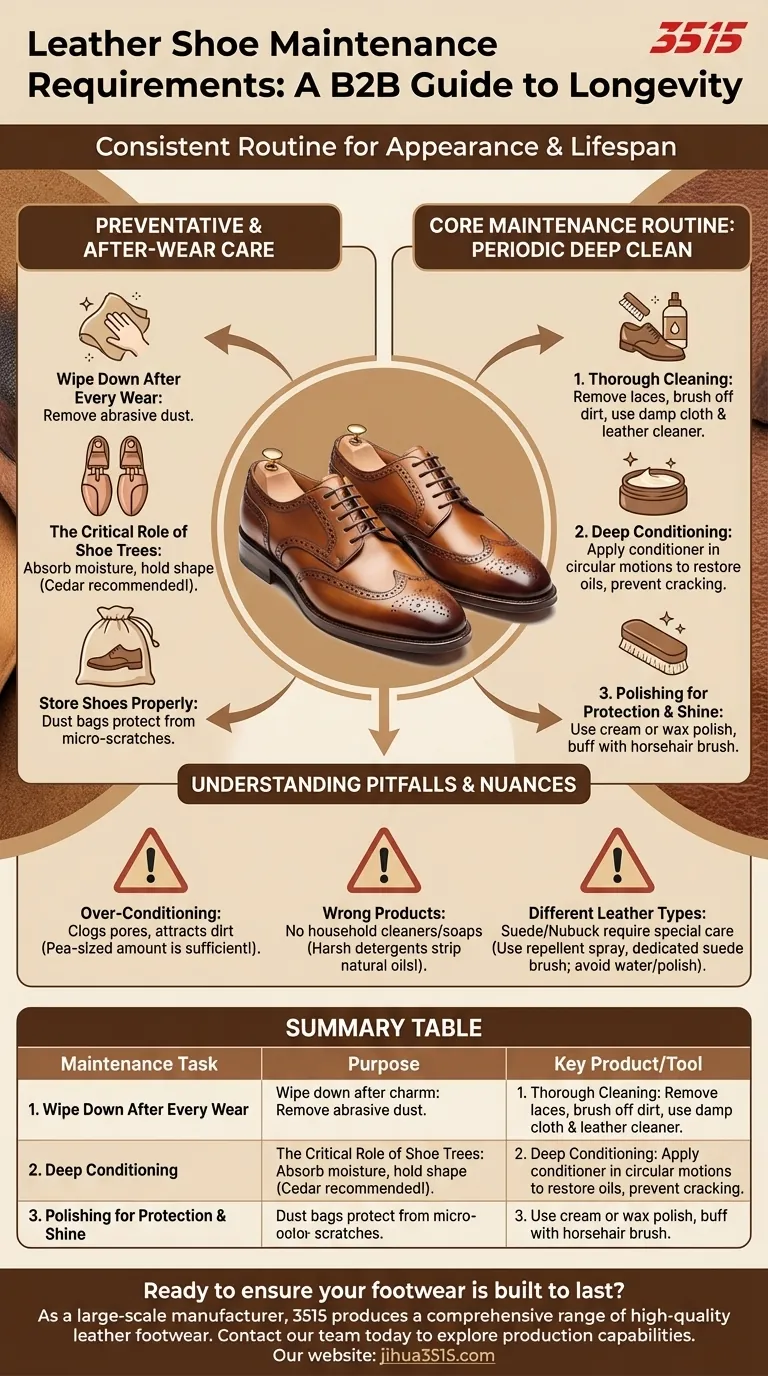
To properly maintain leather shoes, you must adopt a consistent routine of cleaning, conditioning, and polishing. This three-step process removes damaging dirt, restores essential moisture to prevent cracking, and provides a protective barrier that preserves the leather's appearance and significantly extends its lifespan.
The core principle of leather care is treating it like skin. It needs to be cleaned of impurities, regularly moisturized (conditioned) to stay supple, and protected from the elements (polished) to prevent premature aging and damage.
The Foundation: Preventative and After-Wear Care
Proper maintenance begins with the small habits you build around wearing and storing your shoes. These steps prevent the vast majority of long-term damage.
Wipe Down After Every Wear
Quickly wipe your shoes with a soft cloth or brush after each use. This removes the surface-level dust and dirt that can be abrasive to the leather over time.
The Critical Role of Shoe Trees
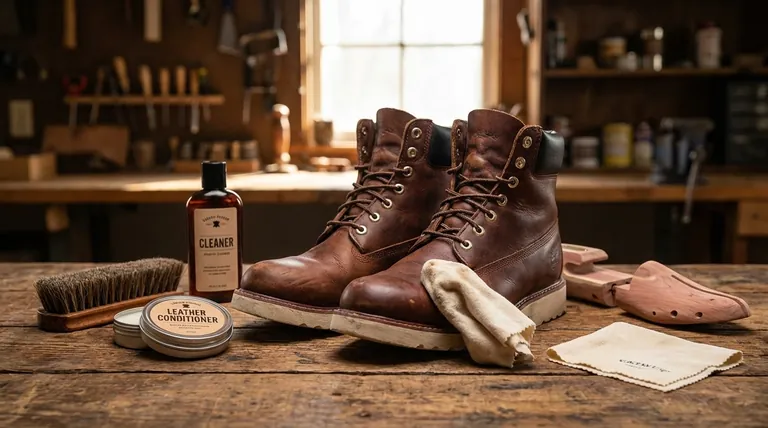
Using cedar shoe trees is arguably the single most important thing you can do for your shoes. They absorb moisture from sweat, which prevents lining rot, and crucially, they hold the shoe's shape as it dries, preventing deep creases from setting in.
Store Shoes Properly
When not in use, especially for long periods, keep shoes in a dust bag. This protects the leather from dust particles that can cause microscopic scratches and degrade the material.
The Core Maintenance Routine: A Periodic Deep Clean
Every few weeks, or as needed based on wear, your shoes will require a more thorough treatment to restore their health and appearance.
Step 1: Thorough Cleaning
Begin by removing the laces and brushing away any loose dirt. Use a small amount of a leather-specific cleaner on a damp cloth to gently remove any built-up grime or old layers of polish.
Step 2: Deep Conditioning
Once the shoes are clean and dry, apply a small amount of leather conditioner with a soft cloth. Work it into the leather in circular motions to restore the essential oils and fats that keep it flexible and prevent cracking.
Let the conditioner absorb for several minutes, then wipe away any excess with a clean cloth.
Step 3: Polishing for Protection and Shine
Apply a cream or wax polish that matches your shoe color using a soft-bristled brush or cloth. This step fills in scuffs, adds a layer of protection against water and dirt, and restores the shoe's shine.
After applying the polish, use a clean horsehair brush to buff the entire shoe to a luster.
Understanding the Pitfalls and Nuances
Effective care requires avoiding common mistakes and understanding that not all leather is the same.
The Mistake of Over-Conditioning
Leather is porous, but using too much conditioner can clog those pores. This makes the leather feel greasy, attract more dirt, and can ultimately weaken the structure. A small, pea-sized amount per shoe is often sufficient.
Using the Wrong Products
Never use household cleaners or soaps on your leather shoes. These products contain harsh detergents that can strip the leather of its natural oils, leading to dryness and cracking. Always use products formulated specifically for leather footwear.
Recognizing Different Leather Types
The routine above applies to standard full-grain leather. Other types require special care.
Suede and nubuck should never be treated with water, conditioners, or wax polishes. Instead, use a pre-wear protective spray to repel dirt and water. Clean them with a dedicated suede brush or a clean toothbrush to restore the texture.
Making the Right Choice for Your Goal
Your maintenance routine can be tailored to prioritize what matters most to you.
- If your primary focus is maximum lifespan: Invest in high-quality cedar shoe trees and never skip a conditioning session every few weeks.
- If your primary focus is pristine appearance: Polish your shoes more frequently, perhaps weekly, and perform meticulous edge dressing to keep the soles looking sharp.
- If you own suede or nubuck shoes: Prioritize preventative care with a high-quality repellent spray before the first wear and rely on brushing, not creams, for maintenance.
Ultimately, a consistent and correct maintenance routine is the key to protecting your investment and enjoying your leather shoes for years to come.
Summary Table:
| Maintenance Task | Purpose | Key Product/Tool |
|---|---|---|
| Wipe Down After Wear | Remove abrasive dirt and dust | Soft cloth or brush |
| Use Shoe Trees | Absorb moisture, maintain shape | Cedar shoe trees |
| Deep Cleaning | Remove built-up grime | Leather-specific cleaner |
| Conditioning | Restore moisture, prevent cracks | Leather conditioner |
| Polishing | Protect, shine, and fill scuffs | Cream or wax polish |
Ready to ensure your footwear is built to last? As a large-scale manufacturer, 3515 produces a comprehensive range of high-quality leather footwear for distributors, brand owners, and bulk clients. Our expertise in materials and construction means we can deliver durable products that are easier to maintain and built for longevity. Let's discuss your footwear needs — contact our team today to explore our production capabilities.
Visual Guide
Related Products
- Classic Leather Derby Dress Shoes Wholesale & Custom Manufacturing
- Factory Direct Wholesale Leather Comfort Shoes with Dial Closure
- Custom Manufactured Air Cushion Leather Business Shoes for Wholesale
- Wholesale Comfort Leather Business Shoes with Dial Lacing System
- Wholesale Breathable Perforated Leather Derby Shoes with Modern Comfort Sole
People Also Ask
- How often should leather dress shoes be cleaned and polished? A 3-Tier Care Guide for Longevity
- How can you remove salt stains from leather dress shoes? Save Your Shoes with a Simple Vinegar Solution
- What are the basic steps to clean leather dress shoes? A Guide to Preserving Your Investment
- How should you dry wet leather dress shoes? A Step-by-Step Guide to Save Your Investment
- What historical figure is associated with the Derby shoe? The Earl of Derby's Comfort Revolution