To waterproof leather shoes, you must first thoroughly clean them and then apply a dedicated waterproofing agent like a wax, cream, or non-silicone spray. The most effective methods create a physical barrier on the leather's surface to repel water, with waxes generally offering more durable protection than sprays.
The best waterproofing method depends entirely on your type of leather and your desired balance between protection, breathability, and ease of application. Robust waxes provide maximum defense for smooth leather, while specialized sprays are the only safe option for delicate materials like suede.
The Foundation: Preparing Your Shoes Correctly
Applying a waterproofing product to dirty shoes is like painting over rust. To ensure the treatment adheres properly and protects the leather effectively, preparation is a non-negotiable first step.
Start with a Clean Surface
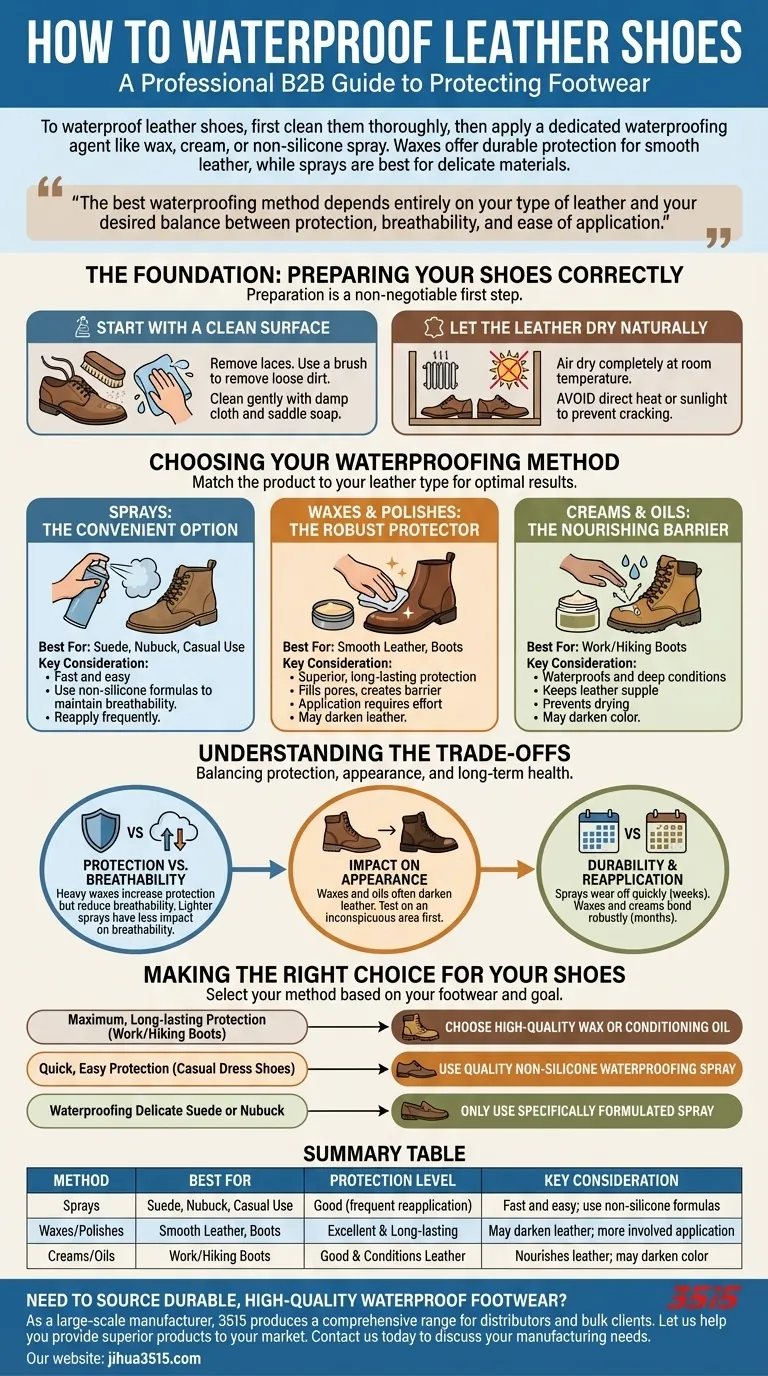
Before you begin, remove the laces to ensure you can treat the entire shoe, including the tongue. Use a brush to remove any loose dirt, then use a damp cloth and a small amount of saddle soap to gently clean away scuffs and grime.
Let the Leather Dry Naturally
After cleaning, allow the shoes to air dry completely at room temperature. Never place them near a direct heat source like a radiator or in direct sunlight, as this can cause the leather to crack and become brittle.
Choosing Your Waterproofing Method
Different products offer varying levels of protection and are suited for different types of leather. Understanding these differences is key to preserving your footwear.
Sprays: The Convenient Option
Waterproofing sprays are the fastest and easiest method. A quick, even coating is often all that is needed, making them ideal for casual use. They are the preferred choice for delicate materials like suede or nubuck, as waxes would ruin the texture. Look for non-silicone-based sprays to maintain the leather's breathability.
Waxes & Polishes: The Robust Protector
For smooth leather boots and shoes, wax-based products offer superior and longer-lasting water protection. Wax fills the pores of the leather, creating a formidable barrier against moisture. It also conditions the leather and can enhance its shine. The application is more involved, requiring you to rub the wax in with a soft cloth.
Creams & Oils: The Nourishing Barrier
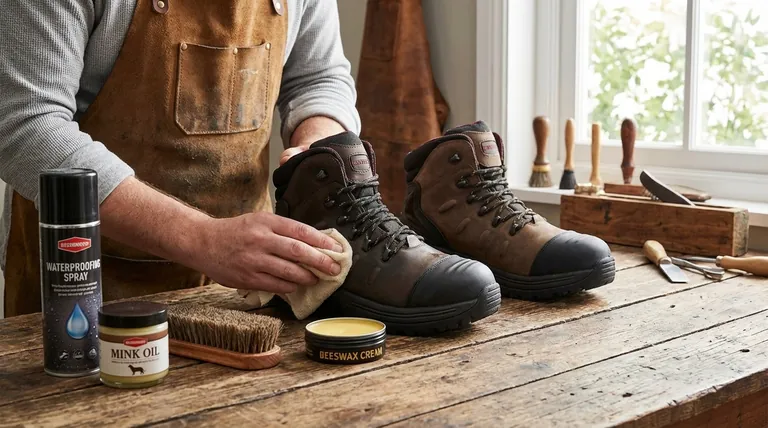
Products like mink oil, beeswax creams, and other specialized formulas both waterproof and deeply condition the leather. They keep the material supple and prevent drying while providing good water resistance. These are excellent for maintaining the health of rugged work or hiking boots.
Understanding the Trade-offs
No waterproofing method is perfect. Choosing one involves balancing competing priorities of protection, appearance, and the long-term health of your shoes.
Protection vs. Breathability
The most effective waterproofing agents, like heavy waxes, can reduce the leather's natural breathability. This might make your feet feel warmer or sweat more. Lighter sprays have less impact on breathability but offer less durable protection.
Impact on Appearance
Be aware that waxes and oils will almost always darken the color of the leather. This can be desirable for some, creating a rich patina, but it's an important factor to consider. Always test any product on a small, inconspicuous area of the shoe first.
Durability and Reapplication
Sprays are convenient but wear off relatively quickly, often needing reapplication every few weeks with regular use. Waxes and creams bond more robustly with the leather and can last for months, but their initial application takes more time and effort.
Making the Right Choice for Your Shoes
Your goal determines the best tool for the job. Select your method based on your footwear and how you use it.
- If your primary focus is maximum, long-lasting protection for work or hiking boots: Choose a high-quality wax-based product or a conditioning oil.
- If your primary focus is quick, easy protection for casual dress shoes: Use a quality non-silicone waterproofing spray.
- If your primary focus is waterproofing delicate suede or nubuck: Only use a spray specifically formulated for these sensitive materials.
Properly treating your shoes not only keeps your feet dry but significantly extends the life of your investment.
Summary Table:
| Method | Best For | Protection Level | Key Consideration |
|---|---|---|---|
| Sprays | Suede, Nubuck, Casual Use | Good (requires frequent reapplication) | Fast and easy; use non-silicone formulas |
| Waxes/Polishes | Smooth Leather, Boots | Excellent & Long-lasting | May darken leather; more involved application |
| Creams/Oils | Work/Hiking Boots | Good & Conditions Leather | Nourishes leather; may darken color |
Need to Source Durable, High-Quality Waterproof Footwear?
As a large-scale manufacturer, 3515 produces a comprehensive range of waterproof footwear for distributors, brand owners, and bulk clients. Our production capabilities encompass all types of durable shoes and boots, built to withstand the elements.
Let us help you provide superior products to your market.
Contact us today to discuss your manufacturing needs and how we can add value to your supply chain.
Visual Guide
Related Products
- Classic Leather Derby Dress Shoes Wholesale & Custom Manufacturing
- Factory Direct Wholesale Leather Comfort Shoes with Dial Closure
- Wholesale Comfort Leather Business Shoes with Dial Lacing System
- Custom Manufactured Air Cushion Leather Business Shoes for Wholesale
- Wholesale Breathable Perforated Leather Derby Shoes with Modern Comfort Sole
People Also Ask
- How often should leather dress shoes be cleaned and polished? A 3-Tier Care Guide for Longevity
- How can you remove salt stains from leather dress shoes? Save Your Shoes with a Simple Vinegar Solution
- What are the basic steps to clean leather dress shoes? A Guide to Preserving Your Investment
- How should you dry wet leather dress shoes? A Step-by-Step Guide to Save Your Investment
- What historical figure is associated with the Derby shoe? The Earl of Derby's Comfort Revolution