
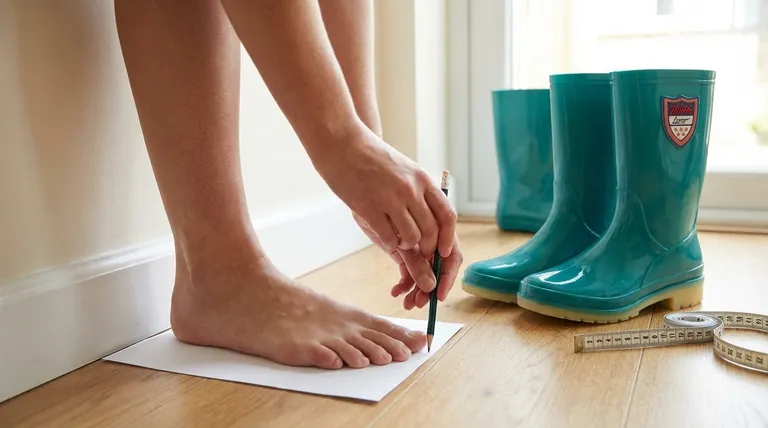
The most reliable method for measuring your foot length involves placing a sheet of paper on a hard floor against a wall. Stand on the paper with your heel firmly against the wall, have someone mark the tip of your longest toe, and then measure the distance from the edge of the paper to that mark. This measurement is your starting point for finding the correct size.
Accurately measuring your foot length is the essential first step, but the perfect Wellington boot fit truly depends on also considering your calf width, sock thickness, and the specific brand's sizing recommendations.
The Foundational Measurement: Your Foot Length
The Paper-and-Wall Method
To get an accurate reading, ensure you are standing with your weight evenly distributed. It's best to perform this measurement at the end of the day when your feet are slightly larger.
Measure both feet, as one is often slightly larger than the other. Use the measurement from your longer foot as your guide.
From Measurement to Size Chart
Once you have your foot length in centimeters or inches, compare it to the brand-specific size chart. Do not assume that one brand's size 9 is the same as another's.
This chart is your direct translation from your physical measurement to the manufacturer's intended size.
Why Foot Length is Only Half the Story
The Critical Role of Calf Width
A boot that fits your foot but strangles your calf is useless. Measure the widest part of your calf to ensure the boot's shaft will accommodate it.
Look for boots with an adjustable gusset or side strap. This feature provides flexibility and is crucial if you have wider calves or plan to tuck in thick trousers.
Factoring in Your Socks
The type of socks you wear has a significant impact on fit. Thick, thermal, or wool socks take up considerable space inside the boot.
If you primarily plan to wear heavy socks for cold weather, you may need to consider sizing up. Always check the brand's notes, as some designs already account for this.
Understanding Brand-Specific Sizing
Some Wellington boot brands are known to run large to accommodate thicker socks, while others are "true to size."
Always read product reviews and check the manufacturer's website for specific sizing advice, such as recommendations to "size up" or "size down" from your normal shoe size.
Understanding the Trade-offs and Common Pitfalls
The "Sizing Up" Dilemma
Simply buying a larger size to fit thick socks can create a problem. The boot might become too loose and cause heel slip when you wear thinner, everyday socks.
A boot that is too large can be just as uncomfortable as one that is too small, leading to blisters and an unstable footing.
Ignoring Calf Fit
Focusing solely on foot length is the most common mistake. An overly tight calf can restrict circulation and make the boots extremely difficult to put on and take off.
Always cross-reference your calf measurement with the boot's specifications before purchasing.
Assuming All Size Charts Are Equal
Relying on your standard shoe size without consulting the Wellington brand's specific chart often leads to a poor fit and the hassle of returns.
Each brand uses different lasts (the mold a shoe is shaped around), resulting in unique sizing.
Making the Right Choice for Your Needs
A proper measurement process removes guesswork and ensures comfort and function.
- If your primary focus is everyday use with standard socks: Measure your foot length precisely and choose the size that corresponds directly to the brand's chart.
- If your primary focus is cold weather with thick socks: Look for brands that explicitly recommend sizing up, or choose a boot a half or full size larger than your chart measurement suggests.
- If your primary focus is accommodating wider calves or thick trousers: Prioritize boots with an adjustable gusset and confirm your calf measurement fits within the boot's specified range.
Considering these key factors beyond simple length is the definitive way to find your perfect fit.
Summary Table:
| Key Measurement | Why It Matters | How to Do It |
|---|---|---|
| Foot Length | The foundation for selecting the correct boot size. | Use the paper-and-wall method while standing. |
| Calf Width | Ensures the boot shaft is comfortable and not restrictive. | Measure the widest part of your calf. |
| Sock Thickness | Impacts the interior space and overall fit. | Wear the socks you intend to use with the boots. |
Get Perfectly Fitted Wellington Boots for Your Customers
As a large-scale manufacturer, 3515 produces a comprehensive range of high-quality footwear for distributors, brand owners, and bulk clients. Our production capabilities encompass all types of durable Wellington boots, designed with precise sizing and features like adjustable gussets for superior comfort.
We can help you:
- Source reliable, well-fitting boots that reduce returns and increase customer satisfaction.
- Develop custom footwear tailored to your specific market needs and sizing standards.
Let's discuss your next order. Contact our team today to get a quote and learn more about our manufacturing solutions.
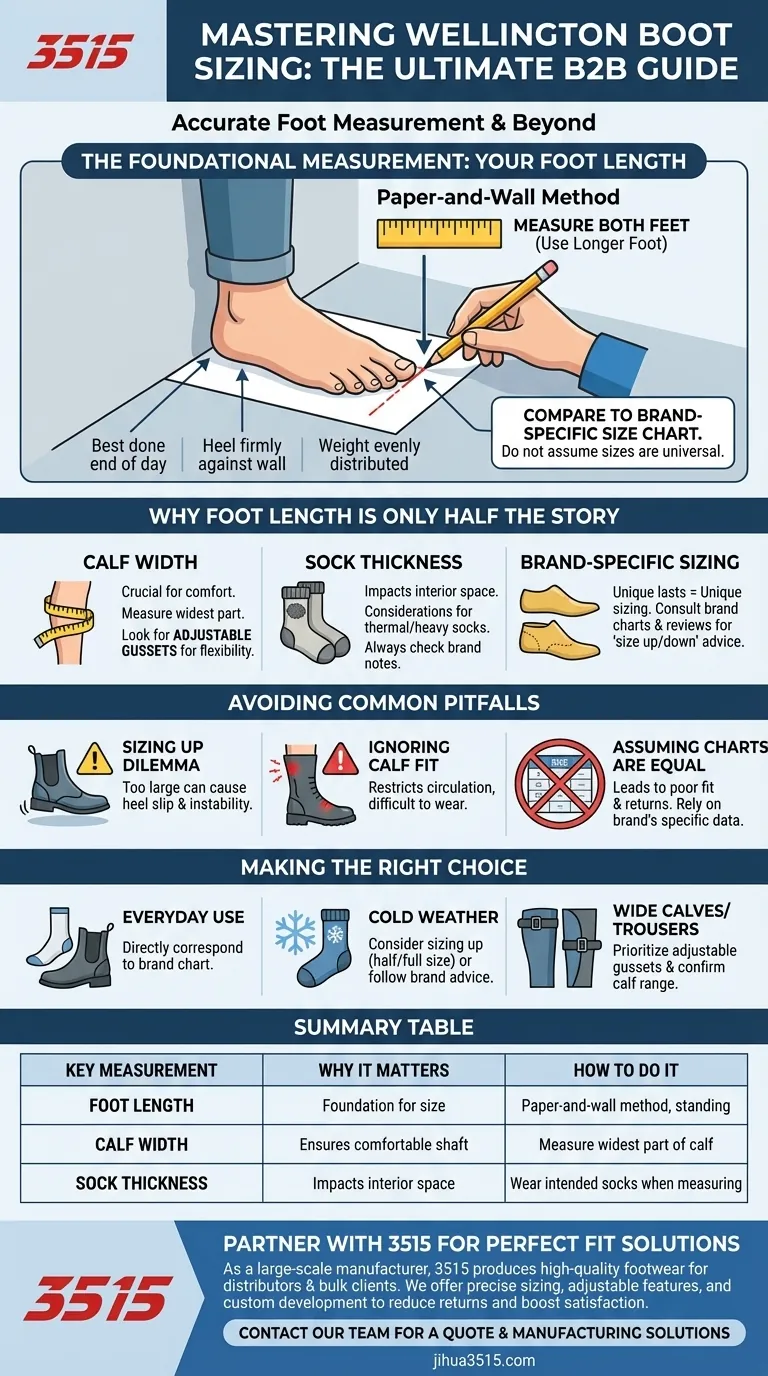
Visual Guide
Related Products
- Durable Waterproof Rain Boots | Custom Manufacturer for Wholesale & Brands
- Durable Goodyear Welt Leather Work Boots for Wholesale & Private Label
- Wholesale Durable Leather Work Boots | 8-Inch Goodyear Welt Manufacturer
- Premium Wholesale Tactical Style Safety Shoes Boots with Quick Lacing
- Durable High-Ankle Tactical Boots Wholesale Manufacturer for Custom & Bulk Orders
People Also Ask
- What are the main materials for waterproof rain boots? Choose the Right Material for Durability & Comfort
- What is the overall recommendation for choosing rain boot materials? A Guide to Rubber vs. PVC
- How does boot height affect waterproofing? Choose the Right Height for Ultimate Protection
- Why are rain boots more flexible and comfortable than snow boots? The Key Differences Explained
- What are the best types of shoes for different gardening conditions? Find Your Perfect Match.



















