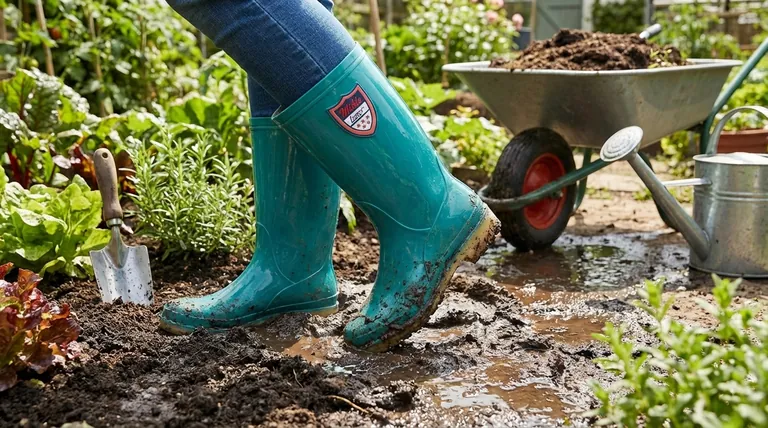
Yes, you can absolutely use rain boots for gardening. High-quality, well-fitting rain boots are an excellent choice for keeping your feet dry and clean. Their core function is to provide a waterproof barrier, making them ideal for working in mud, watering plants, or gardening after a recent downpour.
The key consideration is not if you can use rain boots, but when they are the best tool for the job. Rain boots prioritize waterproof protection above all else, while dedicated garden boots or shoes often provide a better balance of comfort, support, and breathability for specific tasks.
The Primary Role of Footwear in the Garden
The fundamental job of any gardening boot is to create a barrier between your feet and the environment. This involves protection from water, mud, and sometimes temperature.
Unmatched Waterproofing
The primary advantage of a rain boot is its seamless, waterproof construction. This makes it a reliable option for ensuring your feet stay completely dry, which is critical for both comfort and foot health during long sessions in wet soil.
The Advantage of a High Shaft
Rain boots typically feature a high shaft that extends up the calf. This design is highly effective at preventing dirt, water splashes, and debris from entering the boot from the top, a common issue with shorter footwear when engaging in messy tasks.
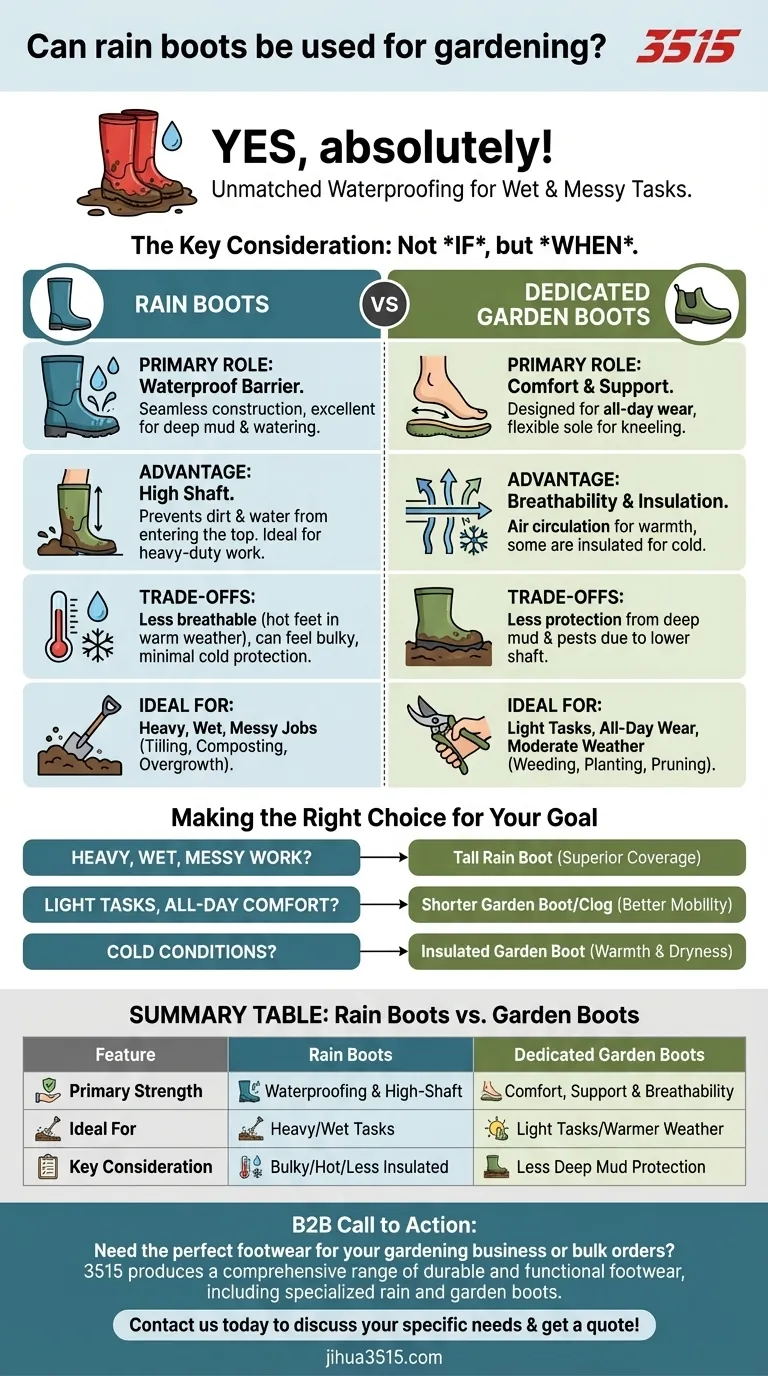
Key Differences: Rain Boots vs. Garden Boots
While a rain boot can serve well, it's important to understand the features that distinguish them from footwear specifically designed for gardening.
The Focus on Comfort and Support
Dedicated garden boots, especially shorter clogs or ankle boots, are often designed with more consideration for all-day wear. They may offer better arch support and a more flexible sole, which is beneficial for tasks that require a lot of kneeling and standing up.
The Role of Insulation
Some specialized garden boots are insulated to protect your feet from cold ground, particularly useful during early spring or late fall gardening. Most standard rain boots lack this feature, offering minimal protection from the cold.
Breathability for Warmer Weather
The same waterproof material that makes rain boots effective also makes them non-breathable. In warm weather, this can lead to sweaty, uncomfortable feet. Shorter garden boots or those made from more breathable materials allow for better air circulation.
Understanding the Trade-offs
Choosing the right boot means balancing protection against comfort and mobility. Your specific gardening style and climate will determine the best fit.
Tall Boots: Maximum Coverage, Less Mobility
Tall boots, like a classic rain boot, offer the best protection for your feet and lower legs. They are the ideal choice for heavy-duty, wet, and messy jobs like tilling a new bed, hauling compost, or working in overgrown areas with brambles. The trade-off is that they can feel bulky and hot.
Short Boots: Better Mobility, Less Protection
Shorter ankle boots or clogs provide excellent freedom of movement and are much more comfortable in moderate or warm weather. They are perfect for lighter tasks like weeding, planting annuals, or pruning. Their lower height, however, means they offer less protection from deep mud or pests.
Making the Right Choice for Your Goal
Select your footwear based on the type of work you plan to do that day.
- If your primary focus is heavy, wet, or messy work: A tall rain boot is your best choice for its superior coverage and waterproof protection.
- If your primary focus is light weeding, pruning, or all-day comfort: A shorter, more breathable garden boot or clog will provide better mobility and support.
- If your primary focus is gardening in cold conditions: Seek out an insulated garden boot to keep your feet warm and dry.
Ultimately, the right footwear empowers you to work more comfortably and effectively in your garden.
Summary Table:
| Feature | Rain Boots | Dedicated Garden Boots |
|---|---|---|
| Primary Strength | Unmatched waterproofing & high-shaft protection | Better comfort, support & breathability |
| Ideal For | Heavy, wet, messy tasks (e.g., tilling, compost) | Light tasks, all-day wear, warmer weather |
| Key Consideration | Can be bulky and hot; less insulated | Less protection from deep mud; lower shaft |
Need the perfect footwear for your gardening business or bulk orders?
As a large-scale manufacturer, 3515 produces a comprehensive range of durable and functional footwear, including specialized rain and garden boots perfect for distributors, brand owners, and bulk clients. Our production capabilities ensure you get the right balance of protection, comfort, and support for any application.
Contact us today to discuss your specific needs and get a quote!
Visual Guide
Related Products
- Factory Direct Wholesale Rain Boots Durable Waterproof & Fully Customizable
- Durable Waterproof Rain Boots | Custom Manufacturer for Wholesale & Brands
- Durable Military Combat Boots with Water Drainage for Wholesale & OEM
- Premium Wholesale Waterproof Safety Boots High Performance Protection for Industrial Markets
- High Performance Fire-Retardant Waterproof Safety Boots
People Also Ask
- What are the characteristics of rain boots? A Guide to Waterproof Footwear for Every Need
- What factors should be considered when choosing rain boots? Find the Perfect Boot for Your Needs
- What are the main differences between rain boots and snow boots? Choose the Right Boot for Your Climate
- How should one decide between PVC and rubber for rain boots? A Guide to Choosing the Right Material
- Why are rain boots more flexible and comfortable than snow boots? The Key Differences Explained