
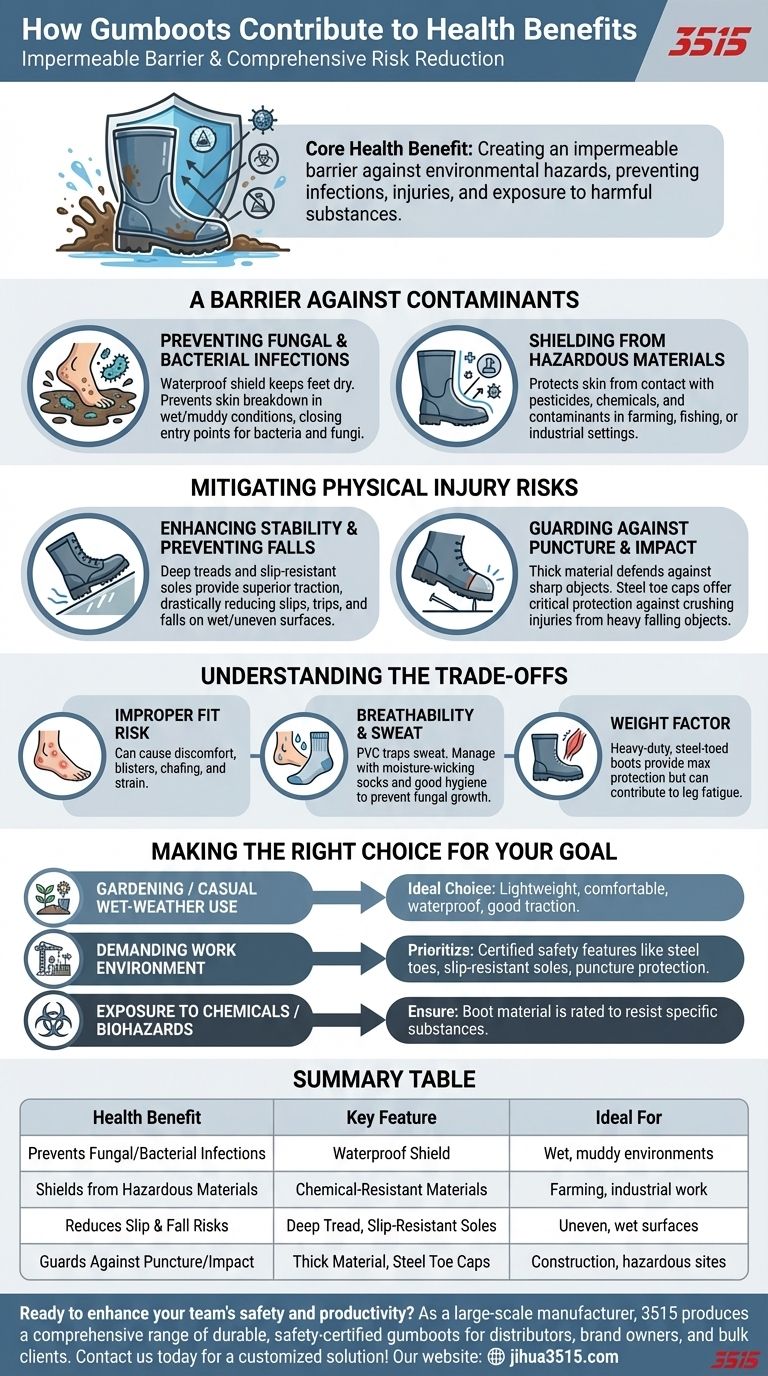
At their core, gumboots contribute to health by creating an impermeable barrier between your feet and environmental hazards. This protection extends beyond simply keeping you dry, actively preventing a range of infections, mitigating the risk of physical injury, and shielding you from harmful substances.
The true health benefit of gumboots is not merely dryness, but a comprehensive system of risk reduction. They are a critical tool for preventing infections caused by exposure to moisture and contaminants, as well as physical injuries from slips, falls, and impacts.
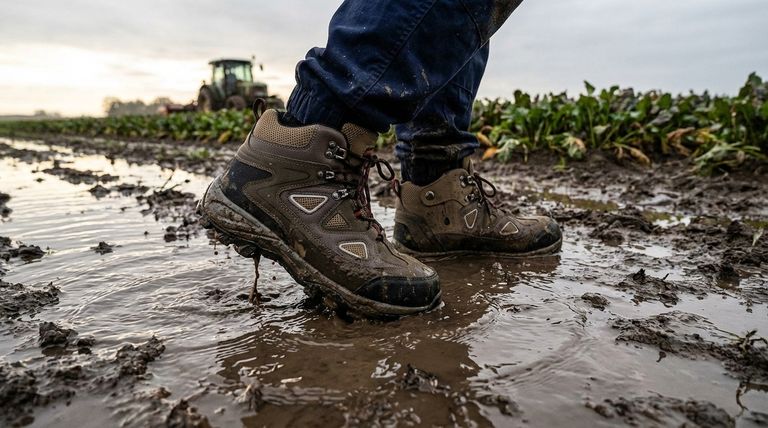
A Barrier Against Environmental Contaminants
The most fundamental health benefit of a gumboot is its ability to isolate your feet from the outside world. This is crucial in wet, dirty, or hazardous environments where direct contact can lead to significant health issues.
Preventing Fungal and Bacterial Infections
When your feet are exposed to prolonged wet or muddy conditions, the skin can soften and break down. This creates an ideal entry point for bacteria and fungi, leading to infections.
Gumboots provide a waterproof shield, keeping your feet dry and clean, which is the first line of defense against these common ailments.
Shielding from Hazardous Materials
For those in farming, fishing, or industrial settings, the ground and water can contain more than just dirt. Gumboots protect the skin from contact with pesticides, chemicals, and other potentially harmful substances.
Mitigating Physical Injury Risks
Beyond environmental exposure, gumboots are an essential piece of personal protective equipment (PPE) designed to prevent common physical accidents and injuries.
Enhancing Stability and Preventing Falls
Slips, trips, and falls are a leading cause of serious injury, both at home and in the workplace.
Many gumboots are designed with deep treads and slip-resistant soles that provide superior traction on wet or uneven surfaces, drastically reducing this risk.
Guarding Against Puncture and Impact
Standard footwear offers little protection from sharp objects like nails, broken glass, or jagged rocks hidden in mud or water. The thick material of a gumboot provides a robust defense against punctures.
For more hazardous environments, specialized gumboots with integrated steel toe caps offer critical protection against crushing injuries from heavy falling objects.
Understanding the Trade-offs
While highly beneficial, selecting the right gumboot and using it correctly is key. Ignoring the limitations can introduce different problems.
The Risk of Improper Fit
A poorly fitting gumboot can cause significant discomfort, leading to blisters, chafing, and altered walking mechanics that can strain muscles and joints over time.
The Importance of Breathability
Most traditional gumboots are made from non-breathable materials like PVC. While this keeps water out, it also traps sweat in, which can lead to skin maceration and fungal growth if not managed with proper moisture-wicking socks and good hygiene.
The Factor of Weight
Heavy-duty, steel-toed gumboots offer maximum protection but can also be heavy. Over a long day, this added weight can contribute to leg fatigue and strain.
Making the Right Choice for Your Goal
Selecting the appropriate gumboot is a proactive health and safety decision. Your intended use should dictate the features you prioritize.
- If your primary focus is gardening or casual wet-weather use: A lightweight, comfortable, and waterproof boot with good traction is your ideal choice.
- If your primary focus is a demanding work environment (farming, construction): Prioritize certified safety features like steel toes, slip-resistant soles, and puncture protection.
- If your primary focus is exposure to potential chemicals or biohazards: Ensure the boot material is rated to resist the specific substances you will encounter.
Choosing the right gumboot is a simple but powerful investment in your personal health and safety.
Summary Table:
| Health Benefit | Key Feature | Ideal For |
|---|---|---|
| Prevents Fungal/Bacterial Infections | Waterproof Shield | Wet, muddy environments |
| Shields from Hazardous Materials | Chemical-Resistant Materials | Farming, industrial work |
| Reduces Slip & Fall Risks | Deep Tread, Slip-Resistant Soles | Uneven, wet surfaces |
| Guards Against Puncture/Impact | Thick Material, Steel Toe Caps | Construction, hazardous sites |
Ready to enhance your team's safety and productivity? As a large-scale manufacturer, 3515 produces a comprehensive range of durable, safety-certified gumboots for distributors, brand owners, and bulk clients. Our production capabilities encompass all types of waterproof and protective footwear, ensuring your workforce stays safe from infections, injuries, and environmental hazards. Contact us today to discuss your specific needs and receive a customized solution!
Visual Guide
Related Products
- Durable Goodyear Welt Leather Work Boots for Wholesale & Private Label
- Lightweight Breathable Training Shoes for Wholesale & Custom OEM Manufacturing
People Also Ask
- What is the difference between full-grain and top-grain leather? Premium Material Guide for Boot Manufacturers
- What are the advantages of leather as an upper material for work boots? Unmatched Durability & Custom Comfort
- Why is it important to waterproof leather work boots? Protect Your Investment and Performance
- How should new leather work boots be broken in? A Guide to Comfort and Durability
- What are the advantages of leather uppers in work boots? Unmatched Durability & Protection

