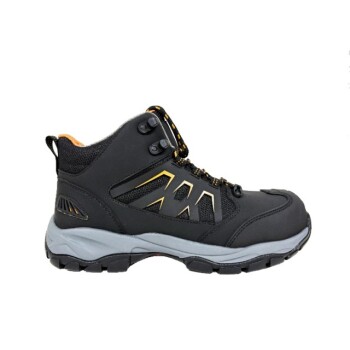
At their core, steel toe shoes are a form of personal protective equipment (PPE) designed with a reinforced steel cap over the toes. This simple addition serves a critical purpose: to protect the feet from severe impact and compression injuries in hazardous work environments. They are a foundational piece of safety gear in any setting where heavy objects, machinery, or sharp materials pose a threat to foot safety.
The purpose of steel toe shoes extends beyond simple protection; they are an engineered safety control designed to prevent catastrophic foot injuries from crushing and impact forces. Their presence is often a non-negotiable requirement for compliance and risk mitigation in hazardous workplaces.
The Anatomy of Protection: What a Steel Toe Actually Does
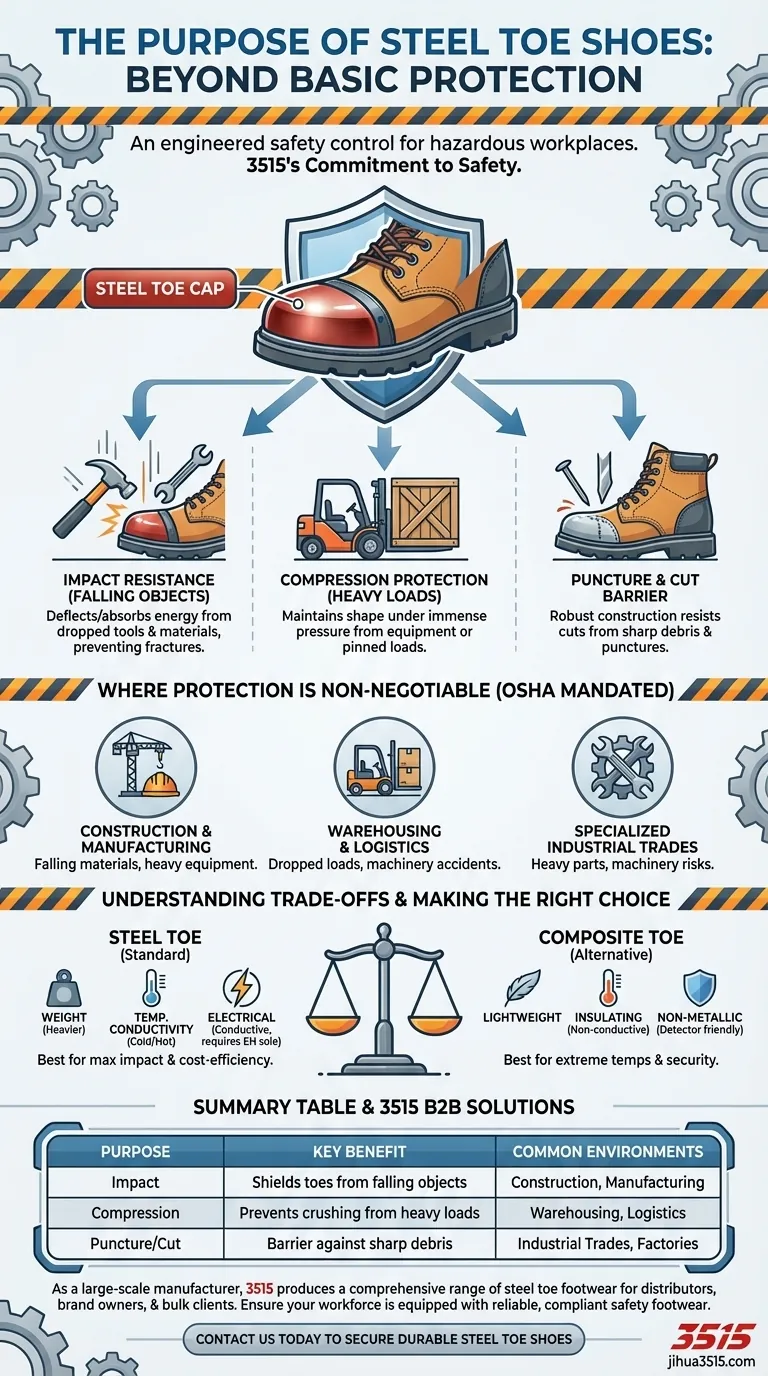
The effectiveness of steel toe footwear comes from its ability to withstand significant forces that would otherwise cause debilitating injury. This protection is delivered in several key ways.
Resisting Impact from Falling Objects
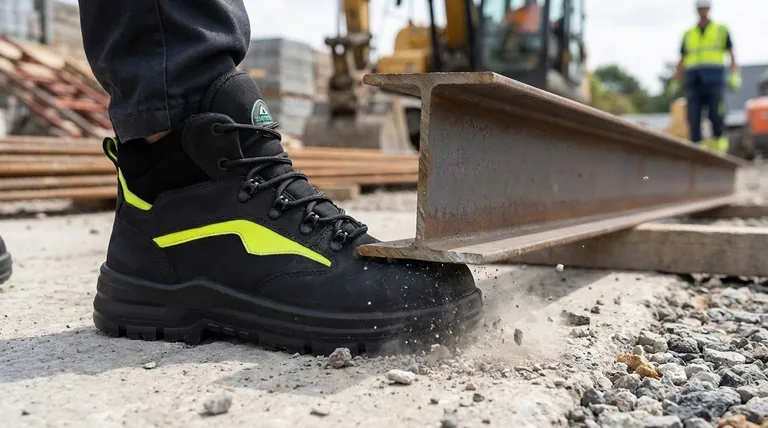
The most recognized function is shielding the toes from falling items. The hardened steel cap is designed to deflect or absorb the energy from a dropped tool, piece of building material, or heavy part, preventing broken bones.
Preventing Compression Injuries
Beyond simple impacts, steel toes protect against compression. This can occur if a foot is run over by heavy equipment, like a forklift, or pinned beneath a heavy load. The steel cap maintains its shape under immense pressure, preserving the space needed to keep the toes from being crushed.
Shielding Against Punctures and Cuts
While the steel cap is the main feature, the overall robust construction of these shoes provides a barrier against sharp objects. The heavy-duty materials resist cuts from tools and punctures from nails or other debris found on job sites.
Where Steel Toe Protection is Non-Negotiable
Certain environments present such a high risk of foot injury that steel toe shoes are mandated by safety regulations, such as those from the Occupational Safety and Health Administration (OSHA).
Construction and Manufacturing
On construction sites and in manufacturing plants, the risk of falling materials, heavy equipment, and sharp debris is constant. Steel toe shoes are the industry standard for worker protection in these fields.
Warehousing and Logistics
Workers in warehouses and distribution centers frequently operate heavy machinery and handle large, heavy pallets. Steel toes provide essential protection from dropped loads and accidents involving forklifts or pallet jacks.
Specialized Industrial Trades
Professions like auto repair, farming, and factory assembly involve handling heavy parts and machinery daily. The risk of a heavy component falling or a foot being caught in machinery makes steel toe shoes indispensable.
Understanding the Trade-offs
While providing superior protection, steel toe shoes have characteristics that make them ideal for some situations but less so for others. Understanding these trade-offs is key to selecting the right footwear.
The Weight Factor
Steel is dense, making steel toe shoes noticeably heavier than standard footwear or even boots with composite safety toes. This extra weight can lead to fatigue over a long workday.
Temperature Conductivity
As a metal, steel conducts temperature very well. In extremely cold environments, the steel cap can become very cold, potentially causing discomfort if the boot is not properly insulated.
Electrical Hazards
While many steel toe shoes are rated for electrical hazard (EH) protection, the steel itself is conductive. The safety rating comes from the insulating properties of the sole and other materials, not the toe cap. In high-voltage environments, non-metallic composite toes are often preferred.
Making the Right Choice for Your Environment
Selecting the appropriate safety footwear requires matching the shoe's features to the specific hazards of your workplace.
- If your primary focus is maximum impact protection and cost-effectiveness: Traditional steel toe footwear remains the gold standard, offering the highest level of protection at an affordable price point.
- If your primary focus is working in extreme temperatures or passing through metal detectors: You may want to consider composite toe shoes, which do not conduct heat or cold and are non-metallic.
- If your primary focus is overall compliance and safety: Ensure the footwear meets OSHA standards and is rated for the specific risks of your job, such as slip resistance or electrical hazards.
Ultimately, selecting the correct protective footwear is a foundational step in ensuring personal safety on any hazardous job site.
Summary Table:
| Purpose | Key Benefit | Common Work Environments |
|---|---|---|
| Impact Protection | Shields toes from falling objects (e.g., tools, materials) | Construction, Manufacturing |
| Compression Protection | Prevents crushing injuries from heavy equipment or loads | Warehousing, Logistics |
| Puncture/Cut Resistance | Provides a barrier against sharp debris and objects | Industrial Trades, Factories |
As a large-scale manufacturer, 3515 produces a comprehensive range of steel toe footwear for distributors, brand owners, and bulk clients.
Ensure your workforce is equipped with reliable, compliant safety footwear designed for maximum protection. Our production capabilities encompass all types of safety shoes and boots to meet your specific needs.
Contact us today to discuss your requirements and secure durable, high-quality steel toe shoes for your team.
Visual Guide
Related Products
- Durable Steel Toe Safety Boots Wholesale & Custom Manufacturing
- Wholesale Mesh Steel Toe Safety Shoes with Dial Closure Factory Production
- Wholesale Safety Footwear Manufacturer for Bulk & Custom OEM Orders
- Durable Leather Safety Boots for Wholesale & Custom OEM Manufacturing
- Premium Wheat Nubuck Safety Shoes for Bulk Distribution
People Also Ask
- Why are industrial safety boots with steel toes necessary for machine operators? Essential Foot Protection for Safety
- Why is it mandatory to wear safety shoes with steel toe protection during metal loading? Prevent Crushing Injuries
- What are the main materials used in steel toe safety shoes? A Guide to Protective Footwear Construction
- What are the characteristics of steel toe safety boots? Maximum Protection, Key Trade-offs
- Is it true that steel toes can cause toes to get cut off? Debunking the Dangerous Myth