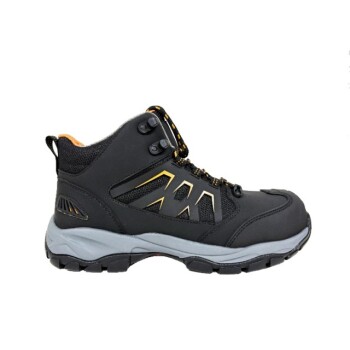
The fundamental purpose of front hardeners in safety footwear is to provide a rigid, crush-resistant shield for the toes. In hazardous environments like welding workshops and construction sites, these steel or composite reinforcements absorb significant impact and compression forces from heavy falling objects, preventing severe structural damage to the foot.
Core Takeaway: Front hardeners are a non-negotiable safety feature required by international standards (such as EN ISO 20345) to prevent catastrophic crushing injuries. They serve as the definitive physical barrier between a worker's feet and the heavy, unpredictable loads common in industrial settings.
The Mechanics of Toe Protection
Preventing Crushing Injuries
The primary function of a front hardener is to mitigate crushing injuries.
In construction and welding, heavy materials—such as steel beams, concrete blocks, or machinery—pose a constant risk. If these objects fall, the hardener disperses the energy, ensuring the toes remain intact.
Resisting Compression Forces
Beyond sudden impacts, these shoes are designed to withstand compression.
This protects the worker if a heavy object rolls onto the foot or rests against it. Without this reinforcement, the weight alone could cause fractures or amputation.
Meeting Safety Standards
The inclusion of these hardeners is not optional; it is a matter of regulatory compliance.
To be effective, the hardeners must meet rigorous standards like EN ISO 20345 or SNI. These certifications guarantee that the shoe can withstand a specific level of joules (impact energy) and kilonewtons (compression force).
Broader Safety Context
Reducing Fatal and Severe Outcomes
The primary reference highlights that these reinforcements reduce the risk of severe or fatal injuries.
While a foot injury might not seem fatal initially, the complications from severe crushing trauma in a dirty industrial environment can lead to systemic infection or permanent disability.
Integration with Total Foot Protection
While the hardener protects the toes, it is often part of a holistic safety system.
Professional safety shoes typically pair these hardeners with slip-resistant outsoles and puncture-resistant midsoles. This ensures that while the toes are shielded from above, the foot is also protected from sharp objects below and falls on slippery surfaces.
Understanding the Trade-offs
Weight and Fatigue
Steel hardeners, while incredibly durable, add significant weight to the footwear.
Heavier shoes can lead to increased leg fatigue during long shifts. While composite options offer a lighter alternative, the added mass of any hardener is a necessary trade-off for maximum protection.
Protection Limits
It is critical to understand that the hardener only protects the toe box.
It does not offer protection for the metatarsal (top of the foot) or the ankle unless the shoe is equipped with additional guards. Relying solely on the toe cap for total foot safety is a common misconception.
Making the Right Choice for Your Goal
When selecting safety footwear for welding or construction, consider the specific risks of your environment.
- If your primary focus is maximum impact protection: Ensure the footwear explicitly cites compliance with EN ISO 20345 or SNI to guarantee the hardener can withstand heavy industrial loads.
- If your primary focus is reducing worker fatigue: Look for shoes that utilize composite hardeners and comfortable inner linings, which offer similar protection to steel but with reduced weight.
The correct safety shoe transforms a potential amputation into a minor workplace incident.
Summary Table:
| Feature | Steel Hardeners | Composite Hardeners |
|---|---|---|
| Primary Benefit | Maximum crush resistance | Lightweight & non-conductive |
| Key Protection | 200J Impact / 15kN Compression | 200J Impact / 15kN Compression |
| Industry Standards | EN ISO 20345, SNI, ASTM | EN ISO 20345, SNI, ASTM |
| Best Use Case | Heavy construction & welding | Electronics & long-shift fatigue reduction |
| Durability | Extremely high | High (impact resilient) |
Secure Your Workforce with Premium Protective Footwear
As a large-scale manufacturer serving distributors and brand owners, 3515 offers comprehensive production capabilities for all footwear types, anchored by our flagship Safety Shoes series. Our extensive portfolio covers work and tactical boots, outdoor shoes, training shoes, and sneakers, as well as Dress & Formal shoes to meet diverse bulk requirements.
Whether you need heavy-duty steel toes for construction or lightweight composite solutions for logistics, our certified manufacturing processes ensure your brand delivers maximum safety and comfort. Contact us today to discuss your wholesale or OEM needs and leverage our expertise to strengthen your product line.
References
- Muammar Kadhafi. Evaluation of the Use of Personal Protective Equipment in the Welding Process at the Arjasa District Welding Workshop. DOI: 10.62012/collaborate.v1i1.8
This article is also based on technical information from 3515 Knowledge Base .
Related Products
- Advanced KPU Athletic Safety Shoe with Steel Toe Cap Anti-Slip Rotary Lacing System
- Athletic Safety Shoes with Dial Closure & Steel Toe for Wholesale & Custom Manufacturing
- Wholesale Safety Footwear Manufacturer for Bulk & Custom OEM Orders
- Wholesale Mesh Steel Toe Safety Shoes with Dial Closure Factory Production
- Durable Steel Toe Safety Boots Wholesale & Custom Manufacturing
People Also Ask
- What are the key differences between steel toe and composite toe caps? Choose the Right Safety for Your Job
- What impact do steel toe caps have on toe skin health? Prevent Friction and Pressure in Your Safety Shoes
- What are the primary protective functions of safety shoes with steel toes in the automotive repair industry?
- What type of safety shoe is recommended for workers exposed to heavy machinery? Steel Toe Boots for Ultimate Protection
- How does defining specific friction interface models in FEA assist in predicting safety shoe toe cap failure modes?