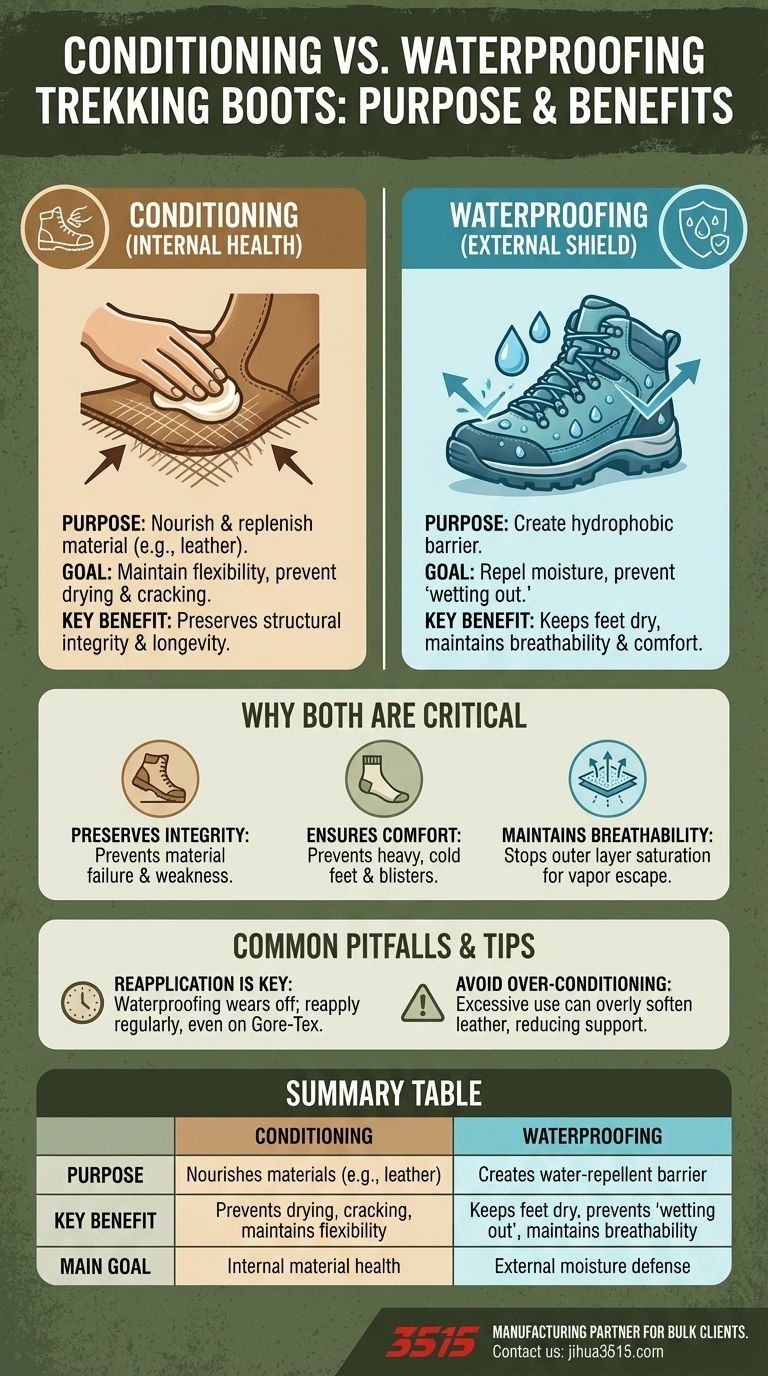
At its core, conditioning and waterproofing are two distinct but complementary processes essential for trekking boot maintenance. Conditioning focuses on the boot's internal material health by keeping it supple and flexible, while waterproofing creates an external barrier that repels moisture. Together, they are critical for preserving the durability, performance, and comfort of your footwear.
The fundamental goal is not just to keep water out, but to maintain the structural integrity of the boot itself. Conditioning prevents the material from failing, while waterproofing protects your feet from the elements, ensuring both the longevity of your gear and your safety on the trail.
Deconstructing the Process: Conditioning vs. Waterproofing
To properly care for your boots, you must understand that these are two separate jobs that solve different problems. Treating them as the same thing is a common and costly mistake.
Conditioning: The Foundation of Material Health
Conditioning is about nourishing the boot's materials, particularly leather. Think of it like moisturizing your own skin.
Products designed for conditioning penetrate the material's pores to replenish oils that are lost over time due to exposure to dirt, water, and sun. This process keeps the material flexible and prevents it from drying out, becoming brittle, and eventually cracking.
Waterproofing: The External Shield
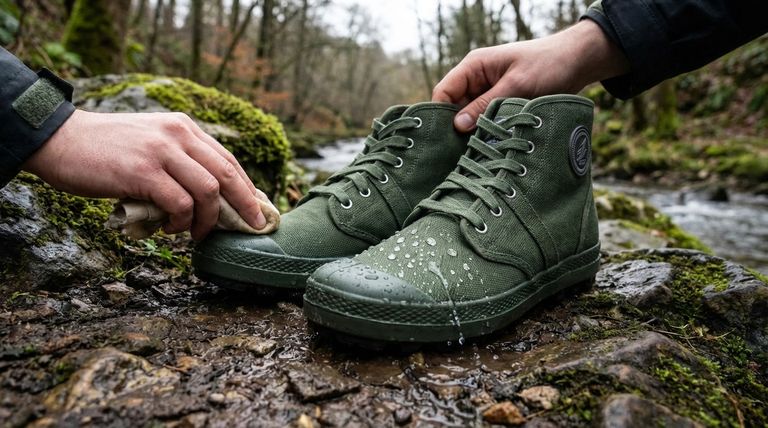
Waterproofing, in contrast, is about creating a hydrophobic barrier on the boot's exterior surface. Its sole purpose is to make water bead up and roll off instead of soaking in.
This is typically achieved with a spray or wax that coats the outer material. This external treatment is your first line of defense against moisture, protecting not just the boot material but also any internal waterproof membranes like Gore-Tex.
The Critical "Why": Beyond Just Dry Feet
The benefits of a proper maintenance routine go far beyond the simple luxury of having dry socks. It is a matter of performance, safety, and long-term value.
Preserving Structural Integrity
A boot that cracks has failed. Conditioning directly prevents this by maintaining the material's suppleness. A well-conditioned leather or synthetic boot can flex thousands of times without developing weak points, dramatically extending its usable lifespan.
Ensuring Comfort and Preventing Injury
Waterlogged boots are heavy, cold, and uncomfortable. More importantly, persistently damp feet are the primary cause of blisters, which can quickly end a trek.
Furthermore, prolonged moisture inside your boot creates an ideal environment for bacteria and fungi to grow, leading to skin infections and persistent odors.
Maintaining Breathability and Performance
When the outer fabric of a boot becomes saturated with water—a state known as "wetting out"—it can no longer breathe. This traps sweat vapor inside, making your feet feel clammy and wet even if no external water has penetrated.
A proper waterproofing treatment prevents this, allowing the boot's breathable membrane to function as designed, keeping you both dry and comfortable.
Understanding the Trade-offs and Common Pitfalls
Effective boot care requires acknowledging that there is no permanent, one-size-fits-all solution. Awareness of the limitations is key to success.
The Myth of "Permanent" Waterproofing
No treatment lasts forever. Abrasion from rocks and dirt, flexing of the material, and simple exposure to the elements will wear down any waterproofing application. It must be reapplied periodically.
Even boots with an internal waterproof liner (e.g., Gore-Tex) require regular re-treatment of the exterior. The liner may stop water from reaching your foot, but a "wetted-out" boot will still be heavy, cold, and non-breathable.
The Risk of Over-Conditioning
While essential, it is possible to use too much conditioner, especially on full-grain leather boots. Over-conditioning can make the leather excessively soft, reducing the support and stability the boot is designed to provide.
Always follow the manufacturer's instructions and apply conditioning treatments only when the material appears dry or is beginning to stiffen.
Making the Right Choice for Your Boots
Your maintenance strategy should be tailored to your specific boot material and intended use.
- If your boots are full-grain leather: Prioritize regular conditioning to prevent cracking, followed by a robust waterproofing wax or cream for maximum durability.
- If your boots are synthetic or a fabric/suede mix: Focus on reapplying a DWR (Durable Water Repellent) spray to maintain surface water repellency without affecting breathability.
- If you operate in consistently wet environments: Re-waterproof your boots more frequently and pay close attention to the seams, as this is your primary defense against water ingress.
Proper boot care is a fundamental skill that directly translates to greater durability, comfort, and safety on any trail you follow.
Summary Table:
| Purpose | Key Benefit | Main Goal |
|---|---|---|
| Conditioning | Nourishes materials (e.g., leather) | Prevents drying, cracking, and maintains flexibility |
| Waterproofing | Creates a water-repellent barrier | Keeps feet dry, prevents 'wetting out,' and maintains breathability |
Need durable, high-performance trekking boots for your customers? As a large-scale manufacturer, 3515 produces a comprehensive range of footwear for distributors, brand owners, and bulk clients. Our production capabilities encompass all types of shoes and boots, built to withstand the elements with proper care. Let us help you equip your customers with reliable gear. Contact our team today to discuss your manufacturing needs!
Visual Guide
Related Products
- Wholesale High-Traction Camo Boots - Custom Manufacturer for Brands
- Durable Spiked Camouflage Boots Wholesale & Factory Production
- High-Traction Suede Tactical Boots Wholesale & Custom Manufacturing
- Wholesale Waterproof Tactical Boots Custom Suede & High-Traction Soles
- Wholesale Tactical Boots High-Traction & Reflective for Bulk & Brand Orders
People Also Ask
- What are the key features of the new line of camo boots? Built for Extreme Cold & Rugged Terrain
- Are camo boots necessary for hunting success? Prioritize Performance Over Pattern
- How does the Rank Score Test identify the primary causes of premature failure in tactical and work boots? Key Insights
- What is the technical logic behind using closed-eye testing for tactical boots? Unlocking Peak Footwear Stability
- What shoes to wear for a security job? Durable, Protective Footwear for Long Shifts