Okay, so I'm tackling this. I need to deliver a rock-solid, unbiased resource for folks looking into snake-proof boots. First, the big picture: the user wants to know if these boots work and what they need to be careful of. Essentially, they're looking for a safety upgrade for their outdoor activities. I'll start with a clear answer: high-quality boots are effective, but no boot is perfect. That's the starting point.
My plan here is to really address the user's deep need for information. It's not just about the "proofness", but about how they work, the limitations, and what else matters beyond just snake protection. This is about helping them choose wisely for real-world risk mitigation.
I'll lean heavily on the existing research. The effectiveness is there, but quality is crucial. The references clearly point to durable materials and high shafts. The key is to emphasize that "snake-proof" is really "snake-resistant," and that cheap options are a definite no-go. I'll need to discuss the value of reputable brands and the typical price range.
Then, I'll dive into the broader considerations. These references are actually very helpful regarding additional features. I'm thinking comfort (critical for long treks), flexibility, weight, waterproofing, protection from brush, and even tick prevention. I'll need to offer a good comparison to regular hunting boots and gaiters.
Now, how to structure it? I'll start with a strong, direct statement about effectiveness, then immediately qualify it with the crucial limitations. I'll include a takeaway box at the start so folks can grasp the core idea quickly: it's about reducing risk, not eliminating it.
I'm thinking of breaking it down into a few key sections: "How Snake Boots Provide Protection" focusing on materials and coverage, "Evaluating Features Beyond the 'Proof'," which really addresses the day-to-day usability, and "Understanding the Trade-offs and Cautions," which will build a ton of trust by being upfront about limitations.
For each section, I'll drill down further with subsections on specific aspects. I'll address materials like leather and rubber, and the importance of full leg coverage. I'll also discuss comfort, waterproofing, and durability. The "trust" section will be where I really drive home the fact that "snake-proof" is a relative term, and that low-quality boots are a waste of money. I'll also acknowledge the potential trade-offs regarding weight and flexibility.
Finally, I'll finish with actionable advice, a simple bulleted list to help people make choices based on their specific needs, emphasizing the need to consider the type of outdoor activity and risk exposure. The goal is to empower the reader to make a confident, informed decision. High-quality snake-proof boots are a highly effective layer of protection against venomous snake bites, but their reliability is directly tied to their construction and materials. Buyers must be cautious of low-cost, unproven products, as "snake-proof" is a measure of resistance, not an absolute guarantee of invincibility.
The core issue is not simply whether snake boots work, but understanding that you are buying a significant reduction in risk, not total immunity. The most effective choice balances specialized bite protection with the practical demands of your activity, such as comfort, weight, and waterproofing.
How Snake Boots Provide Protection
A common misconception is that any thick leather or rubber boot offers sufficient protection. While sturdy boots are better than nothing, dedicated snake boots are engineered with specific defensive characteristics that set them apart.
The Critical Role of Material
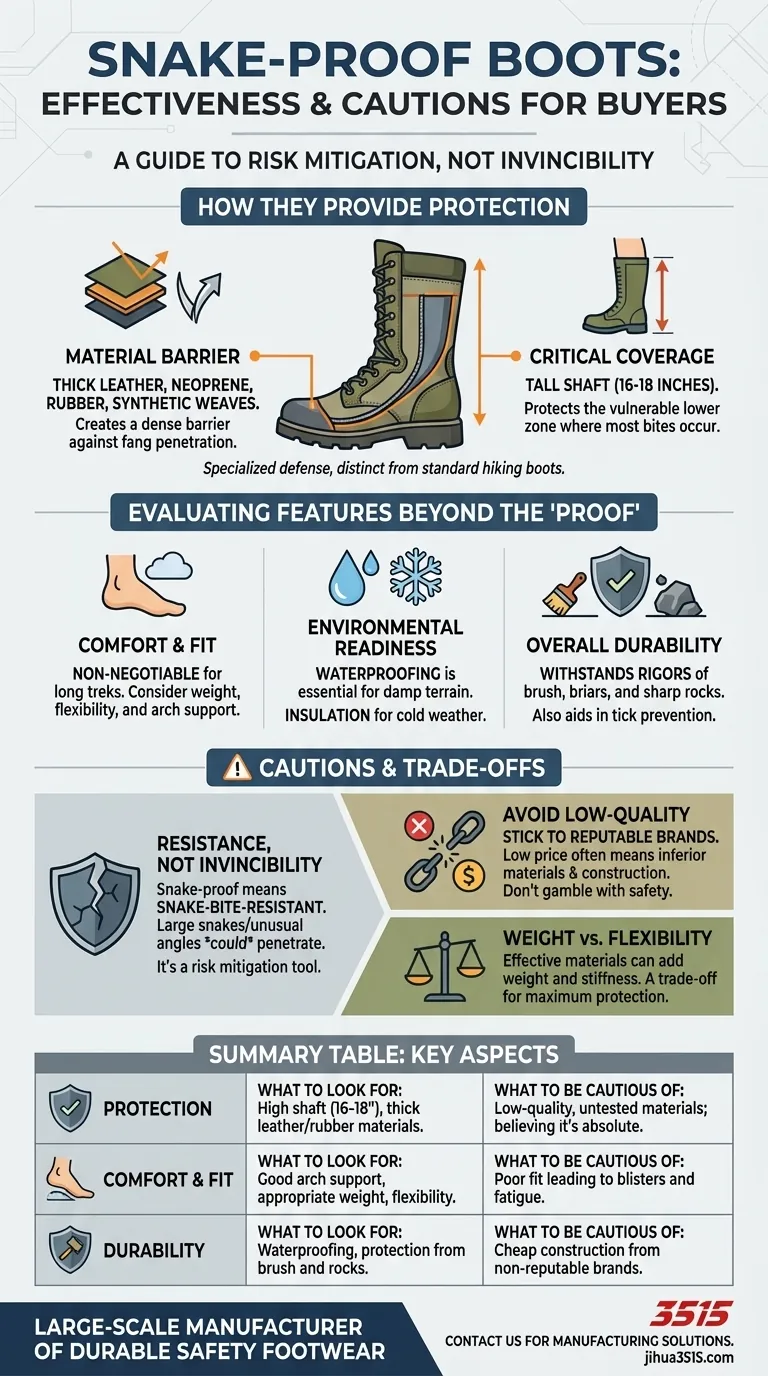
True snake boots use materials like thick leather, neoprene, rubber, or synthetic weaves specifically chosen to prevent fang penetration. The goal is to create a barrier that is too dense or tough for a snake's fangs to puncture effectively.
The Importance of Coverage
Most venomous snake bites occur on the lower extremities, between the foot and the knee. Snake boots feature a tall shaft, typically 16 to 18 inches, to provide comprehensive coverage of this entire vulnerable zone.
Specialized vs. Incidental Protection
Standard hunting or hiking boots may offer incidental protection due to their sturdy build. However, they are not designed or tested for this purpose and often lack the necessary shaft height and fang-resistant materials, leaving the upper ankle and calf exposed.
Evaluating Features Beyond the "Proof"
A boot's effectiveness is also measured by its usability in the field. A pair of boots that offers excellent protection but is too uncomfortable to wear for long periods is a poor investment.
Comfort and Fit
You will likely be walking long distances, so comfort is non-negotiable. Key factors include the boot's weight, flexibility, and internal features like arch support. A poor fit can lead to blisters and fatigue, compromising your focus and safety.
Environmental Readiness
Your boots must match your environment. Waterproofing is essential for crossing streams or traversing damp terrain. For cold-weather use, insulation becomes a critical factor for both comfort and safety.
Overall Durability
Beyond snake bites, your boots must withstand the general rigors of the outdoors. They should offer robust protection against sharp rocks, brush, and briars, ensuring they last for many seasons. They also help keep pants tucked in, which is an effective defense against ticks.
Understanding the Trade-offs and Cautions
Objectivity is crucial when selecting safety gear. Understanding the limitations and potential downsides of snake boots allows you to make a more informed decision.
"Snake-Proof" Is a Measure of Resistance
No boot is 100% impervious to every possible scenario. The term "snake-proof" should be understood as "snake-bite-resistant." A very large snake with long fangs striking at an unusual angle could potentially penetrate a boot. These boots are a tool for risk mitigation, not a shield of invincibility.
The Pitfall of Low-Quality Construction
The market contains many cheaply made boots that use the "snake-proof" label without the requisite engineering. Stick to reputable brands known for their quality and testing. A lower price tag often indicates inferior materials and construction, which is a gamble you cannot afford to take with safety equipment.
The Weight and Flexibility Compromise
Generally, the materials that make a boot effective against fangs also make it heavier and stiffer than a standard hiking boot. While modern designs have improved significantly, there is often a trade-off between maximum protection and maximum flexibility or lightness.
Making the Right Choice for Your Activity
Your final decision should be guided by how you intend to use the boots. A boot that is perfect for one person may be entirely wrong for another.
- If your primary focus is maximum safety in high-risk areas: Prioritize boots from top-tier brands with the highest shaft and most robust material construction, even if it means accepting more weight.
- If your primary focus is all-day comfort for hunting or hiking: Look for a hybrid design that balances proven snake-resistant features with lighter, more flexible materials for agility and reduced fatigue.
- If your primary focus is general-purpose outdoor work: Consider features like waterproofing, sole durability, and comfort to be just as important as the specific snake protection rating.
Ultimately, choosing the right snake boot is an informed decision about managing risk while ensuring your gear supports, rather than hinders, your activity.
Summary Table:
| Key Aspect | What to Look For | What to Be Cautious Of |
|---|---|---|
| Protection | High shaft (16-18"), thick leather/rubber materials | Low-quality, untested materials; "snake-proof" is not absolute |
| Comfort & Fit | Good arch support, appropriate weight, flexibility | Poor fit leading to blisters and fatigue |
| Durability | Waterproofing, protection from brush and rocks | Cheap construction from non-reputable brands |
Ready to equip yourself with reliable, high-quality safety footwear?
As a large-scale manufacturer, 3515 produces a comprehensive range of durable footwear for distributors, brand owners, and bulk clients. Our production capabilities encompass all types of safety boots, including models built with the robust materials and construction needed for outdoor protection.
We can help you source or develop the right snake-resistant footwear to keep your customers safe and comfortable. Contact our team today to discuss your specific needs and explore our manufacturing solutions.
Visual Guide
Related Products
- Wholesale Waterproof Tactical Boots Custom Suede & High-Traction Soles
- High Performance Fire-Retardant Waterproof Safety Boots
- Durable Waterproof Rain Boots | Custom Manufacturer for Wholesale & Brands
- Wholesale Premium Waterproof Nubuck Safety Shoes Boots
- Premium High-Cut Waterproof Safety Boots Manufacturing & Wholesale Solutions
People Also Ask
- What waterproof technology is used in tactical boots? Unlock All-Weather Performance & Protection
- What are the advantages and disadvantages of waterproof tactical boots? A Guide to the Key Trade-Offs
- What is the significance of waterproof functionality in tactical boots? Essential for Health & Performance
- What is the role of professional 3D medical imaging software in optimizing tactical boot design and performance?
- What features enhance breathability and comfort in tactical boots? A Guide to Superior Footwear Performance